Author: Josh

  • On This Day in 2015: Apple Opened Pre-Orders for the Apple Watch 1st Generation

    On This Day in 2015: Apple Opened Pre-Orders for the Apple Watch 1st Generation

    How Apple’s first wearable redefined the wristwatch—and the watch industry

    Nine years ago, on April 10, 2015, a single device challenged long-held notions of what a wristwatch could be.

    In 2015, the landscape of timekeeping was largely divided. On one side stood the venerated world of mechanical watches, celebrating intricate craftsmanship and heritage. On the other, the burgeoning but still niche realm of digital and “smart” watches, mostly catering to early adopters and fitness enthusiasts. The smartphone had already reshaped personal communication, but whether its functionality could successfully migrate to the wrist remained an open question. Could a tech company truly enter the deeply personal, often sentimental space of wristwear and succeed? Apple’s answer arrived in the spring of 2015, not with a quiet whisper, but with a bold reimagining of the wristwatch.

    31127224656?profile=RESIZE_710x

    On April 10, 2015, Apple opened pre-orders for its first-ever watch, a device that would soon become known to enthusiasts as the “Series 0” or 1st Generation Apple Watch. This wasn’t just another gadget; it was a deliberate redefinition of what a watch could be. From its sleek, rectangular form factor to its intuitive digital crown and Force Touch display, the Apple Watch was designed to be Apple’s “most personal device” yet. It promised a future where your wrist could track your health, deliver notifications, and even facilitate payments—all while maintaining a sleek, modern aesthetic.

    Apple Watch 1st Generation

    What truly set the original Apple Watch apart was its audacious market strategy and technological ambition. Apple didn’t just offer one watch; it presented a tiered ecosystem. There was the accessible aluminum “Sport” model, the more premium stainless steel version, and, most controversially, the opulent 18-karat gold “Edition,” priced between $10,000 and $17,000. This move signaled Apple’s intent to compete not just with Fitbit, but with Omega and Rolex, a bold gambit that captivated the tech world and sparked debate among traditional watchmakers.

    Specifications: The Dawn of a New Era

    Case Sizes 38mm and 42mm
    Materials Anodized aluminum (Sport), stainless steel, 18k yellow/rose gold (Edition)
    Display Force Touch Retina OLED
    Processor Apple S1 SiP (System in Package)
    Sensors Heart rate sensor, accelerometer, gyroscope, ambient light sensor
    Connectivity Bluetooth 4.0, Wi-Fi 802.11b/g/n
    Operating System watchOS 1
    Battery Life Approximately 18 hours
    Water Resistance IPX7 (splash resistant, not submersible)
    Starting Price $349 (Sport), $549 (steel), $10,000+ (Edition)

    Legacy: A Defining Moment

    The original Apple Watch, despite its initial limitations (like requiring an iPhone and a relatively short battery life of approximately 18 hours), was a resounding success. It swiftly became the world’s best-selling watch by volume within its first year, a title it has largely maintained ever since. Its release forced the traditional watch industry to confront the challenge of smart technology, leading to a flurry of “hybrid” smartwatches and a renewed focus on brand identity and mechanical artistry. While the 18k gold Edition proved to be a short-lived experiment, it underscored Apple’s ambition to redefine luxury on its own terms.

    Today, nine years on, the Apple Watch is ubiquitous. It has evolved into a sophisticated health and fitness device, offering features like ECG and fall detection, a powerful communication tool, and an indispensable companion for millions. The Series 0 is remembered as the pivotal moment a tech giant stepped onto the horological stage and fundamentally reshaped it, proving that a watch could be much more than just a time-telling instrument. It bridged tradition and innovation, proving that the wristwatch could evolve without losing its relevance.

     See a few of our other articles featuring the Apple Watch:

    © Spot.Watch — On This Day in Watch History

  • Rolex “Lavender” Datejust II Ref. 116300

    Rolex “Lavender” Datejust II Ref. 116300

    The Rolex 116300 “Lavender” is one of those references that didn’t feel special until it disappeared.

    It’s not “the watch someone famous wore.”

    It’s not hype.

    It’s not rare.

    It’s not limited.

    It’s not loud.

    But it’s one of those watches that quietly grows on you.

    It captures a specific era of Rolex—slightly bolder case proportions, experimental dial playfulness, and the final chapter of the classic 31xx movement line. For collectors who appreciate nuance over noise, this Datejust might be one of the smartest under-the-radar steel Rolex buys of the past decade.

    And in the right light? Yes—it really does glow lavender.

    Rolex Datejust 116300 Lavender

    Unique fact #1:
    This was one of the last Datejust references where Rolex leaned into colored applied Arabic numerals on a 41mm DJ. They’ve since become far more conservative with DJ41 dial layouts.

    Unique fact #2:
    The lavender hue effect is partly due to the anti-reflective properties of the sapphire crystal interacting with the radial brushing—it’s an optical phenomenon, not a separate dial color.

    Pros and Cons

    Pros

    • Unique dial tone with subtle lavender hue
    • Discontinued configuration
    • Smooth bezel versatility
    • Proven 3136 movement
    • Less common than fluted DJ41 models

    Cons

    • Chunkier case than modern DJ41
    • No upgraded 70-hour power reserve
    • Polished center links scratch easily
    • Not instantly recognizable as “special”

    Note: The Rolex Datejust II (116300) and Datejust 41 (126334) are both 41mm watches but differ significantly in design, movement, and availability.

    #datejust2


    More Rolex Datejust Spots on Spot.Watch

  • Seiko SSK023 with Christopher Ward strap

    Seiko SSK023 with Christopher Ward strap

    Affordable GMT & Field Watch Review

    Seiko SSK023: The Honest GMT That Broke the Internet

    Fitted here with a Christopher Ward 20mm hybrid rubber strap — the Seiko SSK023 is rugged, functional, and packed with more capability than almost anything else at its price point.

    Seiko 5 has always been the gateway drug for mechanical watch enthusiasts — built on five core principles: automatic movement, day-date display, water resistance, recessed crown, and a durable case. In 2022, Seiko broke the internet by bringing an affordable GMT movement (the 4R34) to their dive-style cases.

    The SSK023, released shortly after, takes that same “Office GMT” functionality and drops it into a vintage-inspired field watch silhouette — arguably the most wearable package in the lineup.

    Seiko SSK023 with Christopher Ward hybrid rubber strap

    Seiko SSK023 — fitted with Christopher Ward 20mm hybrid rubber strap

    “Honest, rugged, and ready for any time zone — a modern classic at an honest price.”


    Timepiece

    Seiko SSK023 — Specifications

    The SSK023 isn’t trying to be a luxury item — it’s trying to be a tool. Get past the minor cost-cutting on the clasp and crystal, and you’re left with a field GMT that punches well above its weight class.

    Movement Seiko 4R34 — automatic GMT, 24hr hand
    GMT Type “Office GMT” — 24hr hand tracks second time zone
    Lug Width 20mm with drilled-through lugs
    Bracelet 5-row stainless steel with secure lock clasp
    Silhouette Vintage-inspired field watch — a true strap monster

    Wearing Experience

    On the wrist, the SSK023 is a certified “strap monster.” While it ships on a handsome five-row stainless steel bracelet with a secure lock, its drilled lugs and 20mm lug width make strap swaps effortless — NATO, leather, rubber, all fair game.

    The multi-link bracelet gives it a slightly more sophisticated air than a standard three-link Oyster style, though the clasp is stamped rather than milled — a reasonable cost-cutting measure that keeps the price honest without compromising day-to-day wearability.

    Strap Pairing

    Christopher Ward 20mm Hybrid Rubber Strap — a premium aftermarket upgrade that transforms the SSK023’s field watch character, adding a sportier edge while keeping the 20mm lug compatibility locked in.

  • Troy Aikman Sporting the Rolex Yatch Master

    Troy Aikman Sporting the Rolex Yatch Master

    NFL Hall of Fame Quarterback — ESPN Monday Night Football

    Troy Aikman’s Rolex Yacht-Master: After the Trophy, the Tide

    Troy Aikman won three Super Bowls, took a Super Bowl MVP, made six Pro Bowls, and entered two Halls of Fame. The man does not need to announce himself. Neither does the Rolex Yacht-Master — the watch Rolex built for people who have already arrived.

    Troy Aikman

    Rolex Yacht-Master

    The Dallas Cowboys dynasty of the 1990s was one of the most dominant stretches in NFL history, and Troy Aikman was its architect. Over a 12-year career spent entirely in Dallas — 1989 to 2000 — Aikman led the Cowboys to three Super Bowl victories in four seasons: Super Bowls XXVII, XXVIII, and XXX. He was named MVP of Super Bowl XXVII, completing 22 of 30 passes for 273 yards and four touchdowns against the Buffalo Bills in a performance that defined what the phrase “surgical precision” means in professional football. He was selected six times to the Pro Bowl, threw for 32,942 yards and 165 touchdowns across his career, and was among the most accurate passers in the game at a time when accuracy was the rarest commodity in the quarterback position.

    What distinguished Aikman from the quarterbacks of his era was the quality of his decision-making under pressure. He was not a scrambler. He was not a gunslinger. He was, in the most precise sense, a system quarterback — one who understood where the ball was going before the snap, who processed coverage at a speed that made the game appear slow, and who protected the football with a discipline that irritated opponents and reassured coaches. In an era when the Cowboys could run the ball at will behind Emmitt Smith, Aikman’s job was to be exact, not spectacular. He was both. In 2006 he was inducted into the Pro Football Hall of Fame; in 2008 into the College Football Hall of Fame, recognising his years at UCLA, where he was also the first overall pick of the 1989 NFL Draft.

    Since retiring, Aikman has built a second career with the same quiet efficiency. He spent years at FOX Sports as one of the most respected analysts in the booth before moving to ESPN, where he is currently the lead analyst for Monday Night Football. He is also a co-owner of the San Diego Padres, bringing the same competitive mentality he applied in Dallas to the front office of a Major League Baseball franchise. He is, in every post-playing context, a man who has leveraged a reputation earned on the field into authority that extends well beyond it.

    “I never wanted to be the story. I wanted to win. There’s a difference — and it shows up in the score.” — Troy Aikman


    Timepiece

    Rolex Yacht-Master

    Rolex introduced the Yacht-Master in 1992 as a companion to the regatta world — a watch designed for the deck, with the rotatable bezel and countdown-ready functionality of a tool watch, but finished and proportioned for the life that surrounds the sport rather than the racing itself. Positioned between the Submariner’s pure tool identity and the Datejust’s dress credentials, the Yacht-Master occupies the exact territory where sport becomes lifestyle: refined enough for a boardroom, robust enough for open water.

    The most characterful variant of the Yacht-Master is the Rolesium configuration — an Oystersteel case paired with a platinum bezel and matching platinum dial — which gives the watch a cool, understated read at a glance: not yellow gold, not two-tone, but something quieter and more considered than either. The current 40mm reference runs the Caliber 3235, Rolex’s in-house movement introduced to the Oyster Perpetual line from 2015 onward, carrying a 70-hour power reserve and Chronergy escapement certified to chronometer standard. The Yacht-Master also comes in Everose gold, yellow gold, and — at the 42mm size — in RLX titanium with an Oysterflex bracelet, the most technically ambitious configuration in the current range.

    Reference 126622 (Rolesium, 40mm) / 226659 (White gold, 42mm) / 226659 (RLX Titanium, 42mm)
    Case 37mm, 40mm, or 42mm Oystersteel, Everose gold, white gold, or RLX titanium; rotatable bidirectional bezel; 100m WR
    Movement Caliber 3235; in-house automatic; 70-hour power reserve; Chronergy escapement; COSC chronometer certified
    Market price $13,150 retail (Rolesium 40mm); $17,850–$43,250 depending on material; significant premiums on secondary market

    The Watch Between the Watches

    The Rolex Yacht-Master occupies a position in the lineup that requires a particular kind of confidence to choose. The Submariner is more famous. The Daytona is more coveted. The GMT-Master II is more immediately legible as a serious watch. The Yacht-Master sits between all of them — less aggressively sporty than the diver, less chronograph-driven than the Daytona, more purposeful than the Datejust. It is the Rolex for someone who has considered the full catalogue, rejected the obvious answers, and arrived at the one that suits them rather than the one that makes the most noise. That kind of selection process requires having nothing left to prove. Aikman fits the profile exactly.

    His playing style was also the quiet choice in a decade of showboating. The 1990s Cowboys were surrounded by personality — Michael Irvin’s celebrations, Deion Sanders’ arrival, the media circus that followed Jerry Jones — but Aikman was consistently the still point at the centre of it all. The pass was delivered. The play was executed. The score changed. He rarely needed to explain himself after the fact because the outcome had already made the argument. The Yacht-Master makes the same argument: refined, composed, unhurried, and unmistakably correct.

    Why This Watch on This Wrist

    The Yacht-Master was introduced the year Aikman won his first Super Bowl. Both have aged in the same direction: toward greater refinement, broader recognition, and a reputation that no longer depends on being explained to anyone. Aikman’s Hall of Fame status, his broadcasting career, and his Padres ownership represent the same principle the Yacht-Master embodies: the transition from proving to established, from performance to legacy. The watch is not trying to be the Submariner or the Daytona. It knows what it is. Aikman stopped trying to be the loudest player on the field about thirty years ago. The result, in both cases, is an object that commands a room without raising its voice. And at Spot.Watch — that’s always worth noticing.


    More Rolex Spots on Spot.Watch

    And at Spot.Watch — that’s always worth noticing.

  • Tyler Hoover – Tag Heuer Chronograph

    Tyler Hoover – Tag Heuer Chronograph

    Automotive YouTuber — Founder, Cars & Bids — Author

    Doug DeMuro’s TAG Heuer Chronograph: Quirks, Features, and a Tachymeter

    Doug DeMuro has built one of the most distinctive voices in automotive media by reviewing cars the way no one else does — cataloguing every quirk, explaining every feature, and assigning a final numerical score. His watch: a TAG Heuer chronograph, a brand whose entire identity is built on the intersection of precision timing and motorsport. The tachymeter is not decorative.

    Doug DeMuro. Source: YouTube

    Doug DeMuro’s TAG Heuer chronograph.

    ▶ Source: YouTube / Cars & Bids

    Doug DeMuro was born on May 22, 1988, and built his automotive media career on a format that sounds simple until you try to replicate it: drive interesting cars, document every unusual detail the manufacturer included, explain them clearly to an audience that ranges from casual enthusiasts to obsessive collectors, and assign a final score across a rubric he invented himself. The “DougScore” — which divides a car’s qualities into weekend and daily categories before arriving at a total out of 100 — is simultaneously a genuine analytical framework and a piece of entertainment that has given millions of viewers a shared vocabulary for discussing cars. His main YouTube channel has approximately five million subscribers. He has also written books and founded Cars & Bids, an online auction platform focused on modern enthusiast vehicles that has become a significant marketplace in its own right.

    The DeMuro format is distinguished by its specificity. Where most automotive journalism covers performance figures, design language, and brand positioning, DeMuro goes further: the unusual placement of a window switch, the particular way a door handle is recessed into the body, the logic (or lack of it) behind a particular ergonomic decision. He calls these “quirks and features,” and the combination of the two — the genuinely strange alongside the genuinely clever — is what makes the format work. It is a form of close reading applied to engineering objects, and it requires exactly the kind of methodical attention to detail that produces useful analysis rather than impressionistic opinion. The TAG Heuer chronograph on his wrist suggests the same disposition applied to timekeeping.

    “This is a car that has some really interesting quirks and features.” — Doug DeMuro, approximately five million times


    Timepiece

    TAG Heuer Chronograph

    TAG Heuer, founded in Saint-Imier, Switzerland in 1860 by Édouard Heuer, has built its identity on precision timing and motorsport over more than 160 years. The brand has been official timekeeper at Formula 1 grands prix, Le Mans, and major racing series worldwide, and its chronograph lines reflect that heritage directly. The signature models — Carrera (named for the Carrera Panamericana), Monaco (square case, famously worn by Steve McQueen in Le Mans), Autavia (dashboard instruments adapted for the wrist), and Formula 1 — each carry a specific chapter of the brand’s racing history.

    TAG Heuer chronographs typically feature tachymeter scales for calculating speed over a measured distance, three sub-dials for elapsed hours, minutes, and seconds, and movements ranging from ETA/Valjoux-based calibers to the brand’s in-house Calibre B01. Case sizes run from 41mm to 43mm across the main sport chronograph lines. The motorsport aesthetic — bold dials, legible subdials, functional bezels — is consistent across the range and has been since Heuer’s original instrument watches of the 1960s.

    Brand TAG Heuer — Saint-Imier, Switzerland, est. 1860
    Key Lines Carrera, Monaco, Autavia, Formula 1
    Movement Valjoux/ETA base or in-house Cal. B01; automatic chronograph
    Market Price ~$3,500–$10,500 retail depending on reference

    The DougScore for the TAG Heuer Chronograph

    If DeMuro applied his own methodology to the TAG Heuer chronograph, the review would probably go something like this. Quirks: the tachymeter scale, which most wearers never use for its actual purpose (calculating speed over a known distance) but which is part of the visual grammar of every serious motorsport chronograph. Features: a genuine racing heritage stretching back to Heuer’s 1916 Mikrograph, which could measure time to 1/100th of a second — a precision that predates most of the technology it would eventually help develop. Weekend score: strong, because the TAG Heuer chronograph is exactly the kind of watch that reads correctly at a track day, a Cars & Bids auction preview, or a car show. Daily score: also strong, because the bold dial and robust case work in almost any environment without requiring explanation.

    The alignment between DeMuro’s professional world and the TAG Heuer brand identity is not incidental. DeMuro reviews cars for people who care about the details — who want to know not just that a car is good but specifically why, and which particular decisions the engineers made that distinguish it from its competitors. TAG Heuer built its reputation on the same principle: the watch is not just a chronograph, it is this chronograph, with this specific movement architecture and this specific historical lineage and these specific design decisions that date to this particular racing context. Both are arguments for paying attention.

    The Tachymeter Is Not Decorative

    DeMuro’s format is built on the premise that features are worth explaining — that the detail a casual observer dismisses as decorative often turns out to be the most interesting thing on the car, once someone takes the time to explain what it actually does. The tachymeter bezel on a TAG Heuer chronograph is exactly that kind of feature. It looks like graphic design until you understand that it allows the wearer to calculate the speed of a moving object over a measured mile — a function that was genuinely useful to racing drivers in an era before digital telemetry made the calculation automatic. DeMuro would explain it correctly. He would also note the specific placement of the subdials, the height of the pushers relative to the case, and the logic of the crown position. Then he would assign it a DougScore. And on the evidence of the watch on his wrist, it would score well.


    More TAG Heuer Spots on Spot.Watch

    And at Spot.Watch — that’s always worth noticing.

  • Urban Meyer’s Apple Watch

    Urban Meyer’s Apple Watch

    FOX Sports Analyst — Big Noon Kickoff | College Football Hall of Fame, Class of 2025

    Urban Meyer’s Apple Watch: 187 Wins, Three National Championships, and the Most Instructive 13 Games in NFL History

    The only modern-era coach to win national championships in two different conferences. Florida 2006. Florida 2008. Ohio State 2014. A 187–32 record across four programmes. The Urban Meyer coaching tree has produced more head coaches than almost any in the sport. Then Jacksonville 2021: 13 games, 2–11, fired. Now a College Football Hall of Famer on the Fox Sports Big Noon Kickoff set alongside Joel Klatt. On his wrist: an Apple Watch.

    Urban Meyer wearing Apple Watch on Fox Sports Big Noon Kickoff

    Urban Meyer — Apple Watch on wrist. Source: FOX Sports / Big Noon Kickoff

    Urban Meyer Fox Sports analyst

    Urban Meyer — College Football Hall of Fame (2025), three national championships, Fox Sports analyst

    Urban Frank Meyer III was born July 10, 1964, in Toledo, Ohio, and grew up in Ashtabula. He played college football as a defensive back at the University of Cincinnati, where he earned a degree in psychology, then earned a master’s in sports administration from Ohio State in 1988 while working as a graduate assistant on Earle Bruce’s staff. He spent years building his credentials through assistant positions at Illinois State, Colorado State, and Notre Dame before his first head coaching job at Bowling Green in 2001, where he went 17–6 in two seasons. At Utah in 2003–04, he went 22–2 including an undefeated regular season, a Fiesta Bowl victory, and the BCS-busting campaign that forced the sport to acknowledge non-power programmes.

    The University of Florida hired him in 2005. What followed was the most productive six-year run in SEC coaching history: 65–15, two national championships (the 2006 season over Ohio State, the 2008 season over Oklahoma), a 22-game winning streak, the development of Tim Tebow into the 2007 Heisman Trophy winner, and four separate 20-game winning streaks — a record unique in major college football. He stepped down after the 2010 season citing health concerns. He came back. Ohio State hired him in 2012, and in seven seasons he went 83–9, won the inaugural College Football Playoff National Championship after the 2014 season — making him the only modern-era coach to win a national title in two different conferences — and seven Big Ten titles. He retired following the 2019 Rose Bowl. His overall college record: 187–32. He was inducted into the College Football Hall of Fame in 2025.

    The Jacksonville chapter is the other part of the biography, and it belongs here too. Meyer came out of retirement in January 2021 to coach the Jacksonville Jaguars — his first NFL job, tasked with building around the first overall pick in the draft, quarterback Trevor Lawrence. He went 2–11 and was fired after 13 games, in the midst of multiple controversies both on and off the field. It was the most public and comprehensive collapse of a major coaching career in recent memory. He returned to Fox Sports, resumed his role on Big Noon Kickoff, and was announced as a Hall of Fame inductee four years later. The coaching record stands at 187–32. The Jacksonville season stands at 2–11. Both are part of who Urban Meyer is.

    “The only modern-era coach to win a national championship at two different schools in two different conferences.” — College Football Hall of Fame, on Urban Meyer’s induction, 2025


    Timepiece

    Apple Watch

    The Apple Watch, first released in 2015 and now in its tenth generation, is the world’s best-selling watch and a platform that has extended beyond lifestyle accessory into genuine health infrastructure. The current lineup — Series 11, SE 3, and Ultra 3 — offers continuous health monitoring across the full day, wrist-level communications, and ecosystem integration that operates without demanding deliberate attention from the wearer. All models update automatically over the air.

    Heart rate monitoring, ECG, blood oxygen, temperature sensing, sleep apnea detection, and sleep tracking run passively throughout the day and night. Meyer stepped down from Florida citing health concerns; he stepped down from Ohio State citing the same. The Apple Watch, monitoring physiology continuously and flagging patterns the wearer wouldn’t otherwise notice, is a practical tool for someone who has made clear that the demands of elite coaching carry a physical cost. Communications — calls, messages, notifications — arrive at the wrist without requiring a phone. On the Big Noon Kickoff set, before and during live television, the watch handles the practical infrastructure of the working day without adding to it.

    Platform Apple Watch (watchOS) — paired with iPhone
    Models Series 11 / SE 3 / Ultra 3 — aluminium, stainless steel, or titanium
    Health Heart rate, ECG, blood oxygen, sleep apnea detection, temperature sensing, fall detection
    Connectivity Calls, messages, notifications, Apple Pay — hands-free on wrist
    Navigation GPS with haptic turn-by-turn directions
    Software watchOS — over-the-air updates, continuously improving
    Price range From ~$249 (SE 3) to ~$799+ (Ultra 3)

    The Tree and the Wreckage

    The “Urban Meyer coaching tree” is one of the most discussed in the sport — a list of assistant coaches who learned under Meyer and became head coaches themselves, including Dan Mullen, Kyle Whittingham, Bob Stoops, Chris Petersen, and Kirby Smart. Building a coaching tree of that depth requires a particular kind of organisational intensity: a system, a culture, a standard that transmits. Meyer built three national championship programmes from that intensity. He also retired from two of them citing the toll on his health, and was fired from the third after 13 games having produced a level of controversy that a 187–32 record could not absorb.

    What the Apple Watch on Urban Meyer’s wrist at Fox Sports represents, in that context, is straightforward: a man who twice stepped away from coaching citing health, who now operates in a less physically demanding broadcast environment, wearing the device that monitors what a body like his has been through. The health monitoring suite — heart rate, ECG, blood oxygen, sleep apnea detection — is not abstract to someone whose career ended twice in significant part because of what it was doing to his body. The watch that tracks what the body is doing, continuously and without being asked, is the appropriate device for the wrist of someone who has learned that ignoring those signals has consequences.

    The View from the Set

    Urban Meyer now sits on the Fox Sports Big Noon Kickoff set alongside Joel Klatt — himself a subject in this series, wearing an Apple Watch on the same broadcast. It is the first extended period of Meyer’s adult professional life in which he is not responsible for a programme’s results. He watches from the outside, as a former coach whose knowledge of what happens inside those buildings is as deep as anyone who has ever sat in that seat. The College Football Hall of Fame recognised him in 2025. The record is 187–32 and three national championships. The watch on his wrist monitors the man behind the record, quietly, continuously, as it always has.


    More Apple Watch Spots on Spot.Watch

    And at Spot.Watch — that’s always worth noticing.

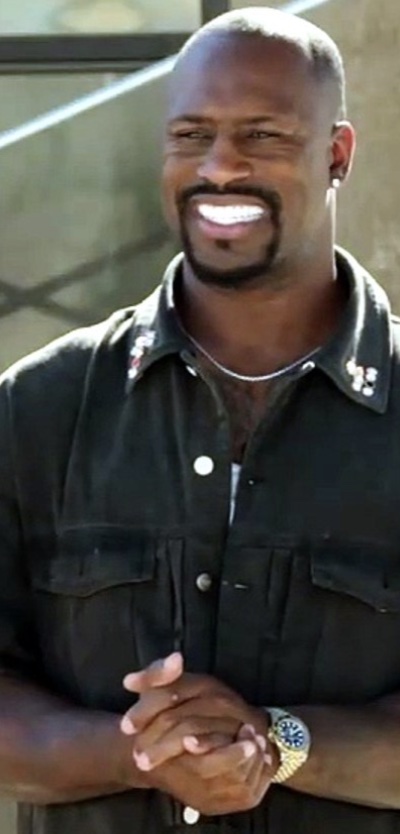
  • Vernon Davis: Rock the Block GMT Gold Rolex

    Vernon Davis: Rock the Block GMT Gold Rolex

    NFL Tight End · San Francisco 49ers · HGTV Rock the Block

    Vernon Davis’s Rolex GMT-Master II Yellow Gold: The Hall of Famer’s Second Time Zone

    Vernon Davis built one of the most athletic careers in NFL history at tight end — a position that demands the size of a lineman and the speed of a receiver, and that rewards people who refuse to be categorised. The Rolex GMT-Master II in 18k yellow gold operates on the same refusal: it is a tool watch that became a luxury icon, a traveller’s instrument that became a status symbol, a sports watch that belongs equally on a job site or a red carpet.

    Vernon Davis

    Vernon Davis. Source: YouTube Rock the Block – youtube

    Rolex GMT-Master II 18k Yellow Gold

    Rolex GMT-Master II, 18k yellow gold, Ref. 126718GRNR. Source: Rolex Website

    ▶ Source: YouTube

    Vernon Davis was born in Washington, D.C., and came up through the University of Maryland before the San Francisco 49ers selected him sixth overall in the 2006 NFL Draft. The expectations attached to that selection were significant — top-six picks at tight end are rare, and the position had been evolving rapidly toward the kind of hybrid role that would eventually reshape offensive football. Davis exceeded them. At 6’3″ and 250 pounds with sub-4.4 speed, he represented what the tight end position was becoming: a mismatch problem that no defence could solve cleanly, equally dangerous in-line, in the slot, or split wide. His career in San Francisco produced some of the most memorable moments of the 49ers’ Jim Harbaugh era, including a playoff reception against the New Orleans Saints in January 2012 that became one of the most emotionally raw celebrations in recent NFL history.

    After stints with the Denver Broncos and Washington, Davis retired from professional football and moved into television with the same athleticism he brought to the field — finding new lanes rather than settling into a single role. His appearance on HGTV’s Rock the Block Season 7, partnered with renovation expert Mina Starsiak Hawk, placed him in the design and construction world that had become a genuine interest rather than a celebrity cameo. Davis has spoken about his passion for interior design and architecture as an extension of the same spatial intelligence that made him effective as a route runner — understanding how space works, how to move through it, how to use it.

    “I’ve always wanted to be more than just a football player.” — Vernon Davis


    Timepiece

    Rolex GMT-Master II — 18k Yellow Gold, Ref. 126718GRNR

    The GMT-Master was introduced by Rolex in 1954 as a professional instrument for long-haul aviation crews, specifically in partnership with Pan American World Airways, whose pilots needed to track home time and local time simultaneously across transatlantic routes. The GMT-Master II, arriving in 1983, added the ability to set the local hour hand independently of the GMT hand, making it a genuine dual-time complication. It remains Rolex’s canonical traveller’s watch — produced across steel, Rolesor two-tone, and full precious metal references.

    The Ref. 126718GRNR executes the GMT-Master II entirely in 18k yellow gold — case, bracelet, and crown — with a black and green “Sprite” Cerachrom ceramic bezel on a five-link Oyster bracelet. The Calibre 3285 movement offers a 70-hour power reserve and Rolex’s Chronergy escapement. At retail pricing above $40,000 USD, it is the GMT that does not need to justify itself.

    Reference 126718GRNR (“Sprite” — black/green Cerachrom bezel, yellow gold)
    Case 40mm 18k yellow gold; black/green Cerachrom bezel; Oyster bracelet in yellow gold
    Movement Calibre 3285; perpetual self-winding; GMT complication; Chronergy escapement; 70-hour power reserve
    Market price Retail approx. $41,550 USD; secondary market $45,000–$55,000+ USD (2025)

    The Full Gold Statement

    The GMT-Master II comes in several configurations, and each communicates something different. The steel version says: I know what I’m doing. The Rolesor two-tone says: I know what I’m doing and I’ve done well. The full yellow gold says something else — it removes the question of subtlety from the conversation entirely. Davis spent his NFL career as one of the most physically imposing players at his position in the league; he did not make his living being easy to overlook. The full-gold GMT-Master II is consistent with that biography. It is not a watch that asks to go unnoticed, and Davis is not a person who has ever needed to.

    The Sprite bezel — black and green Cerachrom — gives the yellow gold reference a particular visual energy. Where the black-only bezel reads as formal and the root beer reads as warm, the Sprite’s green injection pushes the watch toward something more assertive. On a yellow gold case and bracelet, the combination is unmistakable at distance. For a former tight end who spent a decade making himself impossible to miss in a secondary, that is entirely coherent.

    From End Zone to Job Site

    Davis’s post-football chapter — renovation television, design work, the creative interests he has cultivated across a career that was always about more than the field — puts him in a different kind of environment than the one the GMT-Master II was originally designed for. It was built for pilots crossing oceans; Davis is now crossing between creative industries, building a second act that has nothing to do with the first one’s scoreboard. The GMT complication tracks two time zones simultaneously — the place you are and the place you came from. For a man who has spent the last several years deliberately operating in a different register than the one that made him famous, that second hand on the dial is doing exactly the work the watch was designed for.


    More Rolex GMT-Master II Spots on Spot.Watch

    And at Spot.Watch — that’s always worth noticing.

  • Black Is the New Steel

    Black Is the New Steel

    Trend Report & Modern Horology

    Paint It Black: Why the All-Black Watch Trend Dominates 2026 Horology

    From stealth pilot chronographs to avant-garde oil-filled displays, all-black watches have become one of the clearest design signals in modern watchmaking. What once felt tactical and niche now reads as refined, contemporary, and unexpectedly versatile across nearly every category of horology.
    Design Shift
    Black is no longer a novelty finish.
    In 2026, it functions as a full design language: restrained, technical, and increasingly luxurious.
    Material Story
    Ceramics, carbon, and DLC changed the equation.
    What once scratched or faded too easily now feels durable enough to anchor serious everyday wear.

    31105915086?profile=RESIZE_710x 

    What once belonged mainly to tactical gear, military-adjacent tool watches, or fashion-driven limited editions has matured into something broader and more convincing. In 2026, brands like IWC, Ressence, Dior, and Bremont are showing that black does more than make a watch look stealthy. It strips away flash, sharpens form, and lets material, silhouette, and intent do the talking.

    31105915672?profile=RESIZE_710x

    Blacked-out watches no longer feel like a rebellion against polished steel. They now look like one of modern watchmaking’s most complete design statements.

    The Material Revolution Behind the Look

    The rise of the all-black watch is not just an aesthetic story. It is a material one. Earlier generations of black watches often depended on basic PVD-coated steel, and while the visual appeal was obvious, the durability could be disappointing. Cases would show wear, coatings could mark easily, and the whole concept sometimes felt more temporary than timeless.

    That has changed decisively. Today’s strongest black watches are built with high-tech ceramic, carbon composite, and tougher modern coatings such as DLC. These materials do more than preserve the finish. They give black watches different textures, different weights, and different personalities. A ceramic pilot’s watch feels cool and architectural. A carbon diver feels light and technical. Black is no longer one look; it is a spectrum.

    Featured Watches

    Four Brands Defining the Black-Watch Moment

    IWC has made black feel aerodynamic and purposeful, especially in ceramic and Ceratanium pilot’s watches that look more like cockpit instruments than retro nostalgia pieces. Ressence, by contrast, pushes black into the futuristic. On watches like the Type 5A, the darkened case and oil-filled display create an almost weightless effect, as if time itself were floating under glass.

    Dior brings a different interpretation, using black as a form of quiet luxury rather than outright aggression. Matte, polished, and brushed surfaces create depth without sparkle. Bremont, meanwhile, keeps the trend grounded in utility, using black for anti-reflective, instrument-like watches that lean toward mission-ready practicality. Taken together, they show just how broad the category has become.

    IWC Stealth aviation, ceramic and Ceratanium, instrument-first presence
    Ressence Avant-garde displays, oil-filled surrealism, futuristic black execution
    Dior Fashion-horology crossover, stealth luxury, layered black finishing
    Bremont Tool-watch toughness, anti-glare cases, practical military-adjacent design

    From Tactical Object to Design Statement

    One reason black watches feel so relevant right now is that they no longer carry only one meaning. In the past, black often suggested pure utility: military inspiration, tactical equipment, or non-reflective seriousness. That language still exists, and it still works. But now black can also read as sculptural, elegant, minimal, or even luxurious depending on how a brand applies it.

    That versatility makes the trend much more durable than a novelty dial color. Black reduces visual noise. It emphasizes proportion. It changes how brushed and matte surfaces interact with light. Most importantly, it rewards close inspection. Where polished steel often announces itself immediately, black asks the wearer to come nearer, to notice detail rather than glare.

    Why 2026 Belongs to the Stealth Watch

    The all-black trend also feels well matched to the mood of contemporary collecting. Many buyers still want presence, but not necessarily loudness. They want technical credibility, material interest, and visual confidence without relying on obvious shine. Black delivers exactly that. It can feel serious without becoming severe and luxurious without slipping into excess.

    With ceramics improving, carbon cases becoming more sophisticated, and brands across wildly different segments embracing the look for their own reasons, the black watch has crossed an important threshold. It is no longer a side category. It is one of the clearest visual languages in contemporary horology.

    Unlike polished steel or gold, an all-black watch doesn’t demand attention from across the room. It earns it up close.
    —Spot.Watch editorial observation

    The Verdict

    There is something uniquely modern about an all-black watch. It offers restraint without sacrificing identity. It can look tactical, elegant, avant-garde, or quietly expensive depending on execution. And thanks to the material advances of the last decade, the look now has the durability to match the appeal.

    With brands like IWC, Ressence, Dior, and Bremont each pushing the concept in their own direction, the all-black watch is no longer a niche experiment. In 2026, it looks less like a passing trend and more like a modern classic.

    And at Spot.Watch — that’s always worth noticing.
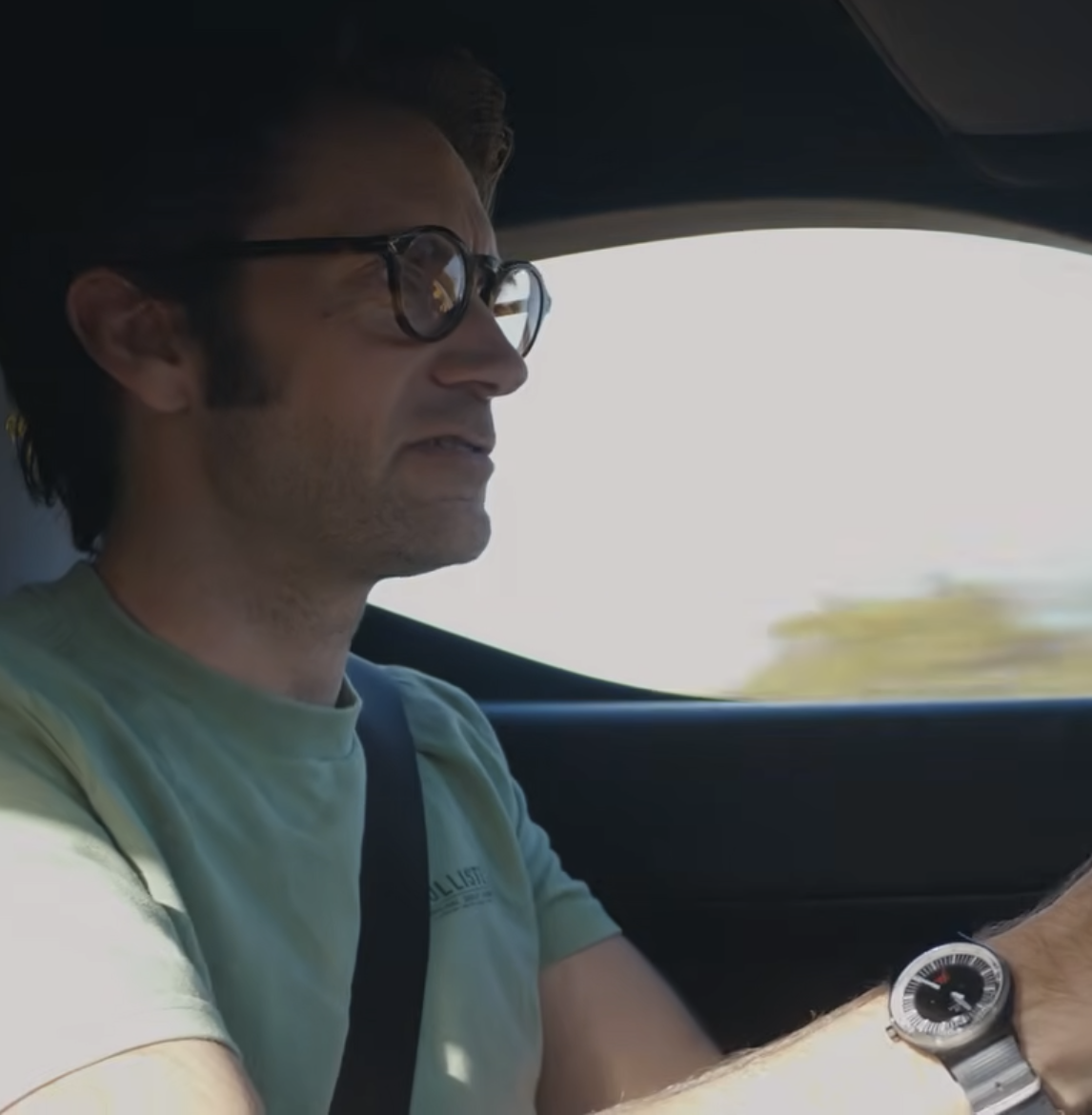
  • Henry Catchpole’s Autodromo Group B Pegasus Edition: The Watch Built for Someone Who Actually Competed in a Rally

    Henry Catchpole’s Autodromo Group B Pegasus Edition: The Watch Built for Someone Who Actually Competed in a Rally

    Motoring Journalist, Presenter & Rally Competitor

    Henry Catchpole’s Autodromo Group B Pegasus Edition: The Watch Built for Someone Who Actually Competed in a Rally

    Evo magazine’s former features editor, Hagerty’s The Driver’s Seat presenter, British Rally Championship competitor, and owner of an unfinished 1979 Ford Escort Mk2 rally car he hopes to finish one day — Henry Catchpole is wearing the Autodromo x Mobil 1 Group B Pegasus Edition. One of 70 ever made, sold out in under 24 hours, built to honour the most spectacularly dangerous era in rallying. It fits him with an exactness that most watch spots can only aspire to.

    31095923668?profile=RESIZE_710x

    Henry Catchpole — Autodromo x Mobil 1 Group B Pegasus Edition. Source: Hagerty / YouTube

    31095923653?profile=RESIZE_710xAutodromo x Mobil 1 Group B Pegasus Edition — 39mm, 70 pieces, sold out in under 24 hours

    Henry Catchpole grew up going to the Goodwood Festival of Speed with his parents — both serious car people — and watching MG Car Club meetings. He took the first issue of Evo magazine from a friend in 1998 while still at school, was immediately struck by its photography and depth, and spent the following years working toward being the kind of journalist who appeared in it. He studied at the University of St Andrews, spent three months on work experience at Evo in Northampton, got offered a staff job, and over the next decade rose to Features Editor. At 6’5″, he has always had to fold himself into the cars he was reviewing. He has never appeared bothered by this.

    He moved to DriveTribe and then founded The Intercooler, building a reputation as one of the sharper writers and most engaging presenters in British automotive media — known, as his own biography puts it, for describing the feeling of being behind the wheel rather than the engineering underneath it. In 2022, Hagerty brought him on as the anchor of a new show, The Driver’s Seat, which covers European sports cars for the Hagerty YouTube channel. His first episode reviewed a new car that wasn’t technically an Escort but very much was an Escort, set in Wales, with drone footage. It is a good template for how he thinks about cars.

    His personal collection is modest by the standards of the industry he covers: a slightly scruffy Renault Clio 182, and most of a 1979 Ford Escort Mk2 rally car that is currently without an engine. He has competed in the British Rally Championship — in a Suzuki Swift in 2008, and in the 2012 Jim Clark Rally. These are not the credentials of someone who attended a rally as a journalist and wrote about the atmosphere. He has been on the stages.

    “Group B represents a moment in motorsport where innovation and passion were at their highest. Those cars carved through mountain passes and forests at speeds that still seem impossible today.” — Bradley Price, Founder of Autodromo


    Timepiece

    Autodromo x Mobil 1 Group B Pegasus Edition — No. 1 of 70

    Group B ran from 1982 to 1986, and in that compressed window produced the most technically extreme, most visually spectacular, and most genuinely dangerous chapter in the history of rally racing. The cars — Audi Quattro, Lancia Delta S4, Peugeot 205 T16, Ford RS200, Metro 6R4 — were effectively prototypes with minimal safety requirements, built to homologation rules so loose they invited creative misuse at every level. Crowds lined the stages without barriers. Drivers averaged speeds through forest passes that would be illegal in most countries even today. Five drivers and several spectators were killed before the FIA banned the category after the 1986 season. It was, in retrospect, an era that should have ended sooner, and produced cars and moments that will be talked about as long as rallying exists.

    Autodromo was founded in 2011 by industrial designer Bradley Price, whose brief for the brand was precise: create watches that translate the aesthetic logic of motorsport hardware into wearable form — not as nostalgia, but as design. The Group B watch, first introduced in 2015 and now in its Series 2 form, has become the brand’s most recognized design: slim, bi-metallic architecture (titanium capsule inside a stainless steel chassis, mimicking how those rally cars mixed exotic materials with metal subframes), and a dial vocabulary drawn directly from vintage racing tachometers. The integrated bracelet arrived with Series 2, sharpening the silhouette considerably.

    The Mobil 1 Group B Pegasus Edition — the second collaboration between Autodromo and Mobil 1, following the sold-out Monoposto edition — takes the Group B Series 2 and gives it an all-over black DLC coating, a high-contrast matte black dial with white detailing, and the centrepiece: the Mobil 1 Pegasus — the red winged horse from Greek mythology, adapted as the brand’s motorsport symbol — applied in lume at 6 o’clock, so it glows in the dark. White details on the hands and minute track are also lumed; red accents on the seconds track match the Pegasus. The watch is 39mm across and 9.9mm thick. It sold all 70 examples in under 24 hours. Each caseback is engraved with its individual production number and the Mobil 1 logo.

    Case 39mm — titanium capsule in stainless steel chassis, black DLC
    Thickness 9.9mm
    Movement Miyota 9015 automatic — 42-hour power reserve
    Dial Matte black — vintage tachometer-inspired; Mobil 1 Pegasus in lume at 6 o’clock
    Crystal Domed sapphire — brushed titanium bezel
    Water Resistance 50 metres
    Bracelet Integrated DLC-coated stainless steel — butterfly deployant clasp
    Edition 70 pieces — sold out in under 24 hours
    Retail $995 at launch

    The Casting Is Exactly Right

    The watch was conceived to honour Group B. The person wearing it has driven on British rally stages, owns an incomplete Mk2 Escort that shares its spiritual DNA with the cars that preceded Group B, and spent over a decade writing about what driving actually feels like from inside the car. Henry Catchpole presenting for Hagerty — the media arm of the world’s largest enthusiast vehicle insurer, whose entire purpose is to keep car culture alive — is the correct person to be wearing this specific watch. There is no gap between the biography and the object.

    That alignment matters more here than it might with a more expensive piece. The Group B Pegasus Edition is a $995 watch limited to 70 examples, and it sold out in a day precisely because the people who wanted it were the people it was made for — not collectors chasing appreciation, but journalists, photographers, and enthusiasts who can name every car that competed in Group B, and for whom the Pegasus logo is not brand identity but motorsport memory. On Catchpole’s wrist at Hagerty, it is read instantly by everyone in the room who knows what it is. That is what a watch like this is for.

    And at Spot.Watch — that’s always worth noticing.

  • France’s Horological Revolution: The Birthplace of Watchmaking Reclaims Its Legacy

    France’s Horological Revolution: The Birthplace of Watchmaking Reclaims Its Legacy


    Horology — Around the World

    France’s Horological Revolution: The Birthplace of Watchmaking Reclaims Its Legacy

    Long before Switzerland became synonymous with fine timepieces, it was Paris that stood at the centre of the horological universe. Today, a new generation of French watchmakers is writing the next chapter — blending centuries of heritage with independent spirit and modern design.


    When collectors think of watchmaking capitals, Geneva and the Vallée de Joux come to mind first. But the story of mechanical timekeeping begins not in Switzerland — it begins in France. In the late 1770s, three of the most celebrated watchmakers in history — Ferdinand Berthoud, Jean-Antoine Lépine, and the young Abraham-Louis Breguet — kept workshops within steps of each other on the Place Dauphine, at the western tip of Paris’s Île de la Cité. Between them, they invented the thin-cased pocket watch, the tourbillon, and the self-winding movement. For a brief, extraordinary period, Paris was the undisputed heart of world horology.

    That golden age didn’t last. The revocation of the Edict of Nantes in 1685 drove Huguenot craftsmen — many of them watchmakers — across the border into Geneva and the Jura, essentially seeding the Swiss industry as we know it. The French Revolution further disrupted the luxury trades in Paris. And while brilliant individual makers like Louis Moinet and Louis Leroy carried the flame into the nineteenth century, the centre of gravity in watchmaking had permanently shifted south.

    But something has changed in the past two decades. A new wave of French brands — some heritage names revived, others born on Kickstarter — is quietly rebuilding a national watchmaking identity. They draw on a distinctly French sensibility: design-forward thinking, a couture-like attention to proportion and material, and a willingness to look beyond Switzerland for both movements and inspiration. For collectors willing to explore beyond the traditional Swiss establishment, France is one of the most interesting watch scenes in the world right now.

    This is the second instalment of our Horology — Around the World series. The first explored Canada’s quiet watchmaking renaissance. Now we turn to the country that started it all.

    Three brands stand out as defining the modern French watch landscape: Yema, Baltic, and Pequignet. Together they represent heritage revival, microbrand ambition, and genuine manufacture capability — three currents that make this scene so compelling.


    Yema

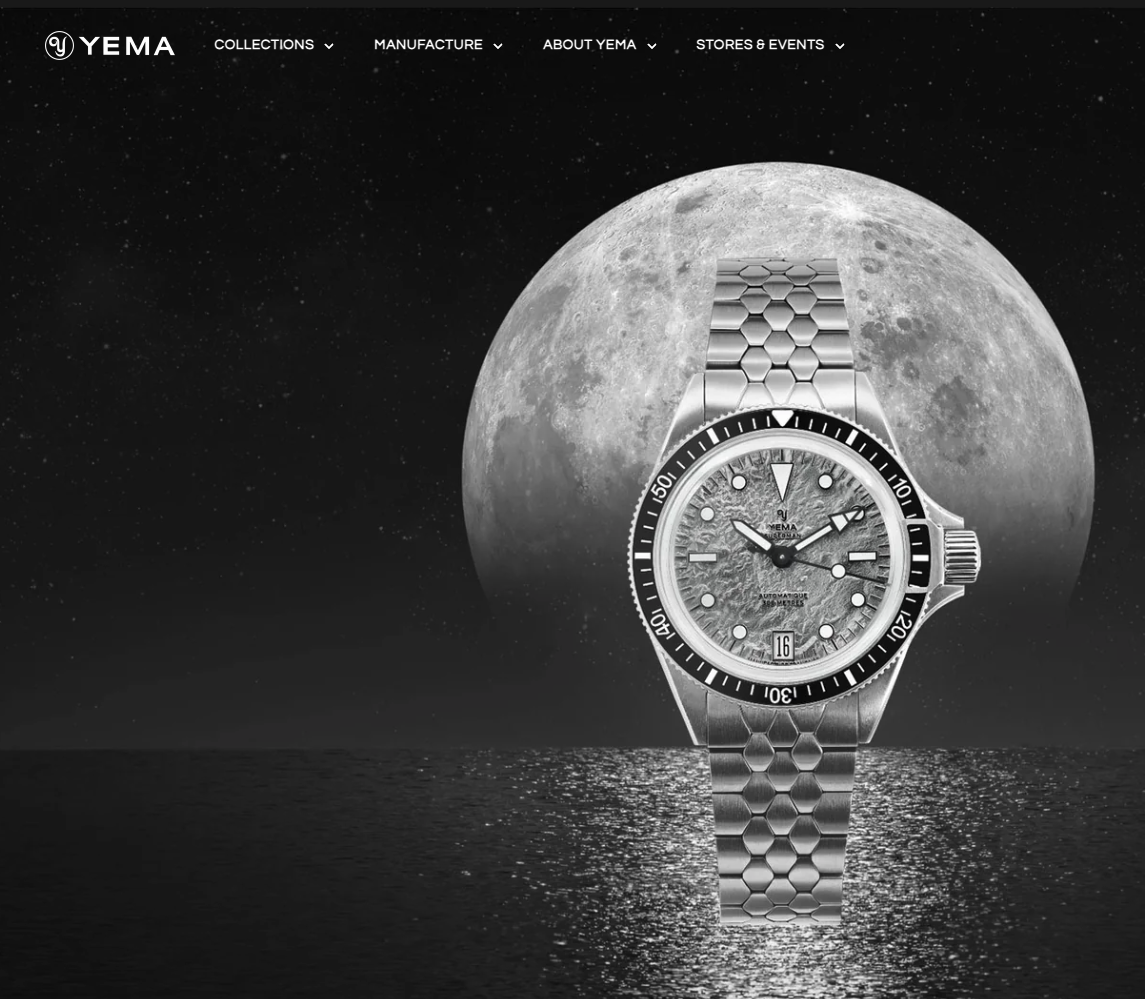
    Founded in 1948 by Henry Louis Belmont — a graduate of the prestigious National Watchmaking School of Besançon — Yema is perhaps France’s most historically significant independent watch brand. From its base in Morteau, in the Franche-Comté region near the Swiss border, Yema produced timepieces that didn’t just sell well — they went places. A Yema Superman was strapped to the wrist of French Air Force pilots in the 1960s. A Yema Flygraf rode into space aboard the first Franco-American orbital mission. And in 1987, explorer Nicolas Hulot wore a Yema across 800 kilometres of North Pole ice.

    31105265064?profile=RESIZE_400x

    The brand survived the quartz crisis — barely — passing through ownership by Matra and 

    then Seiko before returning to French hands in 2004. Today, managed by the Bôle family (a third-generation watchmaking lineage), Yema has done something rare among revived heritage brands: it h

    as developed genuine in-house movements. The CMM.10 automatic, CMM.20 micro-rotor, and CMM.30 tourbillon calibres are all designed, developed, and assembled in Morteau. That places Yema alongside Pequignet as one 

    of only two French brands producing proprietary mechanical movements — a distinction that even most mid-tier Swiss brands cannot claim.

    For collectors, the Superman Heritage diver and the Flygraf pilot’s chronograph remain the essential entry points. Both channel the brand’s mid-century DNA while meeting modern expectations for materials and finishing. Prices range from roughly €400 for quartz heritage pieces to €3,000 and above for in-house mechanical references — positioning Yema as one of the strongest value propositions in the entire watch industry.

    Baltic

    If Yema represents the long arc of French horological heritage, Baltic represents its future. Founded in 2016 by Etienne Malec — a Parisian whose father grew up along the coast of Poland’s Baltic Sea — the brand launched via Kickstarter in 2017 and has since become one of the most admired microbrands in the world, selling into more than 150 countries.

    Baltic’s appeal lies in a design philosophy that feels unmistakably French: vintage-inflected but never pastiche, understated but rich with considered details. The Aquascaphe diver, with its sector-dial options, domed crystals, and compact 39mm cases, has become a modern classic. The MR01 dress watch, featuring oversized applied Breguet numerals — a deliberate nod to France’s greatest historical watchmaker — manages to be both an homage and something entirely contemporary. Every watch is assembled, adjusted, and tested by hand in the brand’s atelier in Besançon, the spiritual home of French watchmaking.

    In a sign of growing ambition, Baltic recently debuted its Experiments line: a perpetual calendar developed in collaboration with the artisan watchmakers at Maclef (founded by Emmanuel Bouchet), powered by an ultra-thin Vaucher micro-rotor movement. It’s the kind of piece that would have been unimaginable from a French microbrand five years ago — and it signals that Baltic’s trajectory is still sharply ascending. Prices for the core collection run from around €420 to €2,100, with limited editions and the Experiments line reaching higher.

    Pequignet

    If any single brand makes the case that France can compete with Switzerland on pure watchmaking substance — not just design — it is Pequignet. Founded in 1973 by Émile Pequignet in Morteau, the company spent its first three decades producing well-made quartz and Swiss-movement watches. But in the early 2000s, under new ownership, Pequignet embarked on an audacious project: building a fully French mechanical movement from scratch.

    The result was the Calibre Royal, introduced around 2011 — the first high-end mechanical calibre designed and assembled entirely in France in modern memory. It’s no token effort: the Calibre Royal features a variable-inertia free-sprung balance (a hallmark of haute horlogerie regulation), a patented winding system, an innovative oversized barrel delivering 88 hours of power reserve, and traditional hand-finishing including perlage, Côtes de Genève, and colimaçonnage. The movement contains eight patented systems and is regulated to chronometric precision.

    Pequignet’s path has not been smooth — the brand weathered financial difficulties and receivership before stabilising — but today the Royale Paris collection, housing the Calibre Royal, retails from around €8,000 to €10,000 for steel references. That places it in direct competition with well-established Swiss manufacture brands, at prices that represent genuinely strong value given the level of in-house engineering. For collectors who appreciate movement-making as the ultimate expression of horological credibility, Pequignet is an essential name to know.


    More French Brands Worth Knowing

    Beyond the three featured brands, several other French watchmakers help define the country’s diverse horological landscape:

    Bell & Ross · Paris

    Founded in 1992 by Bruno Belamich and Carlos Rosillo, Bell & Ross is best known for its bold, instrument-panel-inspired designs rooted in military and aviation aesthetics. The iconic BR 03 square case has become one of the most recognisable silhouettes in modern watchmaking. Though production takes place in Switzerland (making them technically “Swiss Made”), the brand’s design DNA and headquarters are firmly Parisian.

    Herbelin · Charquemont, Franche-Comté

    A family-owned brand since its founding by Michel Herbelin, now run by the third generation. Herbelin designs, assembles, and tests all its watches in the Franche-Comté region near the Swiss border. The Cap Camarat collection — an integrated-bracelet sport-luxury design descended from 1960s aesthetics — has earned the brand wider attention among collectors who appreciate French-assembled quality at accessible price points.

    BRM (Bernard Richards Manufacture) · Magny-en-Vexin, Northern France

    One of the few independent French luxury watchmakers producing all components in-house — cases, dials, and movement guards machined from solid blocks and finished by hand. Founded in 2003 by motorsport enthusiast Bernard Richards, BRM produces roughly 2,000 watches per year, all infused with automotive DNA: tire-tread straps, piston pushers, dashboard dials. Their online Watch Configurator lets buyers personalise almost every element.

    Lip · Besançon

    In operation since 1867, Lip is one of France’s oldest surviving watch brands and producer of the world’s first electric watch. Its mid-century designs — particularly pieces from the 1960s and 1970s — have a dedicated vintage following. Today the brand offers a range of quartz and mechanical models that blend retro French style with everyday wearability.

    Dodane · Morteau

    A family-owned company tracing its roots to 1857, Dodane specialises in aviation chronographs engineered to military specifications. Dodane has supplied the French armed forces for decades, and its Type 21 flyback chronograph is among the most respected pilot’s watches produced outside Switzerland.

    BeauBleu · Paris

    Established in 2017 by designer Nicolas Ducoudert, BeauBleu is immediately recognisable for its signature circular-shaped hands that appear to float above the dial. Conceived, designed, and assembled in Paris, BeauBleu watches use Japanese Miyota automatics for the core line, while the limited-edition Seconde Française models contain a French-made movement by France Ébauche in collaboration with Switzerland’s Soprod — a rare example of genuine Franco-Swiss movement collaboration.

    Charlie Paris · Paris

    Founded in 2014, Charlie Parisassembles all its watches in France and has built a following for durable, elegant, and affordable timepieces that foreground French design and craftsmanship. Their focus on sustainability and direct-to-consumer sales reflects the values of a new generation of watch buyer.

    Depancel · France

    Launched via Kickstarter in 2018 by Clément Meynier — a former nuclear researcher at CERN turned watchmaker — Depancelbrings an inventive, science-minded approach to French watch design. The brand’s colourful, contemporary sport watches have found an audience among collectors looking for something off the beaten path.

    Fugue · Paris

    Founded in 2017, Fugue’s defining innovation is a patented modular case system: the watch splits into two halves via a ball-bearing mechanism, allowing owners to swap case tops and strap frames without tools. It’s a thoroughly modern concept wrapped in neo-classical design — and a distinctly French take on personalisation.


    “Unlike in Switzerland, everything the French invented was recognized by the king, so there was a real incentive to excel.”
    — Karl-Friedrich Scheufele, co-president of Chopard

    A Note on “French-Founded” vs. “French-Made”

    Any honest survey of French watchmaking must acknowledge a persistent tension. Several of the most famous names associated with France — Cartier, Hermès, Louis Vuitton, Breguet, F.P. Journe — are French-founded or French-owned but manufacture their watches in Switzerland under the “Swiss Made” designation. Breguet itself, founded by Abraham-Louis Breguet in Paris in 1775, moved production to the Vallée de Joux in 1976 and is now a subsidiary of the Swatch Group. Cartier, though headquartered in Paris and perhaps the most globally recognised French luxury name in horology, produces through the Richemont group’s Swiss facilities.

    This distinction matters. The brands featured in this article — Yema, Baltic, Pequignet, Herbelin, BRM, Lip, Dodane, BeauBleu, and others — are not simply French by passport. They design, assemble, and in some cases build movements on French soil. They represent something more specific than French luxury branding: they represent French-made watchmaking. An estimated 25 percent of the Swiss watch industry’s workforce actually consists of French nationals who cross the border daily to work in Swiss ateliers. The knowledge and skill exist in abundance. What these brands are proving is that the ambition to build at home does, too.


    Why French Brands Are Worth Your Attention

    What makes the current French watch scene so compelling is the combination of deep historical roots and fresh creative energy. These are not brands borrowing a heritage narrative — France genuinely invented many of the horological principles that the Swiss industry later industrialised. The tourbillon, the thin-cased watch, the self-winding mechanism, the shock-protection device: all French innovations. That history gives today’s French makers a foundation of legitimacy that few other countries outside Switzerland can claim.

    At the same time, the modern French approach tends to be less reverential and more experimental than its Swiss counterpart. Brands like Baltic and Fugue embrace crowdfunding and direct-to-consumer models. Depancel brings a scientist’s curiosity to watch design. BeauBleu treats the watch hand — usually an afterthought — as the defining design element. And Pequignet and Yema have each invested years in developing genuinely proprietary French movements, pushing against the assumption that serious calibre-making must happen in Switzerland.

    For collectors, the practical appeal is strong. Many of these brands offer mechanical watches with considered design, solid build quality, and assembly in historic French ateliers — often at prices significantly below comparably specified Swiss alternatives. In an industry where heritage is currency, France holds more of it than almost anyone. The difference is that, for now, the rest of the world is only beginning to notice.

    For collectors exploring watches from around the world, France is more than a rediscovery — it is a homecoming. The country that gave the world the tools of modern timekeeping is once again building watches worthy of that legacy. And for those paying attention, the best may be yet to come.


    Spot.Watch — Noticing what others overlook