Author: Josh

  • Canadian Watch Brands Worth Knowing | Spot.Watch

    Canadian Watch Brands Worth Knowing | Spot.Watch


    Horology — Around the World

    Canada’s Quiet Watchmaking Renaissance

    Switzerland, Germany, and Japan dominate the conversation. But over the past two decades, a small and energetic group of Canadian brands has quietly built a reputation for thoughtful design, rugged tool watches, and strong enthusiast communities. For collectors willing to look beyond the traditional watchmaking centres, Canada offers several compelling manufacturers worth noticing.

    Three Canadian brands stand out: Halios, Marathon, and RZE. These companies represent different corners of the Canadian watch scene, from military heritage to modern microbrand innovation.


    31096285268?profile=RESIZE_710x

    Marathon Watch Company

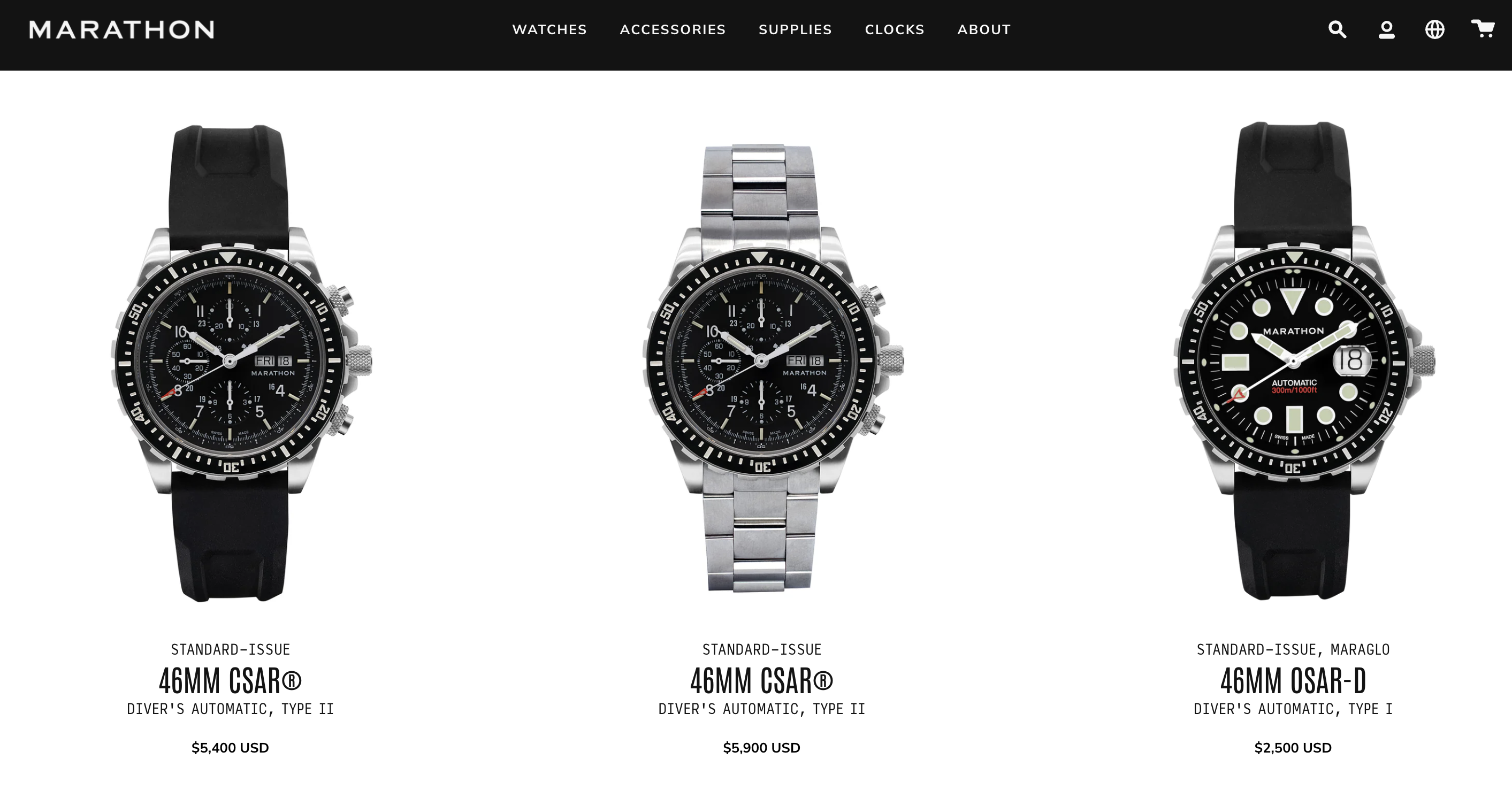
    Marathon Watch Company, based in Canada but manufacturing largely in Switzerland, is perhaps the most historically significant. Founded in 1939, Marathon has supplied watches to Allied forces since World War II and continues to produce timepieces built to U.S. and Canadian military specifications. Models like the GSAR (Government Search and Rescue) and Navigator are known for their durability, tritium gas-tube illumination, and to

    ol-watch practicality. Marathon occupies a rare position among micro-to-mid-size brands: it produces watches genuinely designed for professional use.

    Halios

    At the enthusiast end of the spectrum is Halios, a Vancouver-based microbrand founded by Jason Lim. Halios became popular in the early 2010s among collectors seeking high-quality dive watches without luxury pricing. Watches su

    ch as the Halios Seaforth and Fairwind are admired for their clean design, careful proportions, and small-batch production. Halios releases often sell out quickly, reinforcing the brand’s cult following within the watch community.

    RZE

    Another newer Canadian entrant is RZE, which focuses on modern tool watches made with lightweight titanium. Based in Canada but operating globally, RZE emphasises durability and adventure-ready design. Their watches often feature scratch-resistant coatings and vibrant colours aimed at outdoor enthusiasts, making them appealing to a younger generation of collectors.


    More Canadian Brands Worth Knowing

    Beyond these three, several additional Canadian brands help round out the country’s watchmaking landscape:

    Momentum Watches Vancouver
    Known for rugged dive and field watches designed for the outdoors. Their collections include solar-powered and automatic models built for demanding environments.
    VanBanner Watches Vancouver
    A one-person microbrand producing 100% original-design tool and sport watches in limited runs, with a strong focus on custom components and finishing quality at accessible prices.
    Ferro & Company Vancouver
    Founded in 2014 by brothers Ary and Bob, Ferro specialises in vintage-inspired watches drawing from automotive racing, aviation, and mid-century Art Deco design. Their first watch was inspired by a Porsche tachometer.
    Héron Watch Co. Montréal
    A Montréal-based independent brand producing mechanical dive and GMT watches with a design language rooted in 20th-century aesthetics. Their Marinor diver and Mirabel GMT have drawn attention from enthusiast press for build quality well above their price point.
    Wilk Watchworks British Columbia
    An enthusiast-driven microbrand offering limited runs of robust sports watches, aimed at collectors who value function-first design.
     
    31096286464?profile=RESIZE_710x

    Why Canadian Brands Are Worth Your Attention

    What makes Canadian watch brands particularly interesting is their design philosophy. Without centuries-old watchmaking traditions to protect, these companies often emphasise practicality, modern materials, and enthusiast feedback. Many operate as small microbrands, releasing limited batches directly to collectors rather than through traditional retail networks.

    In a global watch industry often defined by heritage and prestige, Canada represents something different: independent experimentation and community-driven design. While the country may never rival Switzerland in production volume, its growing roster of watchmakers demonstrates that great watchmaking ideas can emerge far from the traditional centres of horology.

    For collectors exploring watches from around the world, Canada is a reminder that innovation in horology often begins with small, passionate makers — and a willingness to do things differently.

    Spot.Watch — Noticing what others overlook

  • Compelling Watchmakers of Norway

    Compelling Watchmakers of Norway

    Horology — Around the World

    Norway: Fjords, Nature, and a Handful of Compelling Watchmakers

    Norway has no centuries-old horological tradition. What it has instead is a small, young group of brands that channel the country’s dramatic landscapes into watches with real character—and growing international followings.

    This is the third instalment of our Horology — Around the World series, following earlier features on Canada and France. Where those countries offer either deep heritage or a burgeoning renaissance, Norway is something different entirely: a scene that barely existed a decade ago, now producing some of the most visually striking microbrands in Scandinavia.

    The Norwegian watch landscape is small—perhaps four active brands of note—and none manufactures movements. Every Norwegian-designed watch relies on Swiss or Japanese calibres. What sets these brands apart is not mechanical innovation but design conviction: a shared instinct to embed the textures, colours, and scale of Norway’s extraordinary natural environment directly into the timepiece. Glacial dial patterns, volcanic basalt, 3,300-year-old bog wood, salmon leather straps—the materials read like a geological field guide. It’s a distinctly Nordic approach, and it gives Norwegian watches an identity that’s immediately recognisable.

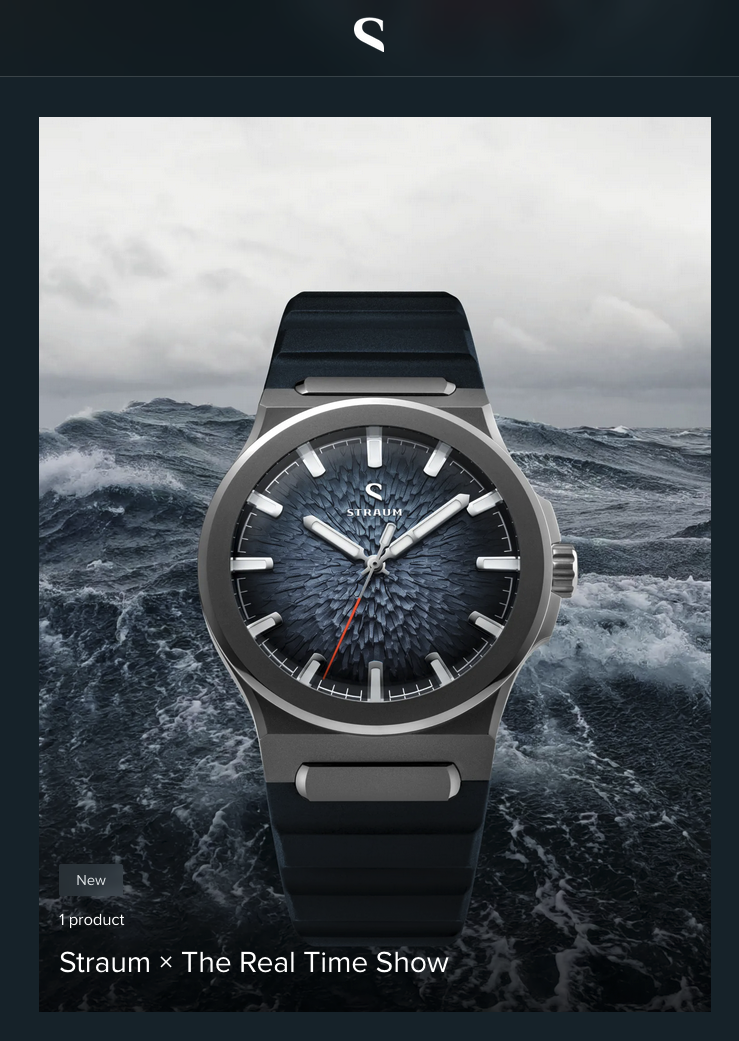
    Co-founded in 2021 by industrial designers Lasse Roxrud Farstad and Øystein Helle Husby, Straum is the most critically acclaimed Norwegian watch brand to date. The founders—neither of whom came from the watch world—spent three years refining their first design before launching without a Kickstarter campaign, funding the venture themselves. Their debut Opphav collection features three-dimensional stamped dials inspired by ripples on a Norwegian lake, with multiple layers of paint and lacquer creating a remarkable sense of depth. The limited-edition Rastarkalv goes further: its dials are crafted from 3,300-year-old root wood extracted from the Rastarkalv plains, each one unique, set inside damascus steel cases. More recently, the Jan Mayen collection draws from the volcanic landscapes of Norway’s remote Arctic island, including a Basalt edition with dials cut from actual volcanic rock. All models house Swiss Sellita SW200-1 movements. Straum is designed in Norway, Swiss Made, and limited in production—typically 100 to 250 pieces per reference.


    31122297292?profile=RESIZE_710x

    Established in 2016 by Øyvind VonDoren Asbjørnsen—whose passion for watches began at age twelve when he inherited his great-grandfather’s Swiss timepiece—Von Doren takes its design inspiration from the Art Nouveau architecture and fjord landscapes surrounding the coastal town of Ålesund. The brand’s collections are deeply rooted in Norwegian culture: the Tandberg pays tribute to Norwegian engineer and industrial pioneer Vebjørn Tandberg; the Runde draws from the bird cliffs of Runde island; and the Il Tempo Gigante is inspired by the legendary 1975 Norwegian stop-motion film The Pinchcliffe Grand Prix. Von Doren also serves as Official Timekeeper for Norway Chess, one of the world’s strongest chess tournaments, and counts chess Grandmaster Aryan Tari among its brand ambassadors. All watches are designed in Norway and produced in Switzerland with Swiss movements, in very limited editions. The recent URÆD GMT, limited to 100 pieces, represents the brand’s most ambitious model yet, priced around $1,690.


    31122297869?profile=RESIZE_710x

    Berg · Bergen

    Visit Website →

    Founded by designer Paal Friele Grung, Berg (Norwegian for “mountain”) offers minimalist fashion watches that take their cues directly from the Norwegian landscape. The brand uses Swiss Ronda movements, sapphire crystal glass, and—distinctively—salmon leather straps sourced from an Icelandic tannery, which are both more durable and more textured than conventional leather. Berg occupies a more accessible, fashion-forward space than Straum or Von Doren, but shares the same commitment to Norwegian identity in design.


    31122298301?profile=RESIZE_710x

    Bruvik Fine Timepieces

    Visit Website →

    Established in 2009 by Rune Bruvik—who had dreamed of designing watches since 1992—Bruvik produces Swiss-made sport-luxury timepieces themed around Norwegian geography. Collections named Svalbard, Pulpit Rock, Arctic Ocean, and Fjord each channel a specific aspect of the country’s natural environment. The Fjord line is perhaps the most remarkable: it incorporates authentic fjord water collected from the top of the Langfoss waterfall, sealed into the watch via a proprietary Hydracapsule module. It’s a poetic, slightly eccentric gesture that feels very Norwegian—embedding a literal piece of nature into the timepiece.


    31122298681?profile=RESIZE_710x

    Norway’s watch scene is young, compact, and entirely reliant on Swiss movements for its mechanical hearts. But what it lacks in manufacturing infrastructure, it compensates for with an intensity of design identity that few other countries can match. These brands don’t compete on complications or calibre pedigree—they compete on story, material, and a sense of place. For collectors drawn to watches that carry genuine cultural meaning, Norway is a small scene well worth watching.

    Spot.Watch — Noticing what others overlook
  • Watch Drop Wednesday: June 17, 2026


    Watch Drop Wednesday

    Watch Drop Wednesday: June 17, 2026

    This week’s releases run from a robot with a flying tourbillon for a brain to a final farewell in deep blue — six new drops worth knowing about.


    MB&F HM12 “The Guardian” with its L’Épée-built robot companion

    MB&F HM12 “The Guardian” — this week’s standout drop, paired with a 38cm robotic companion built by L’Épée. Image: Monochrome Watches.

    Every Wednesday, spot.watch rounds up the new releases and announcements that moved the watch community this week. Here’s what dropped.

    Mido

    Ocean Star 39 “Abyss Blue”

    Mido refreshes its compact 39mm diver with a deep abyss-blue dial, carrying over the embossed wave-textured surface and matching bezel insert that have defined the line since launch. Power comes from the in-house Calibre 72 (built on the ETA A31.111 base), a slimmer automatic with a Nivachron balance spring and a generous 72-hour power reserve. It’s an incremental colorway update rather than a redesign — but it’s a flattering one, and at roughly €1,320 it keeps the Ocean Star 39 firmly in sleeper-hit territory for the affordable dive segment.


    Longines

    Master Collection — 2026 Redesign

    Longines takes its flagship dress line back to the drawing board, relaunching the Master Collection across four sizes — 41mm, 39mm, 34mm and 30mm — with around twenty new references in total. The signature barleycorn dial returns sharper than before, with applied (rather than printed) numerals and a new leaf-shaped handset, while the larger sizes add a blue dial option and an Eastern Arabic numeral variant. The 34mm, 39mm and 41mm models run on the automatic Calibre L888.5 with a 72-hour reserve; the 30mm uses the L592.5. It’s a generational update for one of the brand’s cornerstone collections, and it lands at the price point that’s long made Longines a value benchmark in Swiss watchmaking.


    Urwerk

    UR-120 “Blue Planet”

    Urwerk closes out its UR-120 trilogy with a fittingly theatrical send-off. The Blue Planet trades the line’s earlier monochrome and blackened treatments for a deep, gold-flecked blue across its titanium-and-steel case, with the satellite hour mechanism’s signature V-shaped “Vulcan salute” display picked out in 24-karat gold PVD. Inside is the self-winding Calibre UR-20.01, running at 28,800vph with a 48-hour reserve. Limited to just 20 pieces at CHF 115,000 before tax, it’s the final word on a model that’s become one of independent watchmaking’s more cinematic creations since debuting in 2022.


    MB&F

    HM12 “The Guardian”

    The twelfth Horological Machine answers a question only MB&F would ask: what if a robot’s head were a watch? The HM12, built in titanium, packs a flying tourbillon, jumping hours and trailing minutes arranged to read as a robotic face — complete with a mechanical “face shield” that slides across the dial via a side crown. Detach it from its strap and it clips directly onto The Guardian, a 38cm mechanical companion developed with longtime collaborator L’Épée, complete with a chest-mounted thermometer and a UV torch hidden in one arm. Offered in blue, green and purple editions of just 12 pieces each, at CHF 280,000, it’s less a watch with an accessory than a single, nearly 1,500-component sculpture — and one of the more genuinely unhinged releases independent watchmaking has produced this year.


    Raymond Weil

    A.R.T. Collection

    Fifty years into making accessible Swiss watches, Raymond Weil finally enters the integrated-bracelet conversation with A.R.T. — standing for Art, Refinement and Timekeeping. The sculpted-bezel case flows into a new H-link bracelet with chamfered center links, available in steel or two-tone gold-PVD finishes with graphite, sage-grey or blue dials. The line splits into a mechanical Ref. 1000 family (five references, automatic movement, starting around CHF 1,795) and a quartz Ref. 1250 family that goes even thinner at 7.5mm. It won’t reinvent the now-crowded integrated-sports-watch category, but it does undercut most of the competition on price while marking the brand’s 50th anniversary with its first watch in the genre.


    Blancpain

    Fifty Fathoms Tech (Date)

    Blancpain makes a permanent commitment to one of its most specialized tools. The Fifty Fathoms Tech Ref. 5019A carries over the patented three-hour bezel and dedicated three-hour hand first developed for the 2023 Tech Gombessa limited edition — built for closed-circuit rebreather divers who routinely stay submerged far longer than a standard 60-minute bezel can track — and now adds a date display along with a tool-free, central-lug strap-change system. The 47mm Grade 23 titanium case houses the manufacture Calibre 13P5A, a triple-barrel automatic with a five-day power reserve. At CHF 20,500 and, crucially, no longer limited, it signals Blancpain is betting the Tech concept has earned a permanent place in the Fifty Fathoms family rather than remaining a one-off showpiece.


    spot.watch  ·  Watch Drop Wednesday  ·  June 17, 2026

  • In 1992: Patek Philippe Released the Ref. 3974R

    In 1992: Patek Philippe Released the Ref. 3974R


    This Week in Watch History

    In 1992: Patek Philippe Released the Ref. 3974R

    A masterclass in haute horlogerie, this pink gold grand complication remains a defining symbol of horological prestige at auction.


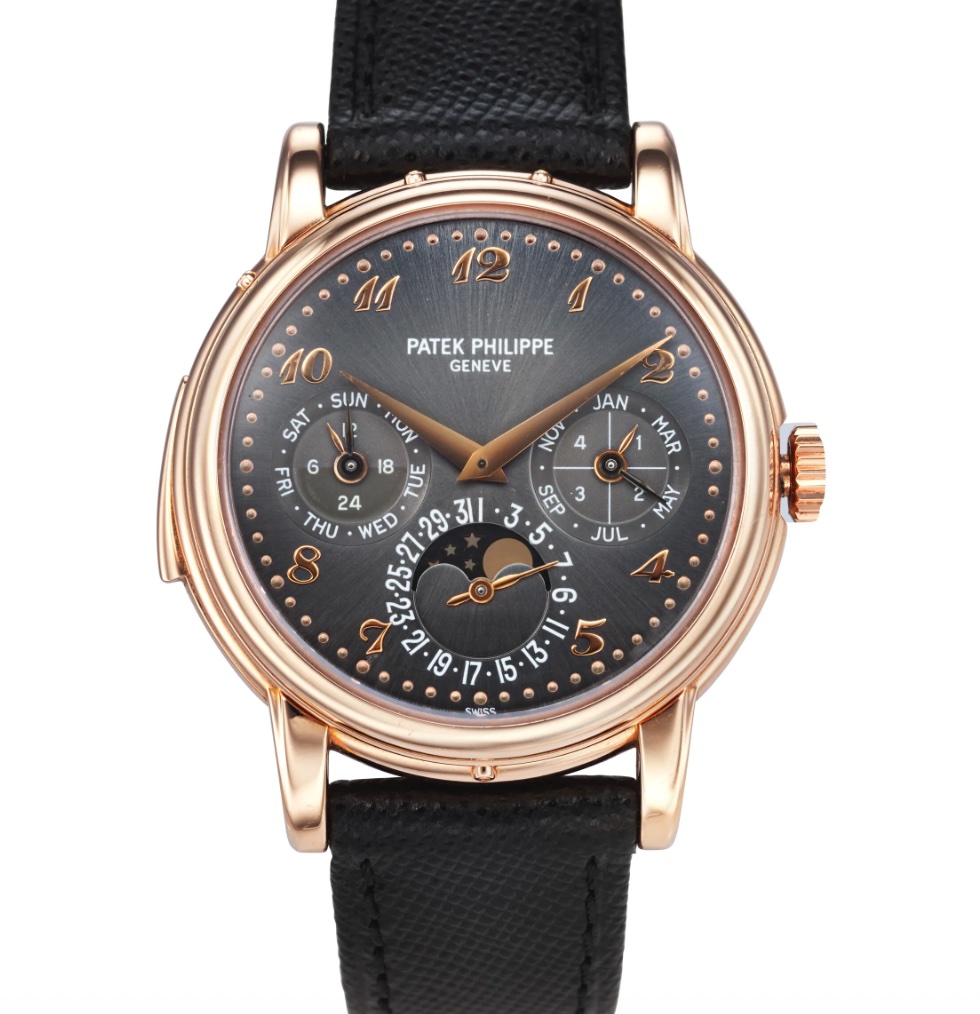
    Patek Philippe Ref. 3974R: pink gold grand complication, 1992

    Patek Philippe Ref. 3974R: pink gold grand complication, 1992. One of approximately 20 examples in this metal.

    In the early 1990s, the mechanical watchmaking renaissance was shifting from a quiet recovery into a triumphant roar. Following the devastation of the Quartz Crisis, Swiss maisons were no longer just trying to survive; they were eager to prove that traditional watchmaking could achieve heights no microchip ever could. At the absolute vanguard of this movement was Patek Philippe. After debuting the groundbreaking Reference 3974 in 1989 for its 150th anniversary, Patek Philippe spent the early 1990s delivering these mechanical marvels to elite collectors worldwide. Among these triumphs was the Reference 3974, a watch that would redefine grand complications and, in its pink gold iteration, become one of the most coveted timepieces of all time.

    The Reference 3974 was, at its debut, the most complicated wristwatch in the world. At the time, no other wristwatch had successfully integrated a self-winding minute repeater with a perpetual calendar, making the Ref. 3974 a landmark achievement in micro-engineering.

    But not all 3974s were created equal. While Patek Philippe produced fewer than 160 examples of the reference over its production run, only about 20 were cased in warm 18k pink gold (designated by the “R”). This specific piece, manufactured in 1992, represents one of the finest examples of bespoke watchmaking from the era. It features a specially ordered, believed to be one of a kind, slate-grey dial adorned with exquisite applied Breguet numerals.

    Its case, hand-sculpted by the legendary master case maker Jean-Pierre Hagmann, further elevates its monumental provenance. Hagmann was renowned for creating cases that allowed a minute repeater’s chimes to resonate with unparalleled clarity and warmth, and his work on this pink gold housing exemplified his mastery. Hagmann’s cases were celebrated for their acoustic perfection, a rarity in wristwatch repeaters.

    “No other wristwatch had successfully integrated a self-winding minute repeater with a perpetual calendar, making the Ref. 3974 a landmark achievement in micro-engineering.”

    Watch Specifications

    Patek Philippe Ref. 3974R

    Brand Patek Philippe
    Model Ref. 3974R Minute Repeating Perpetual Calendar
    Year 1992
    Case Material 18k pink gold (crafted by Jean-Pierre Hagmann)
    Dial Specially ordered slate-grey with applied pink gold Breguet numerals
    Movement Automatic
    Complications Minute repeater, perpetual calendar, moon phases, 24-hour indicator, leap year display, day/night indication
    Rarity One of approximately 20 pink gold examples; unique dial configuration

    Legacy

    Given its rarity and Hagmann’s unparalleled craftsmanship, it was no surprise when this Ref. 3974R took center stage at Christie’s “Important Watches: Stories in Time” auction in June 2025. Stepping into the spotlight as the undisputed top lot of the sale, this masterpiece commanded a staggering price of $1,197,000.

    In a market where trends can be fickle, this result was a powerful reminder of a fundamental truth: grand-complication Patek Philippes remain the ultimate gold standard of horological collecting. The combination of Hagmann’s legendary case construction, the rare pink gold metal, and the highly coveted slate-grey Breguet dial elevates this piece from a mere watch to a historic work of art.

    Looking back today, on June 9, 2026, as a new auction season begins in New York, the triumph of the Ref. 3974R resonates deeply. It stands as a monument to an era when Patek Philippe redefined what was possible in mechanical watchmaking. Decades after it left the workshop, the Ref. 3974R’s melody endures, a reminder that exceptional craftsmanship transcends time.


    spot.watch  ·  This Week in Watch History  ·  June 9, 2026

  • Watch Brands of the United Kingdom

    Horology — Around the World

    Britain invented modern watchmaking and then watched it slip away. Now, from a one-man workshop on the Isle of Man to a manufacturing floor in Henley-on-Thames to a converted carpet factory in Glasgow, a generation of makers is quietly winning it back.


    This is the fifth instalment of our Horology — Around the World series, following features on Canada, France, Norway, and the United States. Of all the countries in this series, the United Kingdom carries the heaviest horological legacy — and arguably the most poignant story of loss and recovery.

    The British Isles were once the undisputed centre of global horology. In 1800, London alone produced more than half the world’s timepieces. The inventions that made modern precision timekeeping possible — John Harrison’s marine chronometer, Thomas Mudge’s lever escapement, John Arnold’s detent escapement, George Daniels’ co-axial escapement — were British. Rolex itself was founded in London in 1905, before relocating to Geneva. The Royal Observatory at Greenwich defined the world’s prime meridian. Time, in every practical sense, was a British invention.

    Then, across the 20th century, it was gone. Two world wars diverted engineering capacity. Switzerland industrialised watchmaking with a precision that Britain could not match at scale. Japan’s quartz revolution in the 1970s delivered the killing blow to what remained. The factories emptied. The apprenticeships ended. By 1980, British watchmaking had collapsed to a fraction of its former self — a few specialist firms, some military contract work, and a handful of restorers.

    What exists today is more than a revival. It is, in places, a genuine resurrection of craft — and in others, something entirely new: a British-designed watch culture that has found its own voice, its own aesthetic, and its own reasons to exist. From the summit of independent haute horlogerie to the most accessible microbrands, the British watch scene in 2026 is more varied, more ambitious, and more alive than at any point in the past half-century.


    The Standard Bearer: Roger W. Smith OBE

    Roger W. Smith OBE · Isle of Man

    There is no figure in contemporary British horology who occupies the position Roger Smith does. Working from a purpose-built workshop in the Manx countryside — inheritor of his mentor George Daniels’ entire workshop collection, his tools, and his philosophy — Smith produces fewer than eighteen watches a year, each one made entirely by hand from sketch to finished movement, using what he and Daniels called the Daniels Method. He is the only watchmaker in the world who works this way. The watches are made to order. Some pieces take more than two years to build. The waiting list is accordingly long, and the prices reflect it — but the objects themselves exist in a different category from almost everything else called a wristwatch.

    Smith’s story begins in Bolton, Lancashire, where as a young man he taught himself to make a pocket watch from George Daniels’ published book Watchmaking, then carried the finished piece to the Isle of Man for Daniels to inspect. Daniels rejected it — the watch “looked handmade, not created” — and Smith went home and spent five years remaking it until it earned Daniels’ approval. That second pocket watch, with its one-minute tourbillon and perpetual calendar, sold at auction in 2023 for $4.9 million. The lesson of those five years — that perfection is the only acceptable standard — is visible in every Roger W. Smith watch produced since. His movements are finished in the classical English tradition: gilded three-quarter plates, hand-engraved baroque scrollwork, blued screws, gold chatons, and the Isle of Man triskelion engraved on the balance cock. His ongoing refinement of the co-axial escapement has produced service intervals far beyond industry norms. In 2018, Smith received an OBE for outstanding services to watchmaking. When Daniels died in 2011, he left his entire workshop to Smith. The inheritance was practical as well as symbolic: Smith is the direct continuation of a tradition of English watchmaking that stretches back to Tompion and Graham.


    The Manufacturers: Industrial British Watchmaking Returns

    Bremont Watch Company · Henley-on-Thames, Oxfordshire

    Founded in 2002 by brothers Nick and Giles English — their surname authentic, their passion for aviation genuine, their ambition unambiguous — Bremont set out to accomplish something that had not been done at commercial scale in Britain for decades: make watches on British soil. Their father, a pilot and watch collector who died in a plane crash, was the direct inspiration. Two decades of investment later, Bremont has come closer than any other brand to fulfilling that ambition. Its Manufacturing & Technology Centre in Henley-on-Thames machines cases in-house, and in 2022 the company released the Longitude — a limited-edition dual-time watch housing its first entirely proprietary calibre, the ENG300, made in Britain. The movement incorporates a silicon escapement, a 65-hour power reserve, and an instantaneous digital date display; its caseback contains brass melted from the actual prime meridian line at the Royal Observatory in Greenwich. It is the first serially produced British watch movement in modern horological memory. Bremont’s collections draw on a deep well of British identity: military aviation (the MB series), WWII Spitfire heritage (the Supermarine), the Ministry of Defence (officially licensed military timepieces). In 2023, Bill Ackman’s private equity fund took a majority stake in the company, and the English brothers stepped away from the board in 2025. Under new CEO Davide Cerrato, the brand’s entry-level Terra Nova field watch has become its signature accessible piece. Whatever the ownership chapter, the Longitude’s ENG300 movement stands as a landmark in British industrial watchmaking.

    Garrick Watchmakers · Norfolk, England

    Founded by David Brailsford and Simon Michlmayr, Garrick manufactures fine mechanical watches in its own dedicated facility in Norfolk, placing a deliberate emphasis on hand craftsmanship and individual character over the uniformity of automated production. The brand occupies a compelling mid-tier between the one-man artisan and the commercial manufacturer, producing open-dial and skeletonised watches that expose the movement as the primary design statement. In 2025, Garrick was named a finalist at the Grand Prix d’Horlogerie de Genève (GPHG) for its S3 deadbeat seconds — one of the very few British brands to reach that level of international recognition for movement innovation. Garrick’s watches are not inexpensive, but for collectors who want genuine British manufacture with a horological rationale behind every design decision, there is little else at this price tier that competes on domestic ground.


    “I like to think that we are operating at the level the British watch industry would have reached had its Golden Age never been interrupted.”
    — Roger W. Smith OBE

    The Microbrands: A Distinct British Voice

    British microbrands have developed something that distinguishes them from their American and Scandinavian counterparts: a recognisably British design sensibility. It tends towards restraint, historical reference, and colour used with intention rather than shock. The brands below are among the most distinctive expressions of that voice.

    Christopher Ward · Maidenhead, Berkshire (designed in England; manufactured in Switzerland)

    Christopher Ward — founded in 2004 during a brainstorming session on the River Thames by Mike France, Christopher Ward, and Peter Ellis — is widely credited with pioneering the direct-to-consumer watch model in Britain, and arguably worldwide. It was the first exclusively online luxury watch retailer, eliminating traditional retail margins at a time when selling expensive mechanical watches on the internet was considered commercially reckless. Twenty years later, the model has become industry-standard, and Christopher Ward has grown into one of Britain’s most commercially significant watch brands, reporting £30.5 million in revenue in the fiscal year ending March 2024. In 2014, Christopher Ward merged with Swiss manufacturing partner Synergies Horlogères and released its first in-house movement, the Calibre SH21 — a five-day, COSC-certified automatic developed by master watchmaker Johannes Jahnke. It was described at the time as the most important development by a British watch brand in over fifty years. The flagship C1 Bel Canto, a striking musical-themed complication, and The Twelve sport collection exemplify the brand’s current ambitions. Watches are designed in England and made in Switzerland, but the design identity — measured, confident, without Swiss pastiche — is unmistakably British.

    anOrdain · Glasgow, Scotland

    Founded in 2015 by designer Lewis Heath in Glasgow — the brand’s name taken from Loch an Ordain, a remote lochan in the Scottish Highlands — anOrdain has built an international reputation on a single, deeply demanding craft: vitreous enamel dials, fired in-house using the grand feu technique. The process begins with a hand-cut copper disc coated in ground enamel powder, then fired at high temperature in a kiln; the work requires mastering more than 4,000 hours of technique, and the workshop produces only around eight dials per week. The dial typography, designed in-house, is inspired by vintage British Ordnance Survey maps. AnOrdain’s fumé innovation — a smoked gradient effect across the enamel surface, a first in the industry — became the brand’s signature and, for many collectors, the defining image of the current British watch revival. The waiting list has stretched into 2028. In recent years anOrdain has expanded by acquiring fellow Scottish brand Paulin Watches, and by moving into a larger Glasgow facility. The Model 1, Model 2, and Model 3 Method form the current core collection. Movements are Swiss (Sellita), but the soul of every anOrdain is in Glasgow, on a copper disc, in a kiln.

    Fears Watch Company · Bristol, England

    Fears is the oldest active watch name in Britain. Founded in Bristol in 1846 by Edwin Fear — when the city’s Redcliff Street was alive with the industry of Victorian watchmaking — the company traded continuously until the quartz crisis forced it to close in 1976. In 2016, Nicholas Bowman-Scargill, the great-great-great-grandson of the founder, relaunched the brand at SalonQP and returned Fears to its home city. The decision to revive a 170-year-old family business rather than invent a new one says something about how seriously the British watch scene takes its own history. Fears’ flagship Brunswick collection is built around a cushion-shaped case directly inspired by the 1920s Fears wristwatches that first replaced the firm’s pocket watch heritage. Each watch is designed and built in the UK. Bowman-Scargill also co-founded the Alliance of British Watch & Clock Makers in 2020, a trade body with more than 70 members that funds horological education and promotes British watchmaking internationally. The Fears x Christopher Ward Alliance 01 collaboration — a limited-edition jump-hour in a Fears cushion case, powered by a Christopher Ward movement, with all profits going to the Alliance — sold out in hours. For a brand producing watches at modest volumes from a boutique in Bristol’s Clifton Arcade, Fears punches considerably above its weight in horological significance.

    Farer · Ascot, Berkshire (designed in London; made in Switzerland)

    Founded in 2015 by Stuart Finlayson, Jono Holt, Ben Lewin, and Paul Sweetenham, Farer takes its name from the compound of “seafarer” and “wayfarer” and its design vocabulary from mid-century British exploration. Watch names reference George Mallory, Amy Johnson, John Cobb, and the ships HMS Beagle and HMS Endurance. The aesthetic proposition is unusual in British watchmaking: Farer uses colour more boldly than almost any of its contemporaries, with richly pigmented dials — warm lacquer tones, deep compressor blues, vivid sunray finishes — that would sit at home on a 1960s Italian sports watch. The brand is Swiss-made (produced by Roventa Henex in Bielle), with Sellita and Dubois-Dépraz calibres powering its GMT and chronograph collections respectively. At its price point, Farer consistently delivers specification and finishing that compares well with watches costing considerably more. It is one of the clearest examples of British design culture expressing itself through Swiss manufacture — and doing so with genuine confidence.

    Other British brands worth knowing include Anoma (an ambitious newcomer generating significant collector interest), Schofield (Brighton-based tool watches with a purist, no-embellishment philosophy), Studio Underd0g (playful, affordable, fiercely independent), Spinnaker (nautical-themed dive watches at accessible entry prices), and William Wood (watches incorporating reclaimed fire engine components, with a portion of sales donated to firefighting charities).


    Why Britain’s Watchmaking Scene Matters

    No country in this series has a deeper claim on the history of timekeeping. No country has fallen further from its former horological position. And no country’s current watch scene is quite so varied in its response to that inheritance — from Roger Smith treating every watch as a research project in classical English craft, to Bremont investing millions in the infrastructure of industrial domestic manufacture, to anOrdain hand-firing enamel in a converted Victorian carpet factory in Glasgow, to Fears carrying a 178-year-old family name back into production from a boutique in Bristol.

    Unlike Switzerland, Britain has no protected labelling standard for domestic manufacture. Unlike America, it has no FTC standard pushing makers to define what “Made in Britain” even means. The Alliance of British Watch & Clock Makers is working to change that — to give consumers a reliable signal and give makers a benchmark to aspire to. That institutional work matters, but the energy driving the revival is something less regulated and more human: a community of makers, collectors, and enthusiasts who believe that the country that gave the world the marine chronometer, the co-axial escapement, and Greenwich Mean Time still has something original to say about how a watch should be made.

    Roger Smith, working alone on the Isle of Man, has said that he believes his watches operate at the level the British industry would have reached had its Golden Age never been interrupted. That is a remarkable claim. What makes it credible is not confidence but evidence — in the engraving on a balance cock, in the service intervals of a co-axial escapement refined over thirty years, in a pocket watch that sold for $4.9 million because a collector understood what it represented. The Golden Age did not end cleanly. It went underground, carried forward by individuals too stubborn, too precise, and too passionate to let it disappear entirely. In 2026, those individuals are joined by more company than at any point in living memory. The British watch scene will not recover its 19th-century volume. But it may, quietly and painstakingly, recover its reputation for being the best.


    Horology — Around the World
    Canada France Norway United States United Kingdom
  • Taylor Swift’s Cartier

    CELEBRITY SPOT

    Taylor Swift’s Cartier Choice Redefines Celebrity Endorsement in the Watch World

    The pop superstar’s engagement announcement watch transforms a discontinued timepiece into the year’s most coveted cultural artifact.

    Source: Hodinkee

    When Taylor Swift posted her engagement announcement to Travis Kelce, the internet predictably exploded. Beyond the fairy-tale romance between America’s pop princess and the NFL’s golden boy, watch enthusiasts fixated on a different detail: the gleaming yellow gold Cartier Santos Demoiselle gracing Swift’s wrist. In an era where celebrity watch choices can move markets overnight, Swift’s selection represents something far more significant than mere accessorizing—it’s a masterclass in authentic influence.

    The Santos Demoiselle wasn’t chosen for its current availability or marketing campaign appeal. Discontinued since 2017, this particular reference exists in a horological limbo that makes it simultaneously exclusive and accessible, coveted yet obtainable. Swift’s choice signals a sophisticated understanding of watch culture that goes beyond flashy complications or headline-grabbing price tags. Here is a woman who has evolved from someone who rarely wore watches publicly to a discerning collector with an apparent preference for Cartier’s architectural elegance.

    “When someone of Swift’s cultural magnitude chooses a discontinued watch, they’re not just wearing time—they’re making a statement about permanence, about choosing substance over trend.”

    The timing couldn’t be more perfect for Cartier’s broader cultural moment. While Swiss sports watches dominated the 2010s celebrity landscape, the 2020s have witnessed a decisive shift toward French elegance. Swift’s Santos Demoiselle choice arrives at the intersection of this trend, worn by someone whose influence extends far beyond music into fashion, lifestyle, and now, apparently, horology. The watch reportedly came as a gift from Kelce, suggesting that even NFL stars are becoming fluent in the language of luxury timepieces.

    What makes this moment particularly fascinating is Swift’s historically arms-length relationship with traditional brand partnerships. Unlike contemporaries who plaster sponsor logos across social media, Swift has maintained careful control over her image and endorsements. Her watch choice feels genuinely personal rather than commercially motivated—which, paradoxically, makes it exponentially more powerful as a cultural signal.

    The secondary market response has been immediate and dramatic. Dealers report inquiries for Santos Demoiselle pieces have increased tenfold since Swift’s announcement, with prices climbing accordingly. This isn’t merely celebrity influence; it’s the transformation of a timepiece into a cultural artifact, imbued with the romance and aspiration that Swift’s public persona represents.

    WATCH SPECIFICATIONS

    Brand Cartier
    Model Santos Demoiselle
    Case Material 18k Yellow Gold
    Dial Color Silver/White
    Approximate Market Price $8,000-$12,000 (secondary market, varies by condition)

    Heritage

    The Santos lineage traces back to 1904, when Louis Cartier created the world’s first purpose-built wristwatch for his friend, Brazilian aviator Alberto Santos-Dumont. The square case with exposed screws became an instant icon, representing the marriage of form and function that would define Cartier’s approach to watchmaking for the next century.

    The Santos Demoiselle, introduced in the 2000s, represented Cartier’s effort to feminize this masculine icon while maintaining its essential DNA. The smaller proportions and refined details made the Santos accessible to a broader audience without compromising its architectural integrity. Though discontinued in 2017 to make way for the current Santos de Cartier line, the Demoiselle remains beloved for its perfect balance of presence and wearability—qualities that clearly resonated with Swift’s aesthetic sensibilities.

    Why This Watch on This Wrist

    Swift’s Santos Demoiselle choice reveals an artist who understands the power of understated luxury. In a world where her peers might reach for diamond-encrusted complications or limited-edition collaborations, Swift selected a watch that speaks in whispers rather than shouts. The Santos Demoiselle’s geometric perfection mirrors her own evolution from country ingénue to pop sophisticate—clean lines, impeccable proportions, and an unmistakable sense of timeless elegance.

    More importantly, this choice demonstrates how authentic personal preference has become the ultimate luxury marketing tool. Swift didn’t need a brand partnership or ambassador contract to make the Santos Demoiselle 2023’s most talked-about watch. She simply wore what she loved, and in doing so, reminded the industry that genuine influence can’t be bought—it can only be earned, one perfectly chosen timepiece at a time.

  • Will Arnett with the Rolex Submariner on Agree to Disagree

    Will Arnett with the Rolex Submariner on Agree to Disagree

    Actor, Comedian, Voice Artist & Co-Host — SmartLess Podcast

    Will Arnett’s Rolex Submariner: The Voice Behind Gob, BoJack, and Batman Wears the Watch That Doesn’t Need to Explain Itself

    Gob Bluth in Arrested Development. BoJack Horseman in the Netflix animated series that became one of the most critically celebrated shows of its decade. Batman in The Lego Movie franchise. Seven Emmy nominations. Co-host of SmartLess with Jason Bateman and Sean Hayes. Will Arnett has spent thirty years making iconic things feel effortless. On his wrist: a Rolex Submariner — the watch that operates on exactly the same principle.

    Will Arnett wearing Rolex Submariner

    Will Arnett — Rolex Submariner on wrist. Source: YouTube

    Will Arnett Rolex Submariner detail

    Rolex Submariner — unidirectional bezel, luminous markers, Oyster case

    ▶ Source: YouTube

    William Emerson Arnett was born May 4, 1970, in Toronto, Ontario, and is Canadian-American. He broke through in 2003 with the role of George Oscar “Gob” Bluth II in Fox’s Arrested Development — a self-deluding, perpetually failing magician who is simultaneously the funniest and most tragic figure in the ensemble. The performance earned him his first Emmy nomination and established Arnett as a specific kind of comedian: one who plays characters of grandiose self-image and catastrophic self-awareness simultaneously. He returned for the Netflix revival seasons in 2013 and 2018–19. He also earned Emmy nominations for his recurring role as Devon Banks in 30 Rock (2007–2013), a recurring villain whose menace is rendered entirely through deadpan corporate cold-bloodedness.

    From 2014 to 2020, Arnett voiced BoJack Horseman in the Netflix animated series of the same name — a depressed, self-destructive former television star who happens to be a horse, living in a world where humans and anthropomorphic animals coexist. The role earned him three Emmy nominations for Outstanding Voice-Over Performance and is widely regarded as among the finest voice acting performances in the medium’s history. He voiced Batman in The Lego Movie (2014) and its spinoff The Lego Batman Movie (2017), a version of the character played entirely for comedic self-seriousness that became a cultural phenomenon in its own right. His voice — a deep, distinctive baritone that manages to be simultaneously imposing and ridiculous — is one of the most recognisable in the business.

    Since 2020, Arnett has co-hosted SmartLess with Arrested Development castmate Jason Bateman and Will & Grace‘s Sean Hayes — a podcast whose format places one host’s mystery guest in front of two cohosts who know nothing about who is coming, forcing rapid improvised response to whoever walks through the door. The show went on a live tour, produced a docuseries on Max, and became one of the most listened-to podcasts in the world. His most recent film, Is This Thing On? (2025), which he co-wrote with Mark Chappell, is directed by longtime friend Bradley Cooper and represents a turn toward dramatic material — a man navigating divorce and middle age who finds refuge in stand-up comedy. Cooper also co-stars.

    “From playing Gob Bluth, a failed magician, in Arrested Development to voicing the title character in BoJack Horseman — his career is usually about making people laugh.” W Magazine, on Will Arnett, January 2026


    Timepiece

    Rolex Submariner

    Introduced in 1953 as the first wristwatch rated waterproof to 100 metres — subsequently raised to 300 metres (1,000 feet) — the Rolex Submariner has become, across seven decades, the most recognised sports watch ever made. The current generation, reference 126610, features a 41mm Oystersteel case, a unidirectional rotating bezel with black Cerachrom ceramic insert (impervious to scratching and UV fading), large Chromalight luminescent hour markers and hands optimised for low-light legibility, and Rolex’s calibre 3235 or 3230 movement — certified to ±2 seconds per day with a 70-hour power reserve. The Oyster bracelet with Glidelock clasp allows fine wrist adjustment without tools.

    The Submariner’s particular genius is its ability to function in contradictory contexts without effort. It was designed as a professional tool for deep-sea divers. It became the definitive luxury sports watch. It works with a wetsuit, a suit, a T-shirt, and a tuxedo, and it looks correct in each of those contexts not by adapting to them but by being itself in all of them. This is, in horological terms, an unusual achievement. Most watches perform in one register. The Submariner performs in all of them. Will Arnett has spent thirty years doing the same thing in his career — playing failed magicians, depressed horses, and Lego Batmen with the same instrument, and making each of them resonate in ways nobody predicted.

    Reference 126610LN — Submariner Date, black dial & bezel
    Case 41mm Oystersteel
    Bezel Unidirectional rotatable, black Cerachrom ceramic — scratchproof, UV stable
    Movement Calibre 3230/3235 — automatic, 70-hour power reserve, ±2 sec/day certified
    Water resistance 300 metres / 1,000 feet
    Bracelet Oyster with Glidelock extension clasp — tool-free micro-adjustment
    Market price ~$10,100 retail / $14,000–$16,000 secondary market (2025)

    The Instrument and the Performance

    Will Arnett’s most discussed professional asset is his voice — a deep baritone that has been described as simultaneously authoritative and absurd, capable of lending gravitas to a Lego superhero and tragedy to a fictional horse in the same register. The voice is the same instrument across all these roles. What changes is the context, and what is remarkable is that the instrument holds across all of them — comic, dramatic, animated, live-action — without the audience ever losing the sense that this is Will Arnett, being entirely himself, inside whatever character the production has placed him.

    The Rolex Submariner is, in its own category, exactly that kind of instrument. The design is the same design it has been since 1953 — modified in detail, improved in movement and materials, but recognisable as itself across every decade of production. It functions in every context without adapting to any of them. It is itself in a boardroom, on a yacht, at a comedy podcast recording, and on a film set, and it is never wrong in any of those places. The Submariner on Arnett’s wrist is not chosen to complement a particular outfit or occasion. It is there because it is always correct. He operates on the same principle.

    The Watch for Someone Who Has Voiced Batman

    There is something appropriate about Will Arnett — who has voiced Batman in three films and a video game, and whose interpretation of the character became a cultural meme — wearing a Rolex Submariner. Batman, in Arnett’s version, wore his watch of cultural authority while being comically oblivious to his own self-importance. The Submariner is the watch that carries decades of cinematic authority — it is the watch associated with competence, capability, and quiet confidence — and it sits on Arnett’s wrist with the same effortlessness he brought to making a Lego caped crusader one of the most beloved versions of the character in recent memory. The watch doesn’t need to announce itself. Neither does he.


    More Rolex Submariner Spots on Spot.Watch

    And at Spot.Watch — that’s always worth noticing.