Category: Spots

Celebrity and notable watch spottings — the main Spot.Watch feed.

  • Blancpain Posts a Short Film for the Fifty Fathoms Automatique 5010 in Grade 23 Titanium

    Blancpain Posts a Short Film for the Fifty Fathoms Automatique 5010 in Grade 23 Titanium

    NEW VIDEO

    Blancpain Posts a Short Film for the Fifty Fathoms Automatique 5010 in Grade 23 Titanium

    The maker's own two-word pitch: lightness and strength, wrapped around a sunburst blue dial.

    Blancpain released a short film, Ready for Exploration, on 10 August 2026, introducing the Fifty Fathoms Automatique 5010 in Grade 23 titanium with a sunburst blue dial. It’s worth watching for the brand’s framing, not the specs: Blancpain’s video is a mood piece with ambient sound and no narration. The description highlights the alloy’s “lightness and strength” and the dial’s “elegance.”

    The film omits specs. Reference, case dimensions, calibre and water resistance are not stated in the film or its description. A “Discover more” link points to a bit.ly URL, presumed to be Blancpain’s product page but unverified.

    Source: announcement

    Why this watch, on this wrist?

  • How Kurt Klaus’ Single-Crown Perpetual Calendar Works: IWC’s Film Breaks It Down

    How Kurt Klaus’ Single-Crown Perpetual Calendar Works: IWC’s Film Breaks It Down

    NEW VIDEO

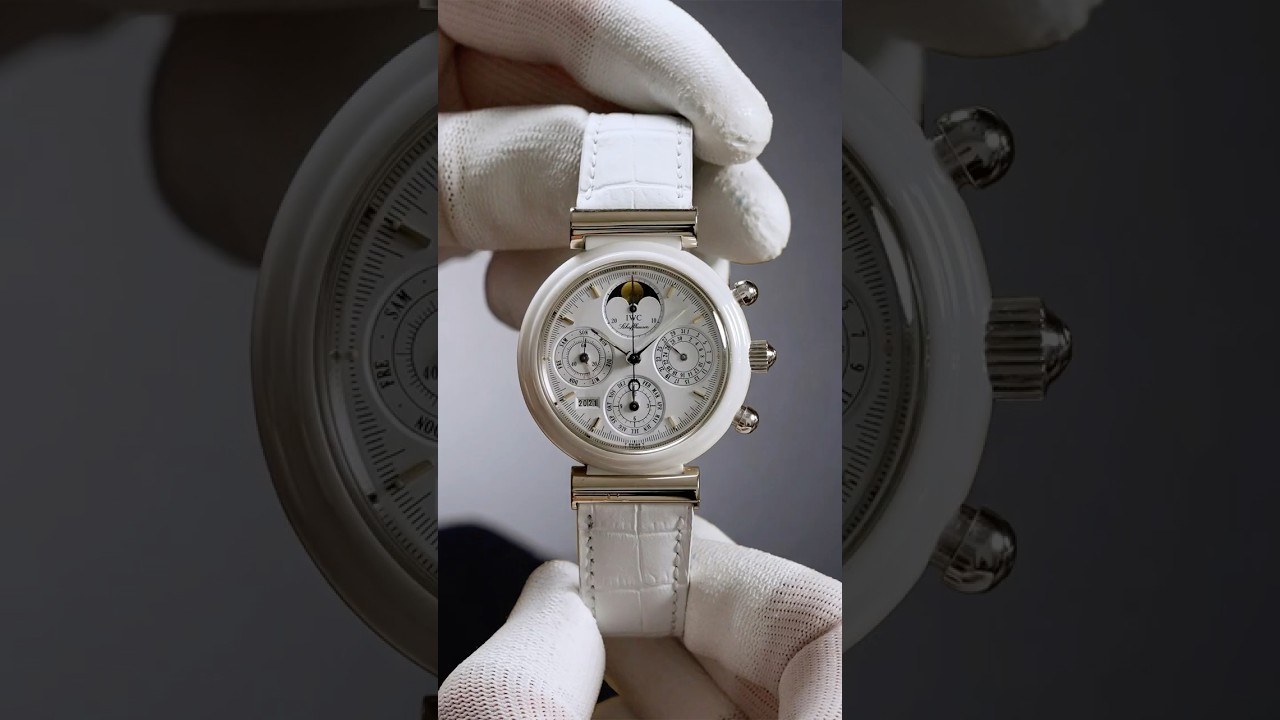
    How Kurt Klaus' Single-Crown Perpetual Calendar Works: IWC's Film Breaks It Down

    Museum curator David Seyffer examines a restored Da Vinci, and the module that put an entire calendar under one crown.

    The piece is part of IWC’s restored-watch program, available at five boutiques, including Schaffhausen and Tokyo Ginza. Seyffer presents it alongside Sales Manager Jule Schäfer.

    The magic is in Klaus’ 1985 design: 81 parts that track the moon phase, manage the date train, adjust for short and long months, handle leap days, and accept all corrections via the crown. IWC says it needs no adjustment until 2499.

    No reference number or mention of the current caliber. Heritage over specs, and stronger for it.

    IWC’s film

    Source: announcement

    Why this watch, on this wrist?

  • Farer Revisits the World Timer: A How-To on Setting It Right

    Farer Revisits the World Timer: A How-To on Setting It Right

    LOOK BACK

    Farer Revisits the World Timer: A How-To on Setting It Right

    Pulled from Farer’s own archive, this 2021 tutorial walks through the mechanics of setting the brand’s world timer, a complication that can baffle newcomers with its city ring and rotating bezel. It’s a short, practical throwback for anyone who owns one, or is curious how these multi-timezone pieces actually work.

    Why this watch, on this wrist?

  • Brew Puts the Metric Watch on Rubber

    Brew Puts the Metric Watch on Rubber

    NEW VIDEO

    Brew Puts the Metric Watch on Rubber

    Brew Watches turns its lens on the Metric’s strap options, showing off rubber straps paired with the racing-inspired dial. A quick, focused look at how a simple strap swap changes the character of the watch on the wrist.

    Why this watch, on this wrist?

  • Patek Philippe’s Ref. 5249R Hides the Time, Then Brings a Fable to Life

    Patek Philippe’s Ref. 5249R Hides the Time, Then Brings a Fable to Life

    DROP

    Patek Philippe's Ref. 5249R Hides the Time, Then Brings a Fable to Life

    A single pusher at 2 o'clock wakes the retrograde hours and minutes, and the animated fable on the dial.

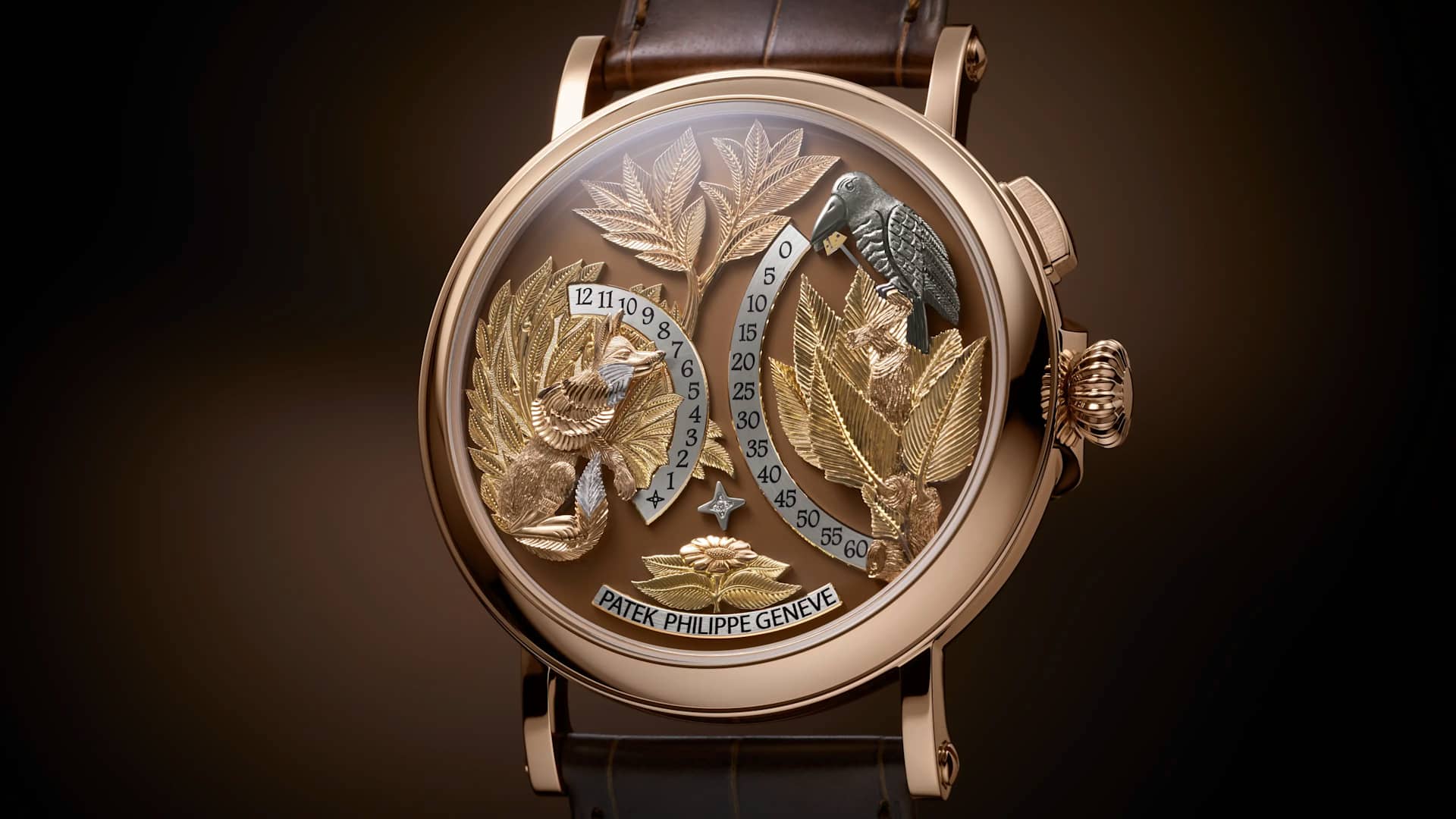
    Patek Philippe "The Crow and the Fox", automaton wristwatch with on-demand hours and minutes

    Image: source

    Patek Philippe’s new 5249R-001, “The Crow and the Fox,” is the first automaton wristwatch in the brand’s contemporary history. The product page puts it bluntly: “Hours and minutes on demand. Automaton.”

    That’s the whole idea: no continuously running hours or minutes. The dial is a scene, not a clock, with applied gold fox and crow figures amid hand-engraved foliage on a brown opaline gold plate. At rest, the only sign of life is the small seconds at 6, centered on a diamond and quietly confirming the movement is running.

    Press the pusher at 2 o’clock, and one action does both. The retrograde hours and minutes appear, and the automaton scene animates. A single trigger makes this a display philosophy rather than a workaround. Patek also says it developed a patented disengaging clutch system to protect the time-setting mechanism, the sort of detail that hints at how much choreography sits behind one button.

    The caliber is the self-winding 31-260 PS HMD AU, 267 parts, with a platinum minirotor and a power reserve running from roughly 38 to 48 hours. The rose gold Officer-style case measures 43 mm.

    The lineage runs deep: a 1958 pocket watch prototype, ref. 784, conceived by Louis Cottier and held in the Patek Philippe Museum.

    Unusually for Patek, the price is published: $411,388.

    Reference5249R-001
    Price$411,388 (published directly on the Patek Philippe product page, pricing is disclosed, contrary to Patek's usual practice of withholding it)
    ReleasedNot explicitly stated on the Patek product page. Secondary trade coverage places it among Patek's 2026 novelties, framed as debuting at Watches and Wonders 2026 and subsequently exhibited at Patek's Salons/Grand Exhibitions circuit (per Prestige Online, 25 Jul 2026, and Luxuo, 30 Jul 2026). This dating is corroborated only by secondary sources, not by Patek's own page, flagged as single-sourced-to-secondary.
    Specs– Case: Rose gold, "Officer"-style, fully polished. Diameter 43 mm, thickness 11.55 mm. Sapphire crystal caseback with dust cover, invisible hinges. Turban-style crown. Water resistance: 30 m.

    Source: announcement

    Why this watch, on this wrist?

  • Rolex Revisits the Submariner’s Dive-Born Roots

    Rolex Revisits the Submariner’s Dive-Born Roots

    NEW VIDEO

    Rolex Revisits the Submariner’s Dive-Born Roots

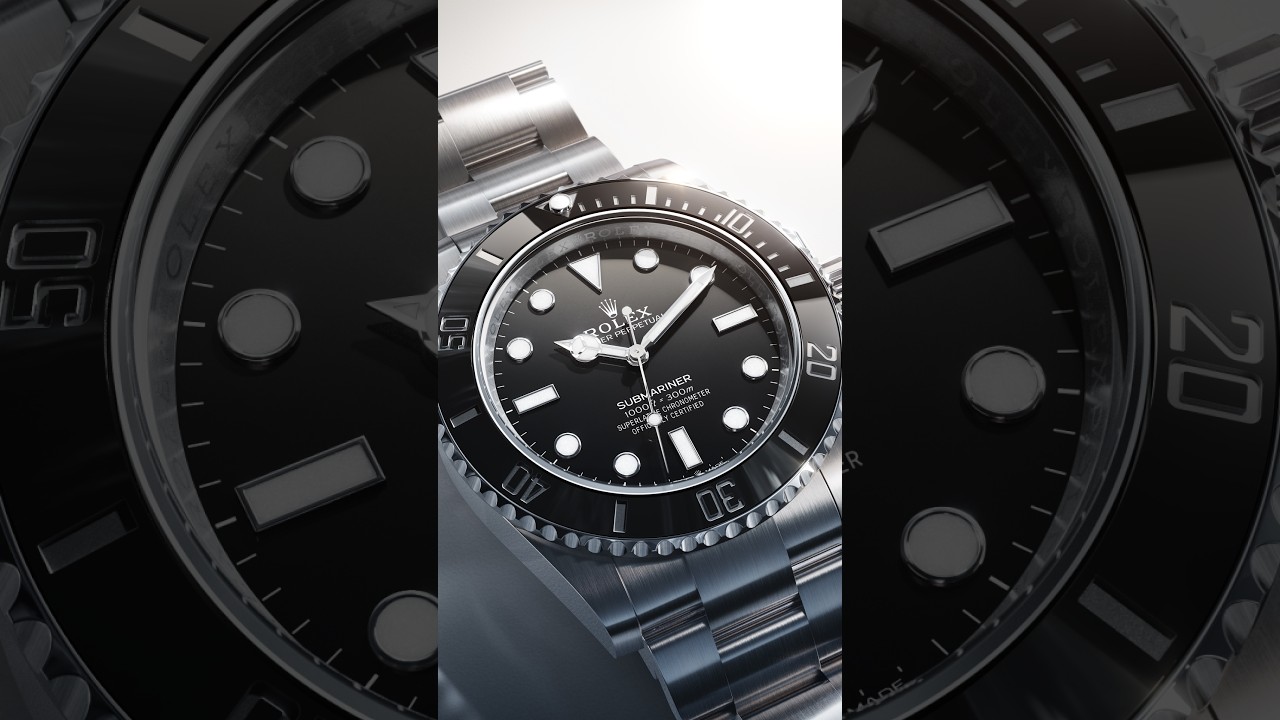
    “Below and Beyond” traces the Submariner’s story from its 1953 debut, the first Rolex diver’s watch rated to 100m, through to today’s 300m-rated Oystersteel version with calibre 3230. It’s a tidy reminder of how a tool built for marine professionals became an icon far from the water.

    Why this watch, on this wrist?

  • Oak & Oscar and the Humboldt GMT

    Oak & Oscar and the Humboldt GMT

    MICROBRAND

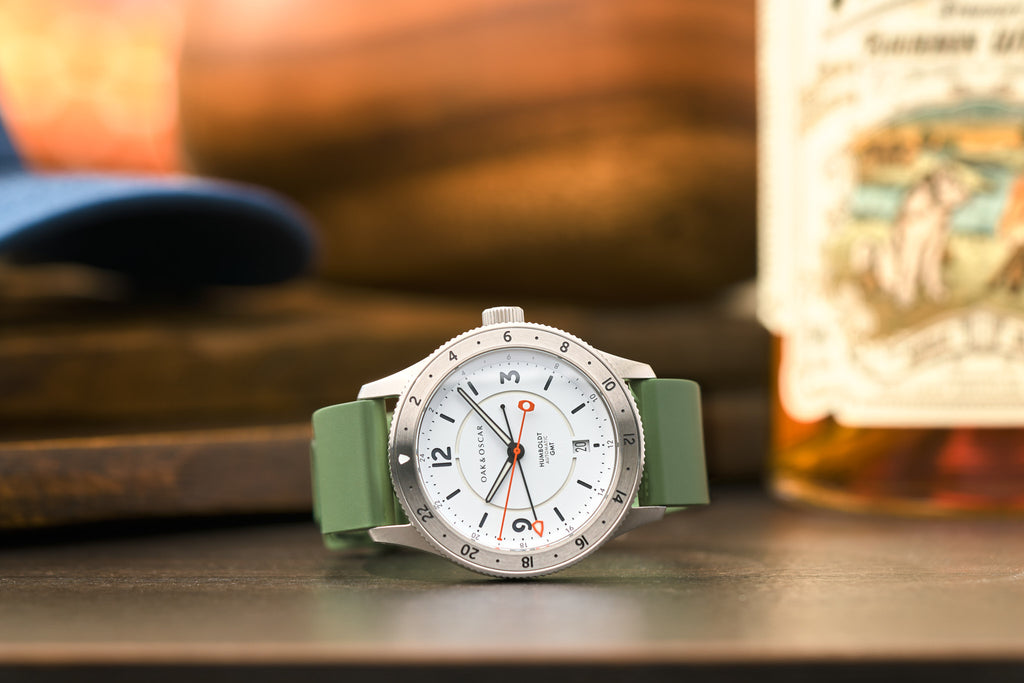
    Oak & Oscar and the Humboldt GMT

    Oak & Oscar has built a loyal following on wearability, finish, and small batch production. The Chicago brand’s Humboldt GMT distills that formula into a travel ready watch made for every day.

    Chase Fancher founded Oak & Oscar in Chicago in 2015 and launched with the time and date Burnham. From the start the brand has favored useful, well finished mechanical watches over novelty, and that clear identity has helped it stand out in a crowded microbrand field.

    What Makes It Notable

    Oak & Oscar is often associated with the GADA ideal, shorthand for “go anywhere, do anything”: versatile sports watches with clean styling, solid proportions, and enough refinement to move between casual and dressed up settings. Small production runs and direct sales let more of the budget go into visible quality, from case finishing to dial execution and strap hardware.

    The appeal is not radical design. It comes from Swiss automatic movements, balanced sizing, and the sense that each release has been edited rather than overworked. Enthusiasts tend to discuss the brand less for its marketing and more for how the finished product feels.

    Signature

    The Humboldt GMT is one of the clearest expressions of that style: a stainless steel travel watch with a second time zone, equally at home on a trip or in the daily rotation.

    Oak & Oscar lists a 39.5mm case with a 40mm bezel, a 12.5mm case height, 46.8mm lug to lug, 20mm lugs, 200 meters of water resistance, and a double domed sapphire crystal, with the 25 jewel Swiss Sellita SW330 automatic inside (source: Oak & Oscar, oakandoscar.com/products/the-humboldt-gmt). Those numbers put it squarely in the wearable middle ground the brand favors.

    It is listed at $1,975 on a Horween leather strap or $2,175 on the stainless steel bracelet, in white, navy, and black dial options, with current availability on the same product page.

    For current models, exact specifications, and availability, visit Oak & Oscar’s official site: oakandoscar.com

    Visit Oak & Oscar →

    Why this watch, on this wrist?

  • Vacheron Constantin Adds a Deep Red 34.5mm Overseas in Steel

    Vacheron Constantin Adds a Deep Red 34.5mm Overseas in Steel

    NEW VIDEO

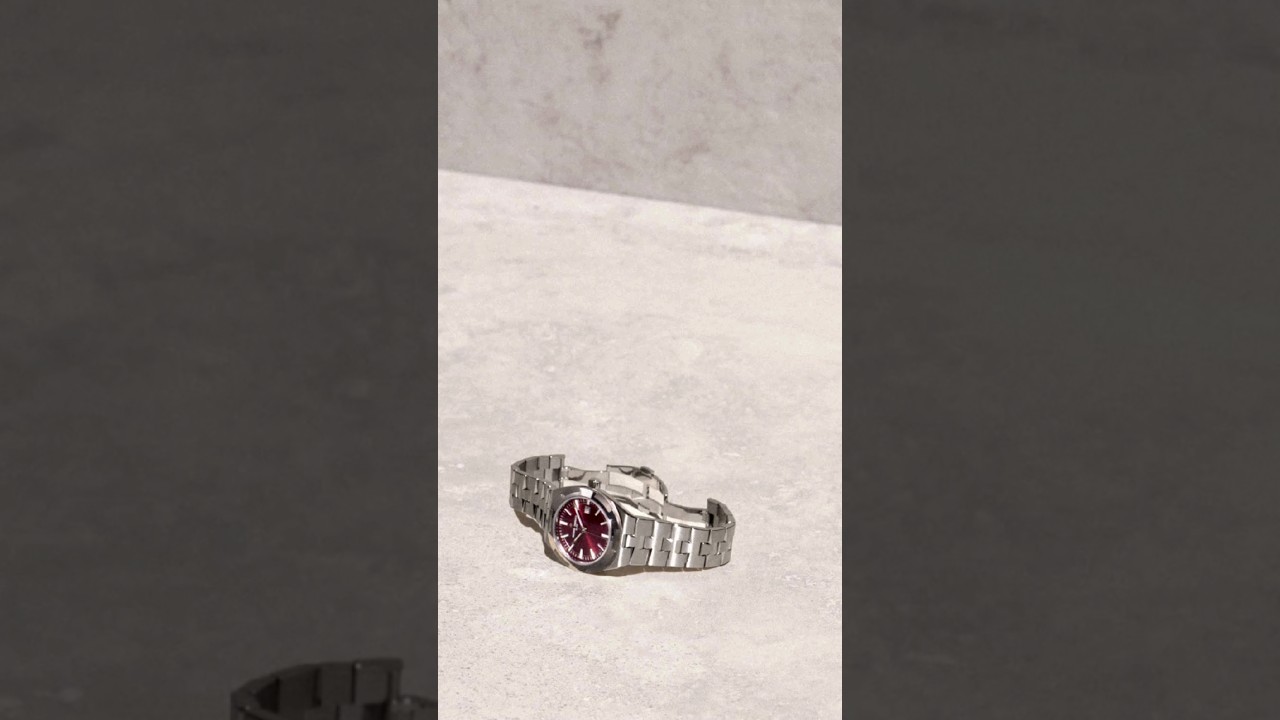
    Vacheron Constantin Adds a Deep Red 34.5mm Overseas in Steel

    Vacheron Constantin’s latest Overseas clip introduces a 34.5mm self-winding steel model with a striking lacquered deep red dial, sized for versatile wear. The video walks through the hexagonal Maltese Cross bezel, a subtle nod tying the collection’s sporty modernity back to the Maison’s heritage.

    Why this watch, on this wrist?
  • Hublot Turns Back to 2005 With the Big Bang Original Unico

    Hublot Turns Back to 2005 With the Big Bang Original Unico

    NEW RELEASE

    Hublot Turns Back to 2005 With the Big Bang Original Unico

    At LVMH Watch Week 2026, Hublot revisits the watch that defined its modern identity, now pairing the original Big Bang design language with the brand’s in-house Unico chronograph movement.

    Hublot Turns Back to 2005 With the Big Bang Original Unico

    Source: Hublot

    According to Hublot’s release, the Big Bang Original Unico debuted at LVMH Watch Week 2026 in Milan, reviving the look of the 2005 Big Bang while updating it with the brand’s in-house Unico movement architecture. [Launch details and exact event phrasing should be confirmed against Hublot’s release page.] The 2005 original was more than a successful model. It locked in Hublot’s modern formula—layered case construction, exposed screws, bold bezel geometry, and the “fusion” of precious metals with rubber—and helped make material contrast central to luxury sports watch design.

    “The point of the early Big Bang was not restraint. It was contrast, made visible in every surface and every material choice.”

    Pairing “Original” with “Unico” bridges two eras of the company. The early Big Bang family relied on outsourced chronograph bases; Unico has come to signify Hublot’s manufacture chronograph platform. The design that made the brand’s name now carries the movement family that supports its claim to in-house watchmaking.

    There is a broader industry angle, too. In a field that trades on 19th century origin stories, Hublot’s key heritage object comes from the mid 2000s. A launch at LVMH Watch Week presents the watch that once felt confrontational as house history—not antique romance, but the canonization of a very contemporary icon.

    WATCH SPECIFICATIONS

    Brand Hublot
    Model Big Bang Original Unico
    Reference Needs verification
    Case Size Needs verification, likely 42 mm to 44 mm based on current Unico architecture
    Case Material Needs verification, commonly titanium, ceramic, King Gold, or mixed materials
    Dial Color Openworked / skeletonized display, needs verification
    Movement Hublot Unico automatic chronograph, exact caliber needs verification, plausibly HUB1280 or related Unico family
    Power Reserve Needs verification, many current Unico calibers are around 72 hours
    Water Resistance Needs verification, often 100 m on Big Bang chronograph references
    Approximate Market Price Needs verification, likely in line with contemporary Big Bang Unico pricing depending on material

    Heritage

    The Big Bang’s roots reach back to Hublot’s founding proposition of 1980: a gold case on a rubber strap. The 2005 watch amplified that idea into something architectural and aggressive, arriving just as the luxury sports watch category was ready to get louder. Love it or hate it, it was difficult to mistake for anything else.

    The Unico caliber belongs to Hublot’s next phase, when the brand built manufacturing credibility through proprietary movement development. This watch combines the two narratives: the Big Bang as cultural object, Unico as industrial statement. [Exact historical sequencing and caliber usage by line should be confirmed against Hublot’s official material.]

    Why This Watch on This Wrist

    The wrist in question is Hublot’s own. The Big Bang Original Unico is a self-portrait: the design that made the brand impossible to ignore, fitted with the movement family that helped it argue it was more than styling and marketing. Provocation on the outside, legitimacy on the inside—if one watch explains Hublot’s journey from disruptor to establishment player, this is a persuasive candidate.

    For collectors, the appeal is narrower but clearer than a generic anniversary piece: this is a watch for someone who sees the mid 2000s as real watch history, offered a more technically self-sufficient version of a period-defining design.

  • Santurce Collection Brings Puerto Rican Identity to the Modern Dive Watch

    Santurce Collection Brings Puerto Rican Identity to the Modern Dive Watch

    MICROBRAND

    Santurce Collection Brings Puerto Rican Identity to the Modern Dive Watch

    Founded in 2025 by a husband-and-wife team of collectors, this Puerto Rican microbrand backs its island identity with serious spec: twin 39mm Sellita divers, an artist-drawn caseback, and a GPHG nod in year one.

    The barracuda is a patient fish. It lurks in Puerto Rico’s warm shallows, silver and motionless, until it isn’t. Locals call it the picúa — and it is one of two Caribbean predators lending their names to the dive watches of Santurce Collection, a young microbrand out to put Puerto Rico on the horological map.

    The Joke That Became a Brand

    Santurce Collection is run by José and Anita Salas, a husband-and-wife team from the San Juan district that gives the brand its name. Both are lawyers, longtime collectors, and founders of Puerto Rico’s RedBar chapter. The name predates the company: when Anita asked for more closet space, José began selling watches from his own collection at friend prices, and local collectors took to calling any well-curated watch at a good price a “#SanturceCollection.”

    In 2025, the inside joke became a company with a mission: watches designed in Puerto Rico, with an identity of their own. The brand is rooted in place first, product second — and it shows.

    Two Divers, One Platform

    Santurce Collection Picúa dive watch

    Image: Time+Tide

    The brand’s fully custom line consists of two 39mm divers: El Tiburón (“the shark”) and the Picúa. They share a platform — a forged, heat-treated 316L steel case measuring 12.2mm thick and 46mm lug-to-lug, a 120-click bezel with DLC-coated steel insert, sapphire crystal with anti-reflective coating on both sides, 300 meters of water resistance, and Sellita’s SW200-B automatic, ordered without a phantom date position. Design happens in Puerto Rico, assembly in the USA. Each is priced at $949.

    The two wear their names differently. El Tiburón’s sandblasted matte case echoes the grey of a shark’s skin; the Picúa pairs linear brushing with a black sunburst dial, rectangular markers, and red accents straight out of the 1970s skin-diver playbook.

    The caliber choice tells you something about how the founders think. The SW200-B is unglamorous and everywhere, and that is precisely the argument for it. Parts exist. Watchmakers know it cold. A brand this young cannot promise it will be around in fifteen years, but it can pick a movement that will be serviceable whether or not it is.

    Flip either watch over and the cultural argument gets literal: the caseback carries “El Jíbaro Buzo,” an engraving that reimagines Puerto Rico’s traditional jíbaro figure as a diver — drawn by co-founder Anita herself.

    Recognition, Fast

    The spec-per-dollar story has already drawn notice beyond the enthusiast forums. El Tiburón has been selected as an official competitor at the 2026 Grand Prix d’Horlogerie de Genève, as Time+Tide reports — rare air for a brand in its first full year. The Picúa’s initial run sold out, with more stock expected; El Tiburón remains available in limited numbers. For hands-on impressions of both, see Ariel Adams’s review at aBlogtoWatch.

    Plenty of watches borrow a sense of place. Fewer are built by people who never had to look one up.

    Visit Santurce Collection →

    Why this watch, on this wrist?