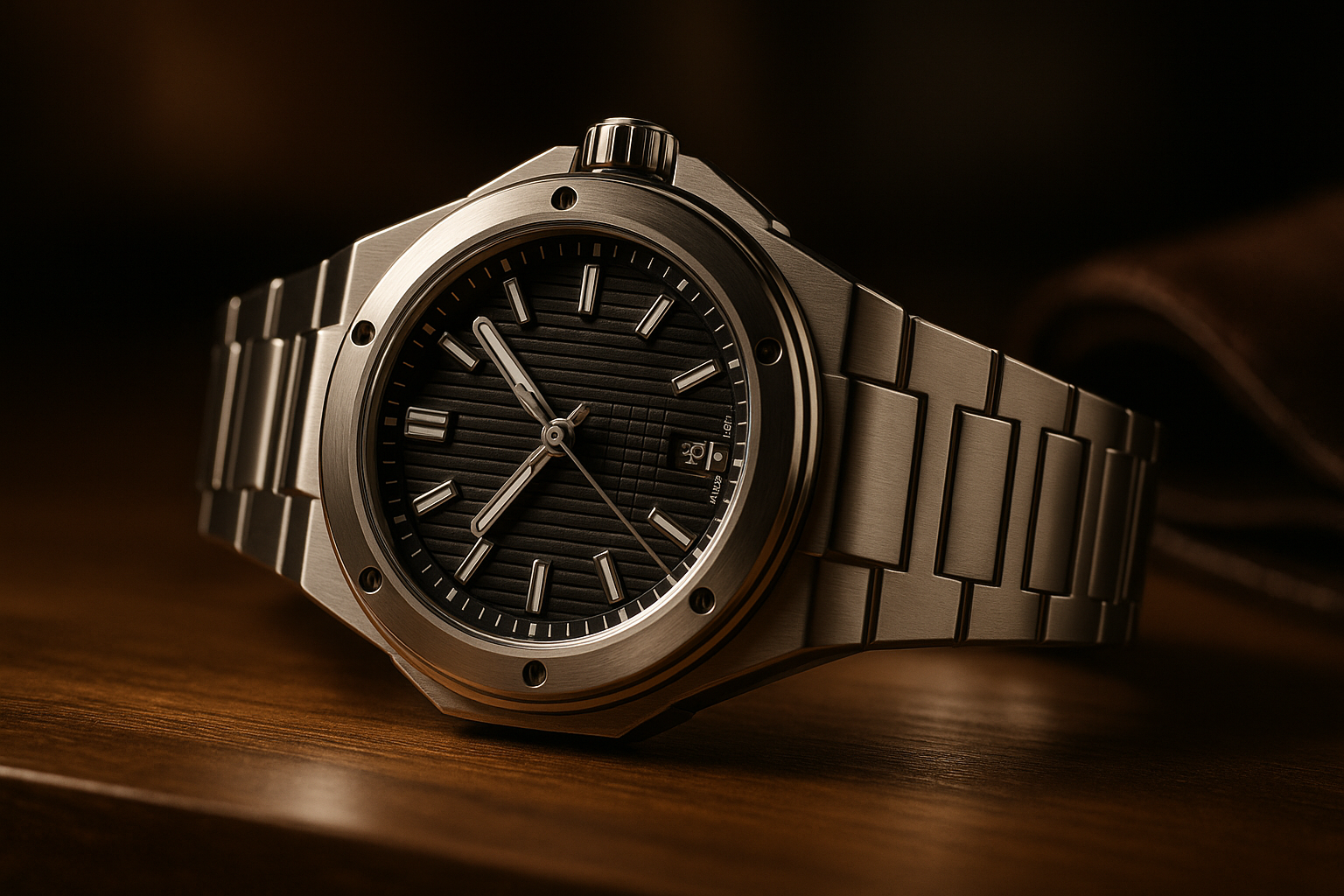
Author: Gabby

  • IWC Builds Out the Ingenieur, Instead of Starting Over

    IWC Builds Out the Ingenieur, Instead of Starting Over

    NEW RELEASE

    IWC Builds Out the Ingenieur, Instead of Starting Over

    At Watches and Wonders 2026, IWC treated the Ingenieur less like a one hit revival and more like a long term collection, adding a gold tourbillon, a green ceramic model, and a titanium perpetual calendar.

    IWC Builds Out the Ingenieur, Instead of Starting Over

    Source: IWC Schaffhausen press materials, with additional reporting and market context from Worn & Wound.

    The strongest message from IWC at Watches and Wonders 2026 was not a single watch. It was the brand’s discipline.

    Since the 2023 return of the Gérald Genta inspired Ingenieur Automatic 40, IWC has expanded the line slowly and deliberately. Instead of refreshing the design every fair season, it has kept working the same architecture across new sizes, materials, and complications. That approach can look conservative in the short term. In the long term, it is how a collection starts to feel permanent.

    Worn & Wound made a similar point in its show coverage, noting that IWC tends to treat a launch as a platform rather than a one season headline. That framing helps explain this year’s additions. The 2026 releases do not reinvent the Ingenieur. They make the case that IWC believes it can carry far more weight than a nostalgic callback.

    At the top of the range is the Ingenieur Tourbillon 41, reference IW345901, a limited edition of 100 pieces in 18-carat 5N gold. It pairs the collection’s integrated case and bracelet design with a dark olive green grid dial and a flying minute tourbillon at 6 o’clock. The watch matters not only because it is expensive or complicated, but because it pushes the Ingenieur into true flagship territory.

    Below it, IWC appears to have broadened the collection in two very different directions. One is an Ingenieur Automatic 42 in dark olive green ceramic, with matching bracelet and warm metallic accents. The other is a titanium perpetual calendar, bringing one of IWC’s best known complications into the line. Together, those watches suggest that the Ingenieur is becoming a full family, not just a single hot reference.

    “IWC is not trying to outshout the market each spring. It is giving the Ingenieur enough time, and enough range, to become a real pillar of the brand.”

    The ceramic model is arguably the bolder move. Black ceramic is familiar territory across the industry. A full green ceramic integrated sports watch is much rarer, and the details reportedly lean into that unusual palette: a rose gold crown, Armor Gold bezel screws, and gold toned hands and markers against a deep green case and dial. Those choices could have tipped into novelty. Instead, on paper at least, they sound measured.

    The titanium perpetual calendar is a different kind of statement. IWC’s crown controlled perpetual calendar system is closely associated with Kurt Klaus, and bringing that complication into the Ingenieur gives the collection more technical legitimacy. A lightweight titanium case also makes practical sense for a complicated daily wearer. Worn & Wound reported an approximate price of $44,000 for that model, though the exact reference and full specifications should be confirmed against IWC’s official release materials.

    WATCH SPECIFICATIONS

    Brand IWC Schaffhausen
    Model Ingenieur Tourbillon 41
    Reference IW345901
    Case Size 41.6 mm (needs verification)
    Case Material 18-carat 5N gold, with five functional bezel screws in 18-carat Armor Gold (needs verification)
    Dial Color Dark olive green grid dial
    Movement IWC calibre 82905 automatic, with Pellaton winding system and ceramic components, plus flying minute tourbillon at 6 o’clock (needs verification)
    Power Reserve 80 hours (needs verification)
    Water Resistance 100 meters (needs verification)
    Approximate Market Price Limited to 100 pieces; price not confirmed (needs verification)

    Selected additional 2026 references mentioned in coverage: Ingenieur Automatic 42 in dark olive green ceramic, reference and price not confirmed here; Ingenieur Perpetual Calendar in titanium, approximate price reported at $44,000, reference not confirmed here.

    Heritage

    The modern Ingenieur draws heavily from the Gérald Genta era of the 1970s, especially in its bezel, bracelet integration, and sporty luxury stance. That lineage is real, but it is only useful if the watches feel alive beyond the archive. What IWC has done well since 2023 is avoid treating Genta as a museum label. The brand has used the design as a framework for a living collection.

    Material history adds another layer. IWC has long emphasized its experience with ceramic, and the brand is widely credited with pioneering ceramic case use in high end mechanical watchmaking in the 1980s. The exact phrasing often used around that claim, specifically that IWC debuted ceramic in a wristwatch in 1986, should be stated carefully unless tied directly to IWC’s own wording or a confirming historical source (needs verification). The same caution applies to any claim of absolute industry first.

    The perpetual calendar link is firmer. Kurt Klaus’s crown controlled system is one of IWC’s most important modern contributions, and placing that complication inside the Ingenieur signals that the line is graduating from design exercise to technical anchor.

    Why This Watch on This Wrist

    The best match here is not a generic “engineer” archetype. It is someone who responds to systems, someone who notices when a brand makes a coherent argument over several years instead of chasing quick applause.

    That is why the Ingenieur feels earned on this wrist. Its appeal in 2026 is cumulative. The watch says something persuasive only because IWC has kept returning to it, refining the same idea across steel, gold, ceramic, titanium, and now higher complications. The owner this collection suits is likely the person who values follow through as much as flair.

    The olive green palette helps, too, but not because green automatically means patience. That symbolism is too easy. More concretely, the color gives the Ingenieur a grounded, technical mood that softens the hardness of its industrial geometry. In gold, it keeps the tourbillon from feeling showy. In ceramic, it makes an unusual material choice feel deliberate rather than loud. On the right wrist, that balance is the whole point.

  • Chanel J12 Caliber 12.1 38mm (Blue Ceramic)

    DROP

    Chanel J12 Caliber 12.1 38mm (Blue Ceramic)

    The J12’s signature white and black have long defined it, so a matte blue ceramic case reads as a genuine departure for the collection.

    Chanel has added a new colorway to its J12 line: a 38mm case executed in matte blue high-tech ceramic and steel, reference H11684. The matte finish absorbs light rather than reflecting it, giving the familiar J12 silhouette a quieter, more shadowed presence than the brand’s usual glossy ceramics.

    Inside is Chanel’s self-winding Caliber 12.1, a Kenissi manufacture movement, the same partnership behind Tudor’s in-house calibers. The 38mm model is priced at $8,350. It arrives alongside a smaller 33mm sibling built around the Caliber 12.2 (reference H11683, $7,950), extending the blue ceramic treatment across both size options in the J12 family.

    For a case shape so tied to its black-and-white identity since 2000, a tonal shift like this matters. It signals Chanel is willing to let the J12 evolve in color while keeping its ceramic construction and in-house movement credentials intact.

    Source: Chanel

    Why this watch, on this wrist?

  • Panerai Submersible 44mm PAM01756

    DROP

    Panerai Submersible 44mm PAM01756

    A blue ceramic bezel gives Panerai’s steel dive-watch staple a cool new edge.

    Panerai has added another variant to its Submersible line with the PAM01756, a 44mm steel dive watch that leans on a familiar formula while introducing a new color pairing. The brushed stainless steel case houses a black sunray-brushed dial, contrasted against a blue polished ceramic bezel insert with a graduated scale, a departure from the tool-watch monochrome that usually defines the collection.

    Beneath the surface, the specs stay true to the Submersible’s dive-watch credentials: an automatic movement, 500m of water resistance, and a steel bracelet built for durability as much as daily wear. It’s priced at $13,200 USD (including sales tax, in the US), positioning it as an approachable entry point within Panerai’s core steel range.

    The PAM01756 arrives as a standalone reference, distinct from the recently released Navy SEALs Submersible PAM01738. Rather than chasing a full redesign, Panerai seems focused on giving collectors more colorway options within a proven case shape, a subtler kind of newness that still turns heads.

    Source: Panerai

    Why this watch, on this wrist?

  • Timex Waterbury Heritage Chronograph: The Case for a Perfect First Watch

    NEW VIDEO

    Timex Waterbury Heritage Chronograph: The Case for a Perfect First Watch

    In this quick short, Watch Studies teams up with Timex to break down the Waterbury Heritage Chronograph, asking what really makes a great entry point into watches. The answer: comfort, style, and features you’ll actually use.

    Why this watch, on this wrist?

  • A Red Dot for a Real Tool Watch: CITIZEN’s Eco-Drive Diver Gets Its Due

    A Red Dot for a Real Tool Watch: CITIZEN’s Eco-Drive Diver Gets Its Due

    NEW RELEASE

    A Red Dot for a Real Tool Watch: CITIZEN’s Eco-Drive Diver Gets Its Due

    In the 50th year of Eco-Drive, CITIZEN’s PROMASTER Professional Diver 300m picks up a Red Dot Design Award, a notable win for a purpose-built watch that prioritizes utility over theater.

    A Red Dot for a Real Tool Watch: CITIZEN's Eco-Drive Diver Gets Its Due

    Image: Citizen

    Source: CITIZEN Watch Global Network

    There is a class of dive watch that earns respect by disappearing into the job. No scarcity campaign, no launch spectacle, no invented mythology, just a dependable instrument built to work. The CITIZEN PROMASTER Eco-Drive Professional Diver 300m sits squarely in that tradition, which makes its latest recognition especially interesting.

    CITIZEN says the PROMASTER Eco-Drive Professional Diver 300m, reference BN1024-01Z, received a Red Dot Design Award 2026 in the Product Design category, according to the brand’s announcement. If accurate, it is a meaningful distinction for a watch whose appeal is rooted less in luxury positioning than in resolved industrial design.

    Red Dot is one of the better-known international design programs, founded in Germany in the 1950s. The awards typically evaluate products on a mix of formal quality, usability, and innovation.

    “A saturation-capable Eco-Drive diver winning a design award is compelling because it suggests the watch succeeded on execution, not just on specs.”

    That is the real editorial angle here. The BN1024-01Z is not being pitched as a fragile objet for collectors. It is a professional-style diver from a mass-market manufacture with global reach. When a watch like this earns attention from a design jury, the point is not that CITIZEN suddenly learned how to make beautiful objects. It is that good tool design, when done honestly, can hold its own without leaning on exclusivity.

    Mechanically, or more precisely electronically, the core story is CITIZEN’s Caliber E365. The brand states that a full charge powers the watch for 365 days, a full year, even without further light exposure. For a serious dive watch, that matters. Eco-Drive has always made practical sense, but pairing light power with a one-year running autonomy gives the concept an extra degree of credibility in a watch built for extended use away from daylight.

    The timing also helps. CITIZEN is framing 2026 as the 50th anniversary of Eco-Drive. Anniversary marketing aside, the broader point stands: few brands have spent as long refining light-powered watchmaking at industrial scale, and fewer still have made it central to their identity.

    WATCH SPECIFICATIONS

    Brand CITIZEN
    Model PROMASTER Eco-Drive Professional Diver 300m
    Reference BN1024-01Z
    Case Size Not specified by source
    Case Material Not specified by source
    Dial Color Orange (unconfirmed)
    Movement CITIZEN Caliber E365, Eco-Drive light-powered quartz
    Power Reserve 365 days on a full charge
    Water Resistance 300 meters
    Approximate Market Price Not specified by source

    Heritage

    PROMASTER has long been the no-nonsense side of CITIZEN, the family that covers diving, aviation, and land-oriented tool watches. The through-line is functionality first. These are watches meant to solve for legibility, durability, and autonomy before they worry about status.

    Eco-Drive is central to that identity. CITIZEN introduced light-powered quartz technology decades ago and turned it into one of the brand’s defining competencies. The appeal remains straightforward: exposure to light replenishes the energy cell, reducing or eliminating routine battery changes. In a practical watch, that is not a gimmick. It is one less maintenance concern.

    The BN1024-01Z makes that heritage feel current. Rather than treating sustainability and utility as separate stories, it folds them into the same object. A professional-style diver that runs on captured light and stores enough energy for a year is exactly the kind of idea CITIZEN has been refining for generations.

    Why This Watch on This Wrist

    This connection works when the wearer values competence over performance in the social sense. The BN1024-01Z is for someone who wants a watch to justify its shape, its depth rating, and even its bulk through use. The Red Dot matters here not because it transforms the watch into a design collectible, but because it validates something longtime CITIZEN owners already understand: clear thinking can be attractive.

    That makes this a natural watch for the wrist of a diver, engineer, marine professional, or simply anyone drawn to equipment that explains itself. The appeal is earned. A helium-valve-equipped, 300-meter Eco-Drive diver with a one-year charge is not trying to impersonate heritage or luxury. It is presenting a coherent tool-watch argument, and in this case the design world seems to have agreed.

  • Brew Watches: A New York Microbrand with a Coffee First Point of View

    Brew Watches: A New York Microbrand with a Coffee First Point of View

    MICROBRAND

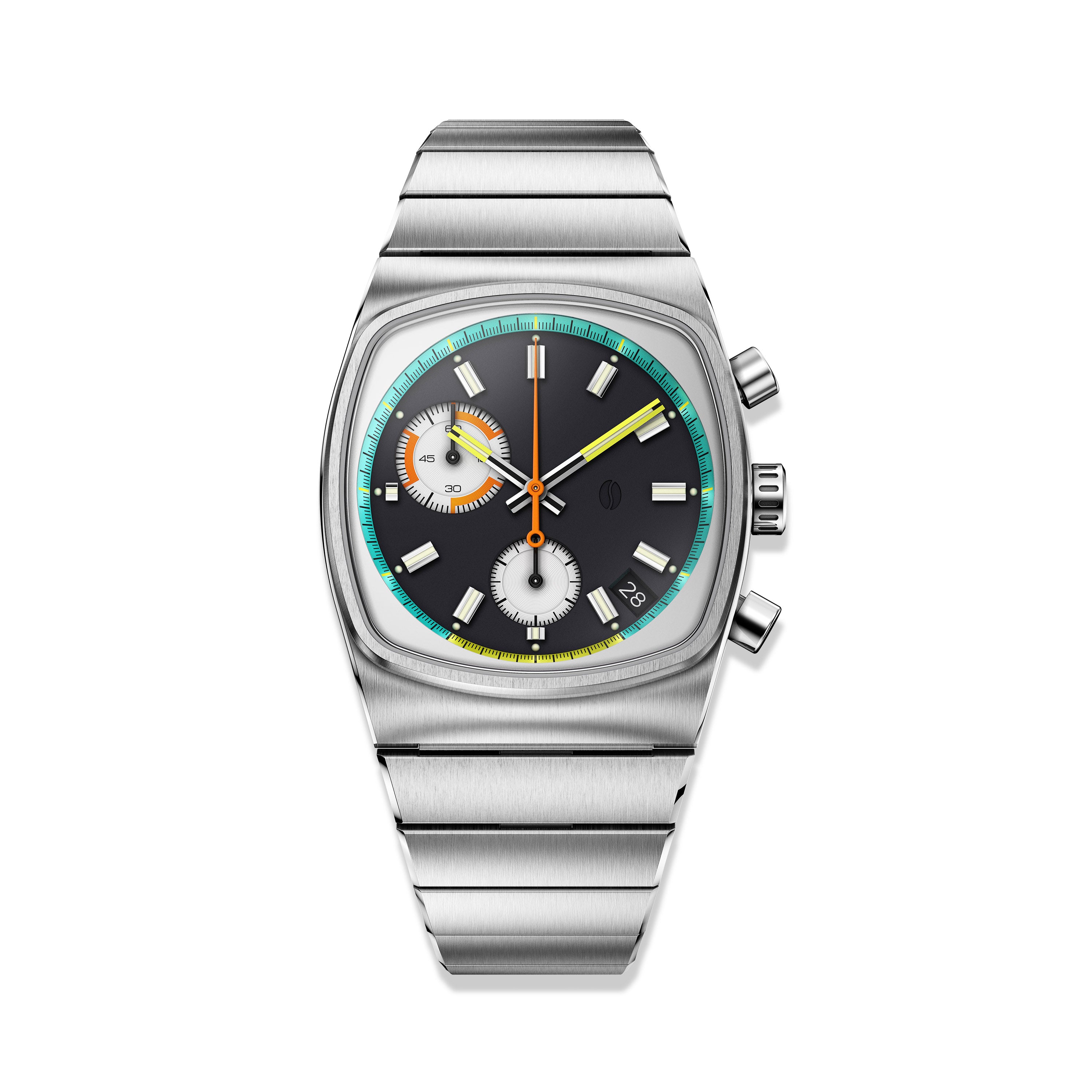
    Brew Watches: A New York Microbrand with a Coffee First Point of View

    Brew turned espresso culture into one of the most distinctive design languages in affordable watchmaking.

    Many microbrands begin with dive watch cues or military references. Brew took a different route, building its identity around coffee and the rituals that surround it.

    The brand was founded in New York by designer Jonathan Ferrer. Brew states that Ferrer launched the company after developing an interest in both watches and coffee culture, and its early story is closely tied to Kickstarter.

    What is clear is the central idea: Brew does not use coffee as a loose bit of marketing. It has shaped the watches’ colors, scales, proportions, and naming from the start.

    Where to Find Brew Watches

    Brew sells primarily through its official website, where it lists current models, upcoming drops, specifications, and pricing.

    Because the brand often releases watches in batches, the official site is the best place to confirm what is actually available now.

    For readers who want the short version, Brew’s appeal is simple: a strong founder led concept, compact and characterful chronographs, and a design language that feels personal rather than generic. In a microbrand market full of lookalike offerings, that is enough to make it memorable.

    Visit Brew Watches →

    Why this watch, on this wrist?

  • Inside IWC’s Build of the Gold Ingenieur Automatic 35, Ref. IW324903

    NEW VIDEO

    Inside IWC’s Build of the Gold Ingenieur Automatic 35, Ref. IW324903

    IWC watchmaker Thomas Zimmermann walks through the full assembly of the Gérald Genta-inspired Ingenieur Automatic 35 in 18ct 5N gold, from lubricating the bearings and fitting the balance wheel and rotor, to installing the caliber 47110 movement, the gold “Grid” dial, and solid gold hands. A satisfying, unhurried look at how this Genta classic comes together piece by piece.

    Why this watch, on this wrist?

  • Traska: The Florida Microbrand That Turned Iteration Into an Advantage

    Traska: The Florida Microbrand That Turned Iteration Into an Advantage

    MICROBRAND

    Traska: The Florida Microbrand That Turned Iteration Into an Advantage

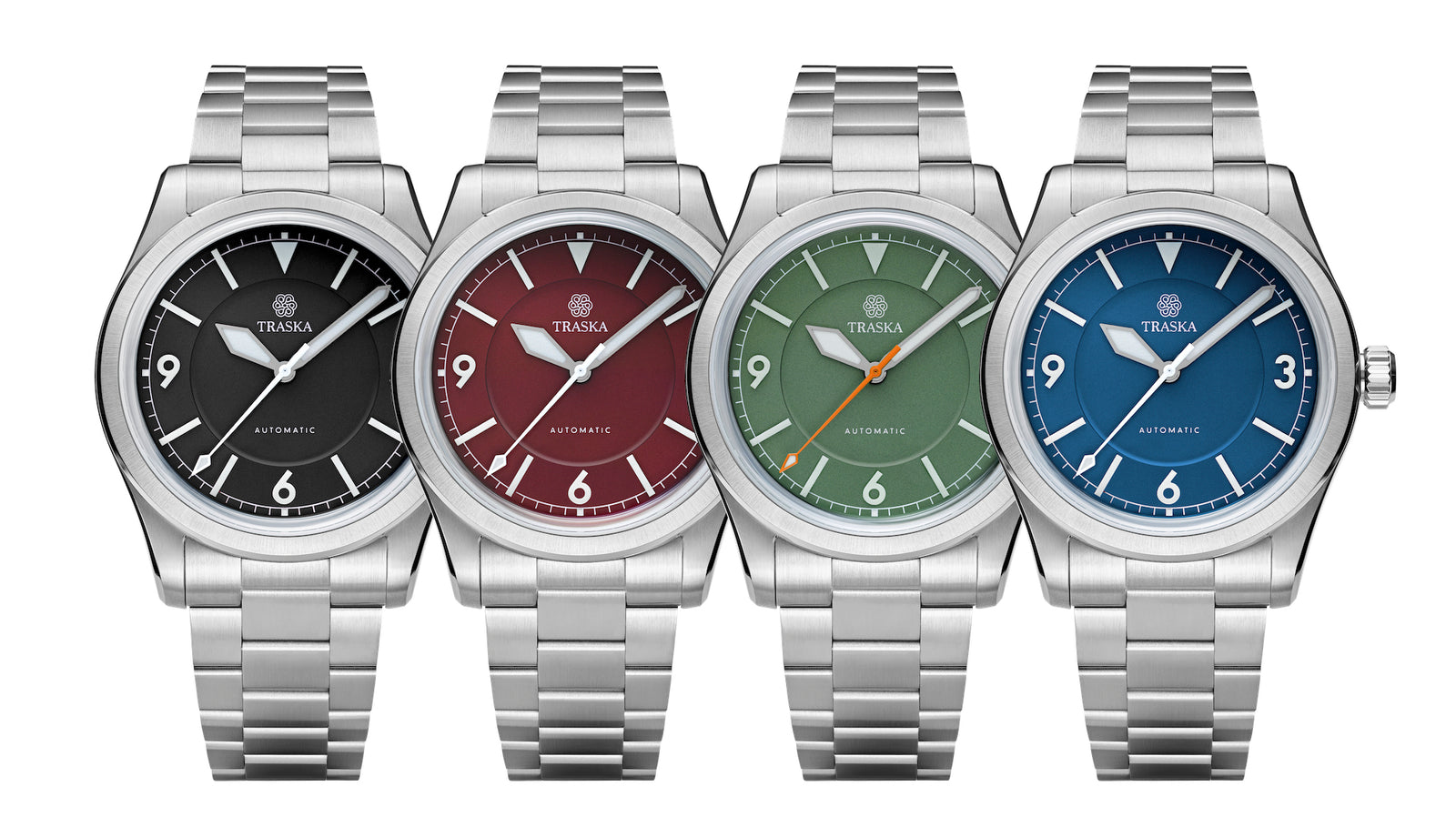
    Rather than chase constant novelty, Traska built its reputation by refining familiar models, improving the details, and focusing on toughness for everyday wear.

    Traska — Traska: The Florida Microbrand That Turned Iteration Into an Advantage

    Image: Traska

    Founded in 2018 in Jacksonville Beach, Florida, Traska took a notably measured path into the market. Instead of relying on a big launch campaign or a hype driven rollout, the brand built momentum gradually through owner recommendations and enthusiast attention. In a crowded microbrand space where many names appear briefly and disappear just as fast, that slower approach helped Traska stand out.

    From the start, the idea was straightforward: make practical watches that owners would actually wear, then keep improving them over time.

    What Makes It Notable

    Traska’s defining habit is iteration. While many young brands expand quickly with a growing catalog of loosely connected releases, Traska has repeatedly revisited its core models and updated them across multiple generations. That process has included case tweaks, bracelet refinements, dial changes, and movement upgrades, depending on the model and release. The result is a lineup that feels considered rather than rushed.

    The brand is also closely associated with surface hardening. Traska says it hardens its stainless steel cases and bracelets to about 1200 Vickers, or 1200HV, to improve scratch resistance, according to the brand’s own materials. That does not make a watch scratch proof, but it is a notable feature at this price level and one of the clearest parts of Traska’s identity.

    Sapphire crystals, solid everyday water resistance, and generally restrained proportions help reinforce the same theme: these are watches designed to be used, not handled delicately. Enthusiast coverage has often praised the finishing and overall value, though claims that they rival watches costing “several times as much” are best treated as subjective opinion rather than fact.

    Just as important, Traska appears to benefit from an engaged owner community. Feedback from customers has clearly informed successive revisions, and that ongoing dialogue has become part of the brand’s appeal.

    Signature

    A strong example of the formula is the Venturer GMT. Current and recent versions have been positioned as compact, travel friendly GMT watches with a hardened steel case, sapphire crystal, and 100 meters of water resistance, according to Traska’s official product pages.

    Specific figures such as a 39mm case size, a Miyota 9075 movement, reference 4217, and a $950 starting price have circulated for this model, though these details should be confirmed against the current official listing before drawing firm conclusions, since Traska has updated this model over time and specs or pricing may vary by generation and availability. If the current Venturer GMT does use the Miyota 9075, that would mean a “true” or traveler style GMT with an independently adjustable local hour hand, a meaningful feature for frequent travelers.

    What remains clear is the larger point: the Venturer GMT represents Traska at its best, modestly sized, practical, and focused on durability without straying into overbuilt theatrics.

    Where to Find Them

    Traska sells directly through its official website, where you can see the current collection, latest specifications, and restock information.

    Because the brand often releases watches in batches, availability can change quickly, so it is worth checking the site for the latest status before drawing any conclusions about pricing or stock.

    For longtime microbrand watchers, Traska offers a useful reminder that progress does not always mean making something entirely new. Sometimes it means taking a good watch and making it better, one generation at a time.

    Visit Traska →

    Why this watch, on this wrist?

  • Astor+Banks

    Astor+Banks

    MICROBRAND

    Astor+Banks

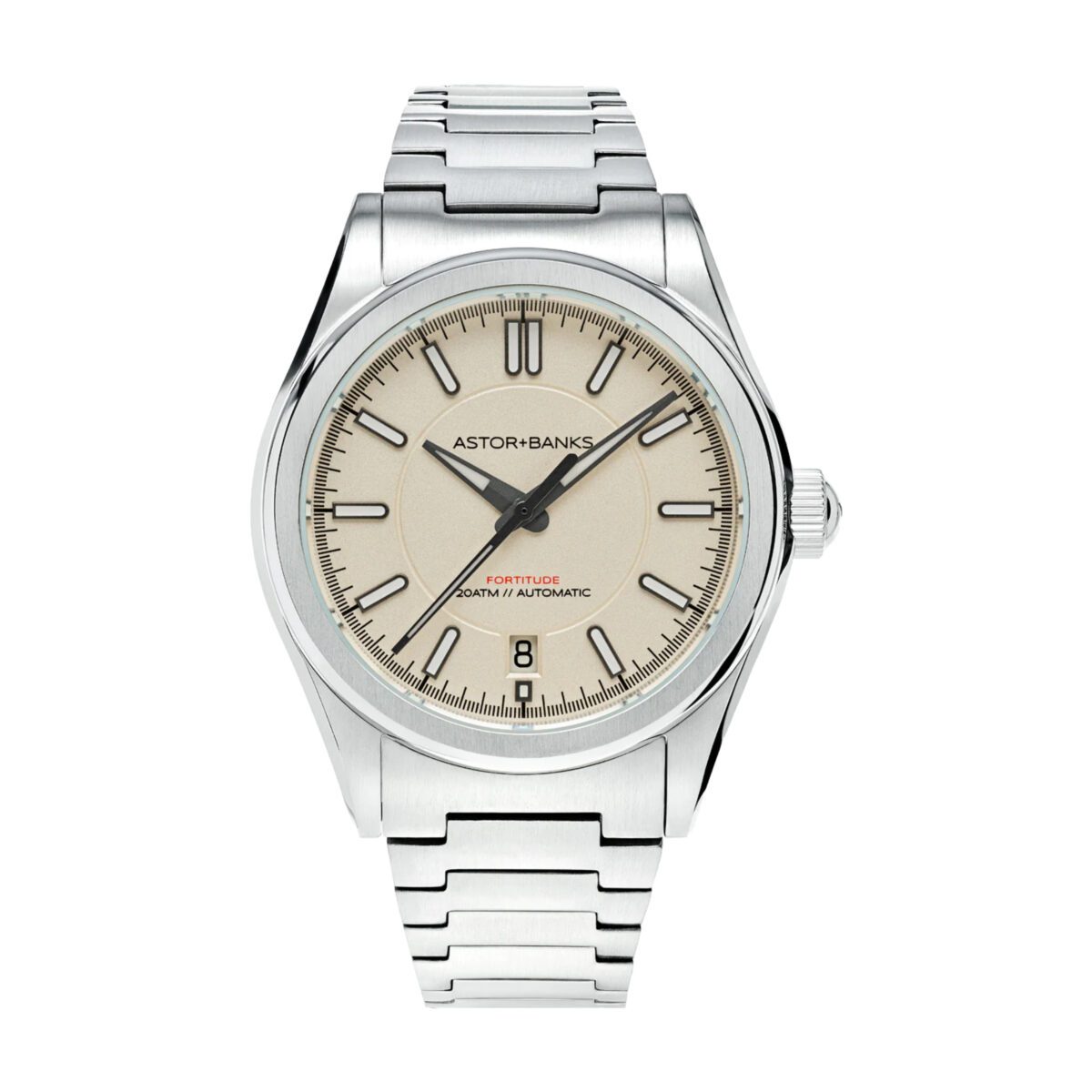
    Chicago made restraint, with tool watch substance.

    Astor+Banks is a small Chicago brand with a clear lane: practical everyday sports watches, produced sparingly and finished with more care than the price might suggest. It does not flood the market with constant launches. Instead, it has built a reputation on a few sturdy, well-resolved models, led today by the Fortitude line.

    Origin

    Astor+Banks was founded in Chicago by Andrew Perez. The brand’s earlier models leaned more overtly toward pilot and tool watch cues, with an emphasis on legibility, solid construction, and straightforward utility. Over time, that aesthetic has become cleaner and more versatile.

    What Makes It Notable

    Astor+Banks stands out because it avoids one of the more common microbrand habits: endless variation for its own sake. Its releases tend to be infrequent, and the attention seems to go into execution rather than volume.

    Where To Find Them

    Astor+Banks sells through its official website, which is also the best place to verify live specifications, color options, stock status, and pricing:

    https://astorandbanks.com

    If you are interested in the brand, it is worth checking the site directly. Astor+Banks does not release constantly, and availability can change from one run to the next.

    Visit Astor+Banks →

    Source referenced in this article: aBlogtoWatch, “Watch Review: Astor + Banks Fortitude Pro” by Mike Razak, read here. Image credit: official manufacturer photography from Astor+Banks, astorandbanks.com.

    Why this watch, on this wrist?

  • Christopher Ward The Twelve Xander

    Christopher Ward The Twelve Xander

    DROP

    Christopher Ward The Twelve Xander

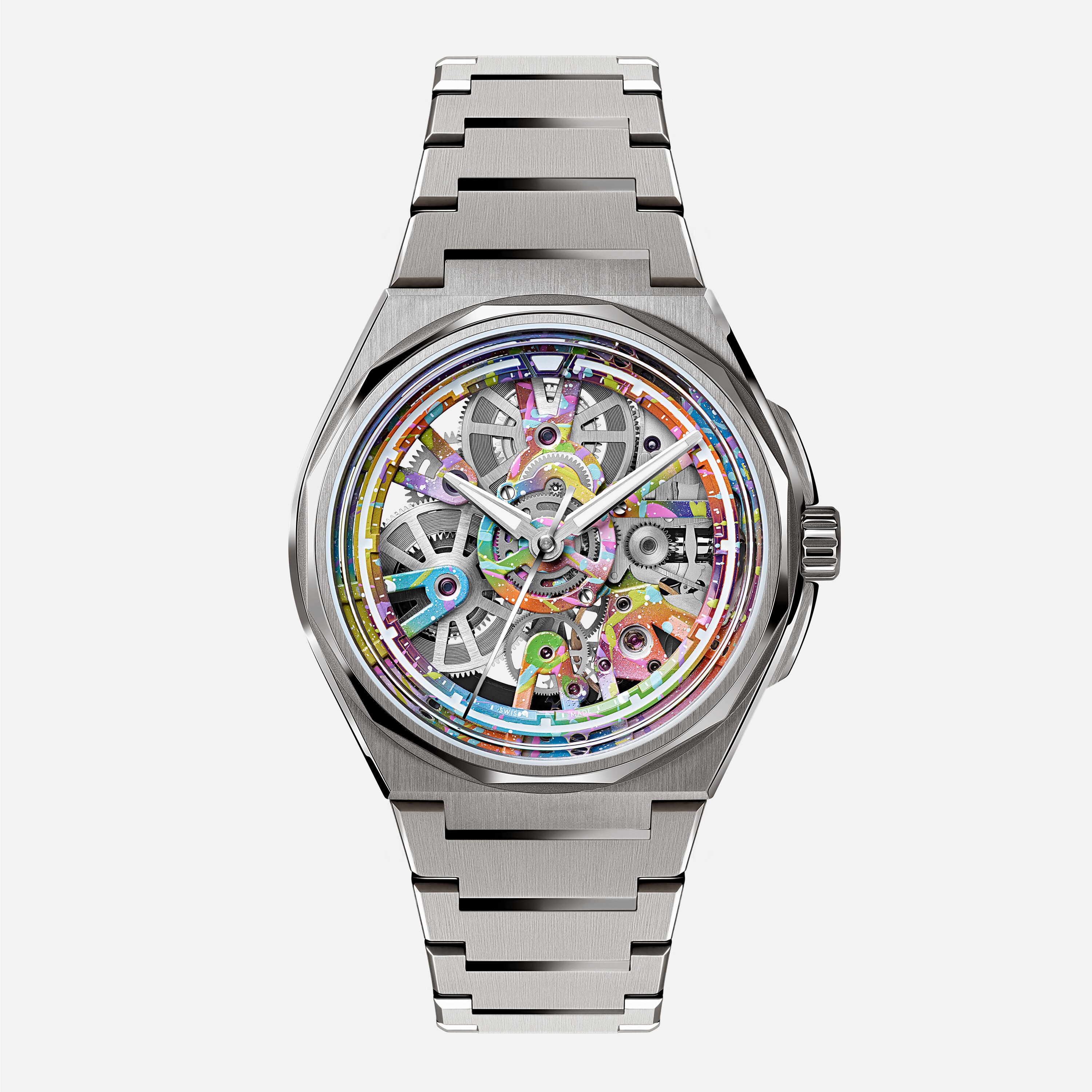
    A skeletonized sport watch becomes a canvas, courtesy of street artist Chris Alexander.

    Christopher Ward has taken its integrated-bracelet Twelve X and handed it to an outsider: London street artist Chris Alexander, known as “The Dial Artist.” The result, The Twelve Xander, keeps the 41mm titanium case and openworked movement of the standard model but adds hand-painted decoration across roughly eight movement components, work the brand says takes around 900 hours per watch. Only 150 pieces will be made.

    It’s announced July 9, 2026, and goes on general sale the following day, July 10, at 3pm BST, priced at £4,710 / $6,515 / €6,125. That’s a meaningful jump over a standard Twelve X, but it buys genuinely bespoke handwork rather than a printed or limited-run dial variant, a rare case of a mainstream microbrand collaborating directly with a visual artist on the movement itself rather than the dial alone.

    For a brand built on stretching value at accessible price points, the Xander is a statement piece: proof that Christopher Ward can still surprise collectors with something more artisanal than its usual spec-sheet pitch, even in a run of just 150.

    Source: Christopher Ward

    Why this watch, on this wrist?