Category: Spots

Celebrity and notable watch spottings — the main Spot.Watch feed.

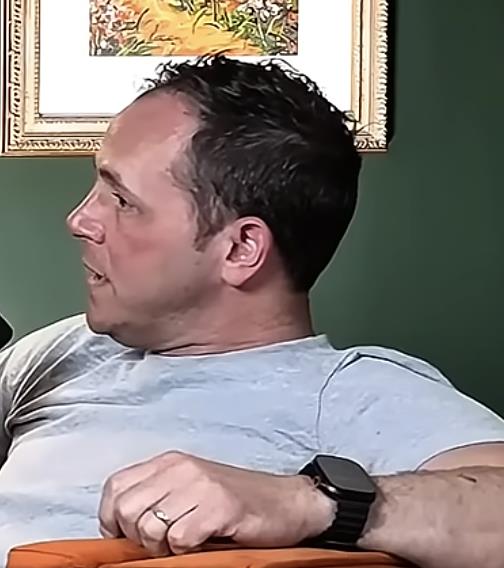
  • Ambassador Mike Waltz, Special Forces Green Beret, Rolex Yatch Master

    Ambassador Mike Waltz, Special Forces Green Beret, Rolex Yatch Master

    U.S. Ambassador to the United Nations — Former National Security Advisor — U.S. Army Green Beret

    Mike Waltz’s Rolex Yacht-Master: The Green Beret’s Watch at the United Nations

    Mike Waltz has operated in some of the most demanding environments American national security can produce — Special Forces deployments, the National Security Council, the halls of Congress, and now the United Nations. On his wrist: a Rolex Yacht-Master, a watch designed for navigating open water, worn by a man who has spent his career navigating considerably harder terrain.

    Mike Waltz. Source: YouTube

    Rolex Yacht-Master.

    ▶ Source: YouTube

    Michael Waltz was born on January 31, 1974, and built his public career across three distinct and demanding domains. He served as a U.S. Army Green Beret — Special Forces, the branch of the military that selects for adaptability, independence, and the ability to operate effectively in environments with minimal institutional support. He deployed multiple times, earned a reputation as a serious practitioner of the craft, and brought that credibility with him when he transitioned into public life. He served as a Republican Congressman from Florida’s 6th congressional district from 2019 to 2025, building a profile on national security and defense policy that reflected his operational background rather than simply his party affiliation.

    In 2025, Waltz was appointed National Security Advisor — a role that places its occupant at the center of the most consequential foreign policy and defense decisions the executive branch makes. In 2026 he transitioned to U.S. Ambassador to the United Nations, bringing his Special Forces background and Congressional experience into the most multilateral diplomatic arena in the world. The range of environments Waltz has operated across — forward operating bases, Congressional hearings, the Situation Room, the UN Security Council — is unusual even by the standards of American national security careers. The Rolex Yacht-Master on his wrist is the watch of a man who has learned to be competent and composed in conditions that vary considerably from one assignment to the next.

    Green Beret. Congressman. National Security Advisor. U.N. Ambassador. The environments change. The watch doesn’t need to. — Mike Waltz’s career trajectory, read against the wrist


    Timepiece

    Rolex Yacht-Master

    Rolex, founded in London in 1905 and headquartered in Geneva since 1919, introduced the Yacht-Master in 1992 as a sports watch positioned between the Submariner’s utilitarian tool-watch identity and the more formal end of the catalog. Where the Submariner is built for depth and the GMT-Master for aviation, the Yacht-Master is built for the water’s surface — racing, cruising, and the broader culture of competitive sailing that demands a watch that is simultaneously robust and refined.

    The Yacht-Master’s bidirectional rotatable bezel distinguishes it from the Submariner’s unidirectional dive bezel — a design choice that reflects its nautical rather than underwater application. Available in 37mm, 40mm, and 42mm, with case materials spanning Oystersteel, 18-karat gold, platinum, and the brand’s proprietary RLX titanium, it is one of Rolex’s most versatile professional references. The current models run on the in-house Calibre 3235 with a 70-hour power reserve. Its nautical aesthetic is more polished than the Submariner’s but no less capable.

    Collection Rolex Yacht-Master — 37mm, 40mm, or 42mm
    Case Oystersteel, gold, platinum, or RLX titanium; bidirectional bezel
    Movement In-house Cal. 3235; automatic; 70hr power reserve
    Market Price From ~$12,000 (steel) to $30,000+ (precious metal variants)

    Between the Submariner and the Dress Watch

    The Yacht-Master occupies a specific position in the Rolex catalog: more capable than a dress watch, more refined than the Submariner, designed for an environment — competitive sailing — that demands both qualities simultaneously. Racing on open water requires preparation, physical endurance, and precision timing; it also requires a watch that looks appropriate at the post-race dinner. The Yacht-Master resolves that tension without conceding either side of it. It is a watch for people who move between demanding environments and social ones and need something that functions correctly in both.

    Waltz’s career has followed the same pattern at every stage. Special Forces operations require the complete subordination of aesthetic presentation to function — comfort and appearance are irrelevant when the mission is active. Congressional hearings and national security briefings require a different kind of authority: composed, credible, appropriate to the institutional context. The United Nations requires all of it at once, in a room full of diplomats from every cultural tradition on earth, each reading every signal a counterpart projects. A watch that works in all of those environments without announcing itself in any of them is not a compromise. It is precision selection.

    The Special Forces Principle Applied to Watch Selection

    Green Berets are selected partly for their ability to adapt — to operate in cultures and environments they did not grow up in, to build relationships with local partners, to project competence and reliability across conditions that no amount of prior preparation could fully anticipate. The watch on a Special Forces officer’s wrist in that context is not a status signal. It is a tool that cannot fail and cannot draw attention it has not earned. The Rolex Yacht-Master is exactly that: a watch from the world’s most recognizable luxury brand that nevertheless manages to be understated within its own category, capable without being showy, refined without being fragile. On Mike Waltz’s wrist — from a forward operating base to the UN Security Council — it reads less like a choice and more like a standard operating procedure.


    More Rolex Spots on Spot.Watch

    Why this watch, on this wrist?

  • Chad Johnson Sporting the Rolex Day-Date 40mm

    Chad Johnson Sporting the Rolex Day-Date 40mm

    Cincinnati Bengals  ·  Six-Time Pro Bowler  ·  Chad Ochocinco

    Chad Johnson’s Rolex Day-Date: Ocho Never Did Anything Quietly

    Chad Johnson changed his name to match his jersey number, staged end zone celebrations that required advance planning, and led the NFL in receiving yards four times. The Rolex Day-Date in yellow gold is simply the next logical statement in a career built on refusing to go unnoticed.

    Chad Johnson. Source: YouTube

    Rolex Day-Date in 18k yellow gold on the President bracelet.

    ▶ Source: YouTube — Chad Johnson

    Chad Johnson was born in 1978 in Miami, Florida, and grew up in a household that required early self-reliance and a thick skin. He played college football at Oregon State and was drafted by the Cincinnati Bengals in the second round of the 2001 NFL Draft — not the highest-profile entry into the league, from a franchise that had not been to the playoffs since 1990. What followed over eleven seasons was one of the most entertaining and statistically dominant wide receiver careers of his era.

    Johnson made six Pro Bowls, earned three All-Pro selections, and led the NFL in receiving yards in 2002, 2005, 2006, and 2007. He finished with 1,047 career receptions for 15,127 yards — numbers that place him among the most productive receivers in league history. But the statistics were almost secondary to the performance. Johnson brought choreographed end zone celebrations at a time when the league was actively trying to suppress them, treating the post-touchdown moment as a canvas for comedy, theatrics, and a particular kind of defiant joy that the rulebook kept attempting to fine out of existence.

    In 2008, he legally changed his surname to Ochocinco — Spanish for eighty-five, his jersey number — a move that managed to be simultaneously absurd, calculated, and entirely on-brand. The NFL initially blocked it from appearing on his jersey; he wore it anyway once the league relented. He changed it back to Johnson in 2012 after his playing career wound down, but the Ochocinco chapter remains the clearest distillation of his approach: if the establishment has a rule about what you are allowed to call yourself, test it.

    “Child please.” — Chad Johnson (Ochocinco), on most objections


    Timepiece

    Rolex Day-Date 40 — 18k Yellow Gold, President Bracelet

    Introduced in 1956, the Rolex Day-Date earned its nickname — “The President’s Watch” — through decades of association with heads of state, from Dwight D. Eisenhower onward. It was the first wristwatch to simultaneously display the full day of the week and the date, and it remains the only Rolex reference made exclusively in precious metals: 18k yellow, white, or Everose gold, or platinum. No steel version has ever been produced.

    The Day-Date 40, updated in 2015 to a 40mm case, runs the Calibre 3255 — a movement delivering a 70-hour power reserve and a Chronergy escapement with 15% greater efficiency than conventional designs. The President bracelet, a semi-circular three-link design with a concealed clasp, has been exclusive to this reference since the beginning. The yellow gold reference is the original configuration and the most immediately legible expression of the model’s symbolism.

    Reference 228238 — 18k yellow gold, 40mm
    Case 40mm, 18k yellow gold, Oyster case, sapphire crystal, 100m water resistance
    Movement Calibre 3255, automatic, 70-hour power reserve, COSC-certified
    Market price ~$40,500 retail; secondary market $48,000–$65,000+

    A Watch for a Man Who Wore His Number as a Name

    The Day-Date’s entire proposition is visibility. The day spelled out in full at 12 o’clock serves no practical function that a simpler watch cannot also provide — the point is that it is there, legible, and unmistakable. Rolex designed the reference for people who wanted to be seen wearing it, which makes it a natural fit for Chad Johnson, a man who structured his entire professional identity around the same principle.

    His celebrations were not spontaneous. The riverdance after a touchdown against the Cowboys, the signing of a fan’s posterboard, the prewritten notes produced from the end zone pylon — these were planned, rehearsed, and executed with the kind of precision that the plays themselves required. Johnson understood that in a sport where individual expression is routinely fined and penalised, staging a spectacle that the camera had to follow was its own form of leverage. The Day-Date operates on the same logic: you wear it because it cannot be ignored.

    Why This Watch on This Wrist

    The Day-Date is nicknamed “The President” because presidents have worn it. Chad Johnson’s claim to the watch runs on different logic: he earned the wrist it sits on through a decade of doing the most difficult job in professional football — getting open against the best coverage defenders in the world, every Sunday, for eleven years — while simultaneously being the most entertaining person on the field. The name change, the celebrations, the sheer theatrical confidence of the Ochocinco era were not distractions from the football. They were the full picture of what he was: a player good enough to carry any stage he built around himself. The gold Day-Date is a natural conclusion to that career. Ocho never did anything quietly, and the President’s watch was never designed for people who did.


    More Rolex Day-Date Spots on Spot.Watch

    Why this watch, on this wrist?

  • Damian Woody’s Apple Watch

    Damian Woody’s Apple Watch

    ESPN NFL Analyst — Former New England Patriots, Detroit Lions & New York Jets

    Damien Woody’s Apple Watch: Twelve Seasons in the Trenches, Now Front and Centre on ESPN

    He played the most thankless position in professional football for twelve seasons — 173 games, 171 starts, across three teams, at centre, guard, and tackle depending on what each team needed. Two Super Bowl rings with New England. A Pro Bowl. A torn Achilles in the final game of his career. Damien Woody joined ESPN the day after he retired and has been on camera at Get Up, First Take, and NFL Live ever since. On his wrist: an Apple Watch — the watch that keeps working in the background so you don’t have to stop to manage it.

    Damien Woody wearing Apple Watch on ESPN

    Damien Woody — Apple Watch on wrist. Source: ESPN / YouTube

    Damien Woody Apple Watch detail

    Apple Watch — health monitoring, communications, continuous utility

    ▶ Source: YouTube

    Damien Michael Woody was born November 3, 1977, in Beaverdam, Virginia, and grew up in Ashland. He attended Patrick Henry High School, where he was a two-way lineman and helped the Patriots win the 1994 Virginia state football championship. He played college football at Boston College, developed into one of the most complete offensive linemen in the country, and was selected by the New England Patriots with the 17th overall pick in the 1999 NFL Draft — the first center taken in the first round in more than a decade. He started all 16 regular season games as a rookie. He was named to the NFL All-Rookie Team. Bill Belichick arrived the following season, and what unfolded over the next four years changed the franchise and, arguably, the sport.

    Woody was the anchor of the Patriots offensive line through the earliest years of the Belichick-Brady dynasty. He mostly played centre, snapping the ball to Tom Brady — though when shotgun formations were called, Woody would shift to guard because of difficulties with the long snap in that configuration. What he provided instead was intelligence, versatility, and the kind of reliability that allows an entire offence to function without drawing attention to itself. The Patriots won Super Bowl XXXVI following the 2001 season and Super Bowl XXXVIII following the 2003 season — Woody missed the latter game with a knee injury but had been integral to the team that earned its place there. Belichick said of him: “Damien gave the Patriots five solid years and was an important part of two Super Bowl champions. He’s a tough, flexible, team-oriented player.” He earned a Pro Bowl selection in 2002.

    He signed with the Detroit Lions in 2004 as the league’s highest-paid interior lineman at the time, started every game in his first two seasons there, and moved through guard and tackle as the team required. In 2008 he joined the New York Jets on a five-year, $25 million contract, helping the team reach the AFC Championship Game in 2009. On January 8, 2011, during a Wild Card playoff victory over the Indianapolis Colts, he tore his Achilles tendon. The Jets released him in February. He announced his retirement on July 26, 2011. Nine days later he joined ESPN. He has been there ever since — appearing on Get Up, First Take, NFL Live, SportsCenter, and Fantasy Football Now, providing the kind of inside-out offensive line perspective that most broadcasters simply cannot offer. As he has put it himself: “You don’t want to just go on TV and just say anything. I talk to the guys and get a feel for them. It takes work.”

    “Damien gave the Patriots five solid years and was an important part of two Super Bowl champions. He’s a tough, flexible, team-oriented player.” — Bill Belichick, on Damien Woody


    Timepiece

    Apple Watch

    The Apple Watch, first released in 2015, has become the world’s best-selling wearable device by doing what Damien Woody spent twelve seasons doing on an offensive line: making everything around it work more smoothly, without calling attention to itself. The current lineup spans the standard Series 11 (always-on Retina display, health sensors, GPS, cellular), the SE for everyday use, and the Ultra — built for the most demanding conditions, with a larger titanium case, extended battery life, and precision dual-frequency GPS. All models pair with iPhone and run watchOS, updating automatically over the air.

    For a former 330-pound offensive lineman now in front of a camera every morning, the health monitoring functions of the Apple Watch carry particular weight. Heart rate, ECG, blood oxygen, sleep tracking, and sleep apnea detection run continuously in the background — the kind of passive health awareness that matters for anyone who spent over a decade absorbing physical punishment at the highest level of professional sport. The communications and notification functions — calls, messages, and alerts on the wrist — keep a broadcast professional connected without requiring a phone to be constantly in hand. And the watch does all of it without demanding attention. Offensive linemen understand that instinctively.

    Platform Apple Watch (watchOS) — paired with iPhone
    Models Series 11 / SE / Ultra — aluminium, stainless steel, or titanium
    Health Heart rate, ECG, blood oxygen, sleep, sleep apnea detection, fall & crash detection
    Connectivity Calls, messages, notifications, Apple Pay — hands-free on wrist
    Navigation GPS with haptic turn-by-turn directions
    Software watchOS — over-the-air updates, continuously improving
    Price range From ~$249 (SE) to ~$799+ (Ultra)

    The Position Nobody Cheers

    Offensive linemen operate in a system where success is defined entirely by the absence of failure. Nobody chants the center’s name. Nobody wears the left tackle’s jersey. The stat line for a great performance is a blank — no sacks allowed, no penalties, no missed blocks. Twelve seasons of that, at the highest level, through multiple teams and positional adjustments and a career-ending Achilles tear in a playoff game, and then straight to a television studio where, for the first time, the camera is pointed directly at you and the microphone picks up every word.

    Woody has handled that transition with the same intelligence Belichick described. He talks to players and coaches before going on air. He brings the kind of positional specificity that most broadcasters cannot provide — the inside view of what a centre reads at the line of scrimmage, how a blocking scheme adjusts to a defensive front, why an offensive line succeeds or fails as a unit rather than as five individuals. The Apple Watch on his wrist in that studio is the same kind of practical, undemanding infrastructure: it does its work in the background, gives you what you need at the moment you need it, and stays out of the way the rest of the time.

    A Note on Health

    Woody was a contestant on The Biggest Loser: Glory Days in 2014, three years after retiring — a public acknowledgement of the physical toll that twelve seasons at 330 pounds in an NFL trench exacts. The Apple Watch’s continuous health monitoring suite — heart rate, ECG, blood oxygen, sleep apnea detection — is not an abstract feature list for someone with that history. It is genuinely useful in ways that most wearers never have to think about. The watch that tracks what is happening in the body of a former professional athlete, quietly and continuously, without interrupting a broadcast morning, is exactly the kind of device a man like Damien Woody benefits from wearing.


    More Apple Watch Spots on Spot.Watch

    Why this watch, on this wrist?

  • Andrew Shultz with the Rolex Daytona

    Andrew Shultz with the Rolex Daytona

    Stand-Up Comedian, Podcaster & Independent Media Operator — Flagrant | Brilliant Idiots

    Andrew Schulz’s Rolex Daytona: Comedy’s Most Independent Operator Wears the Watch He Earned Himself

    He turned down Netflix deals to self-distribute his specials. He sold out Madison Square Garden independently — no network, no label, no infrastructure he didn’t build himself. He co-hosts Flagrant with Akaash Singh and Brilliant Idiots with Charlamagne tha God, two of the most listened-to comedy podcasts in the country. He built his following from the ground up through crowd work clips, YouTube, and a refusal to let a streaming platform own his catalogue. Andrew Schulz runs comedy like a business. The Rolex Cosmograph Daytona on his wrist is the receipt.

    Andrew Schulz wearing Rolex Cosmograph Daytona

    Andrew Schulz — Rolex Cosmograph Daytona on wrist. Source: YouTube

    Andrew Schulz Rolex Daytona detail

    Rolex Cosmograph Daytona — tachymetric bezel, three-register chronograph, Calibre 4131

    ▶ Source: YouTube

    Andrew Schulz was born in New York City and built his comedy career through the clubs and the internet simultaneously — an unusual dual-track approach that gave him a live performance foundation and a digital audience before either had fully validated the other. He gained early online traction through crowd work clips: short videos of unscripted audience interaction that demonstrated a specific kind of improvisational confidence — the ability to read a room, escalate a bit in real time, and land without a net. The clips spread organically, building a following that was his rather than a platform’s.

    The business model he has built around that following is the most discussed in contemporary stand-up. When Netflix offered a deal for his 2022 special Infamous, Schulz declined and self-distributed instead — selling directly to audiences, retaining ownership of the content, and demonstrating that a comedian with sufficient audience relationship could bypass the streaming infrastructure entirely. The special was financially successful and attracted attention across the industry not because it broke records, but because it proved the model worked. He has continued self-distributing, touring extensively, and expanding the podcast portfolio. Flagrant with Akaash Singh covers sports, culture, and comedy from a New York perspective; Brilliant Idiots with Charlamagne tha God has run since 2013 and built one of the most loyal audiences in the podcast space. He has sold out Madison Square Garden on his own paper.

    “Known for his edgy, crowd-work-heavy style — he has released self-produced specials and tours extensively.” — On Andrew Schulz’s career


    Timepiece

    Rolex Cosmograph Daytona

    The Rolex Cosmograph Daytona was introduced in 1963 as a professional chronograph for racing drivers, named after the Daytona International Speedway in Florida. Its defining elements are the fixed engraved tachymetric bezel — calibrated to measure average speeds up to 400 units per hour — and a three-register chronograph layout on the 40mm Oyster case: running seconds at 9, 30-minute counter at 3, 12-hour counter at 6. Screw-down pushers and crown provide 100-metre water resistance, giving the watch the solidity of a professional instrument rather than a delicate piece.

    The movement is the in-house Calibre 4131 — an evolution of the landmark 4130, with a column-wheel chronograph mechanism, vertical clutch for clean activation, 72-hour power reserve, and Superlative Chronometer certification at ±2 seconds per day. The Daytona is available in stainless steel, Rolesor (steel and gold), solid gold in yellow, white, and Everose, and platinum — with dial configurations including the celebrated “Panda” (white dial, black subdials) and “Reverse Panda” (black dial, white subdials) amongst the most coveted. It trades on the secondary market at significant premiums over retail and remains one of the most requested references at authorised dealers globally. The Paul Newman vintage Daytona — a specific dial variant from the 1960s–70s — sold at auction for $17.75 million in 2017, the highest price ever achieved for a wristwatch at that time.

    Introduced 1963 — named after Daytona International Speedway
    Case 40mm Oystersteel — screw-down pushers and crown, 100m water resistant
    Bezel Fixed — engraved tachymetric scale to 400 units/hour
    Movement Calibre 4131 — automatic, column-wheel, vertical clutch, 72-hour power reserve
    Precision ±2 sec/day — Superlative Chronometer certified
    Collector note Paul Newman vintage Daytona — sold for $17.75M at Phillips, 2017
    Market price ~$15,100 retail (steel) — secondary market at significant premium

    Own Your Catalogue

    The most discussed business decision of Andrew Schulz’s career is the Netflix rejection — declining a streaming deal for Infamous and self-distributing instead, retaining ownership and the direct relationship with his audience. The decision attracted attention because it went against the conventional wisdom of what a comedian at his level should do: accept the platform deal, gain the exposure, cash the cheque. Schulz’s argument was that the platform deal trades long-term ownership for short-term distribution, and that a comedian with a large enough direct audience doesn’t need a platform to reach them.

    The Rolex Daytona was, for much of its early history, the watch that Rolex could not sell at retail — dealers returned stock, customers weren’t interested, and the reference sat in cases while sportier Rolex pieces moved faster. The people who bought them anyway — because they understood what the movement and the construction represented, independent of the market’s current opinion — built the foundation of the secondary market that eventually recognised the Daytona as the benchmark chronograph in the category. Schulz’s approach to his career and the Daytona’s trajectory share the same underlying logic: own what you build, don’t let the market’s current consensus determine your valuation, and wait for the audience to catch up. The audience, in both cases, has caught up.

    The New York Comedian’s Watch

    Schulz is a New York comedian in the deepest sense — his crowd work depends on reading the specific people in front of him, the references that land in a room at a particular moment, the energy of a specific city at a specific point in time. New York comedy is not a recorded product. It is a live negotiation between performer and audience, and the performer has to win it in real time with no script and no safety net. Selling out Madison Square Garden on independent paper — without a network’s promotional machinery behind the ticket sale — is the arena version of that negotiation: you have to have built enough direct trust with enough people that they show up without being told to by an algorithm. The Daytona is, among New York’s self-made creative class, the watch that signals exactly that kind of independent arrival. Schulz wears it correctly.


    More Rolex Daytona Spots on Spot.Watch

    Why this watch, on this wrist?

  • Amna Nawaz and her Apple Watch

    Amna Nawaz and her Apple Watch

    Co-Anchor & Co-Managing Editor — PBS NewsHour

    Amna Nawaz’s Apple Watch: The First Journalist Into North Waziristan Now Co-Anchors the PBS NewsHour

    She was the first foreign journalist to gain access to North Waziristan — then the global hub of Al Qaeda and the Taliban — while pregnant with her first daughter. She became the first Asian American and first Muslim American to moderate a U.S. presidential debate. In 2023, she became the first Muslim American woman to lead a national newscast. Amna Nawaz co-anchors the PBS NewsHour alongside Geoff Bennett. On her wrist: an Apple Watch — the device that monitors what a career like hers demands of a body.

    Amna Nawaz wearing Apple Watch on PBS NewsHour

    Amna Nawaz — Apple Watch on wrist. Source: PBS NewsHour / YouTube

    Amna Nawaz PBS NewsHour co-anchor

    Amna Nawaz — co-anchor, PBS NewsHour; Emmy and Peabody Award winner

    ▶ Source: YouTube

    Amna Nawaz began her journalism career as a Nightline Fellow at ABC News, and within weeks of starting her first job, the September 11 attacks happened. She was immediately put to work on one of the defining news events of the era — a beginning that, as she has noted, set the precedent for everything that followed. She moved to NBC News, where she became a foreign correspondent and the Islamabad Bureau Chief, reporting from Pakistan, Afghanistan, Syria, Turkey, and the surrounding region. In that role, she became the first foreign journalist to gain access to North Waziristan — then the recognised global headquarters of Al Qaeda and the Taliban — while she was pregnant with her first daughter. She also founded NBC’s Asian America platform in 2014, building it from nothing into a multimedia journalism operation dedicated to covering America’s fastest-growing and most diverse population.

    She joined ABC News in 2015, anchoring breaking news coverage and leading the network’s digital coverage of the 2016 presidential election, and hosting the documentary Roberts County: A Year in the Most Pro-Trump Town and the podcast series Uncomfortable — long-form conversations with thought leaders about the issues dividing American society. She joined PBS NewsHour in April 2018, and in December 2019 co-moderated the PBS NewsHour/Politico Democratic Presidential Primary Debate, becoming the first Asian American and first Muslim American in history to moderate a U.S. presidential debate. She won a Peabody Award for PBS NewsHour’s series on global plastic pollution, and an Emmy Award for her broadcast journalism. She has also hosted three seasons of the primetime PBS series Beyond the Canvas, profiling leading artists, musicians, and creators.

    Since January 2023, Nawaz has co-anchored the PBS NewsHour alongside Geoff Bennett, succeeding the legendary Judy Woodruff who anchored the programme for over a decade. In doing so, she became the first Muslim American woman to lead a national newscast in the United States. She is a member of the Council on Foreign Relations, a Georgetown University Institute of Politics and Public Service fellow, and serves as an NBC News and MSNBC contributor alongside her primary role at PBS.

    “The first Asian American and Muslim American to moderate a presidential debate, and now the first Muslim American woman to lead a national newscast.” — PBS NewsHour, on Amna Nawaz


    Timepiece

    Apple Watch

    The Apple Watch, now in its tenth generation and the world’s best-selling watch, is a health monitoring and communications platform that operates continuously — gathering physiological data, delivering information, and keeping its wearer connected without interrupting the work in front of them. The current lineup includes the standard Series 11 (always-on display, full health sensor suite, GPS, cellular), the SE 3, and the Ultra 3 — a titanium-cased model rated for extreme conditions. All models run watchOS with Apple Intelligence and update over the air.

    For a journalist whose career has taken her from North Waziristan to the presidential debate stage to the PBS NewsHour anchor desk, the Apple Watch’s health monitoring suite carries particular relevance. Heart rate monitoring, ECG, blood oxygen, sleep tracking, and sleep apnea detection run passively across the demands of a schedule that spans breaking news, nightly broadcasts, documentary production, podcast hosting, international reporting, and public speaking. Communications — calls, messages, and alerts — arrive at the wrist without requiring a phone to be produced in the middle of a live broadcast or a sensitive field reporting situation. The watch does all of this quietly, without announcement — which is consistent with how the most significant parts of Nawaz’s career have tended to happen.

    Platform Apple Watch (watchOS) — paired with iPhone
    Models Series 11 / SE 3 / Ultra 3 — aluminium, stainless steel, or titanium
    Health Heart rate, ECG, blood oxygen, sleep tracking, sleep apnea detection, fall & crash detection
    Connectivity Calls, messages, notifications, Apple Pay — hands-free on wrist
    Navigation GPS with haptic turn-by-turn directions
    Software watchOS with Apple Intelligence — over-the-air updates
    Price range From ~$249 (SE 3) to ~$799+ (Ultra 3)

    Going First

    The pattern in Amna Nawaz’s career is consistent: she goes where others have not gone, does what has not been done before, and does it without making that the point. The North Waziristan access was a journalistic achievement — the first foreign journalist into the region that was then the acknowledged operational centre of Al Qaeda and the Taliban — and she reported it while pregnant. The 2019 presidential debate was a historic moment — the first ever moderated by an Asian American, the first ever moderated by a Muslim American — and she moderated it with the same composure she brings to a Tuesday evening broadcast. The PBS NewsHour co-anchor role is one of the most significant positions in American public journalism, and she assumed it in 2023 as the first Muslim American woman to lead a national newscast. None of these firsts appear to have been her primary motivation. They appear to be the by-product of a journalist who simply goes further than most people do.

    The Quiet Device on the Informed Wrist

    The Apple Watch is, among all the devices in the spot.watch Apple Watch series, the one that belongs most naturally to someone whose career has been defined by doing significant things without drawing unnecessary attention to the doing of them. It is not a watch that announces itself. It does not ask to be noticed. It monitors continuously, communicates efficiently, and improves over time without requiring the wearer to manage the process. The Apple Watch on Amna Nawaz’s wrist at the PBS NewsHour anchor desk is on the wrist of a journalist who started her career covering the September 11 attacks in her first weeks on the job, reported from some of the most dangerous places on earth, and now leads one of the most trusted news programmes in the United States. The watch is the least remarkable thing in the picture.


    More Apple Watch Spots on Spot.Watch

    Why this watch, on this wrist?

  • Desmond Howard Sporting the Patek Philippe Nautilus Steel

    Desmond Howard Sporting the Patek Philippe Nautilus Steel

    College GameDay  ·  ESPN  ·  Heisman Trophy 1991  ·  Super Bowl XXXI MVP

    Desmond Howard’s Patek Philippe Nautilus: The Return Specialist’s Final Word

    He scored the touchdown that sealed a Super Bowl. He struck the pose that became a Heisman moment. And for twenty years, he has been the voice that college football trusts on Saturday mornings. On Desmond Howard‘s wrist: a Patek Philippe Nautilus — the watch that, like the man himself, took the world a little while to fully appreciate.

    Desmond Howard

    Desmond Howard on College GameDay. Source: YouTube

    Patek Philippe Nautilus

    The Patek Philippe Nautilus on the wrist.

    ▶ Source: YouTube

    There is a particular type of greatness that only reveals itself in retrospect. Desmond Howard built his career on understanding this better than almost anyone. At the University of Michigan, where he played from 1988 to 1991, Howard was a wide receiver of exceptional quickness and instinct — someone who turned short routes into long gains and contested catches into touchdowns. In 1991, that instinct was rewarded with the Heisman Trophy, college football’s highest individual honour. His acceptance pose — one arm raised, body tilted forward in the universal gesture of the returning champion — became one of the most reproduced images in the sport’s history. It now stands, in bronze, outside Michigan Stadium.

    The Green Bay Packers selected Howard fourth overall in the 1992 NFL Draft. His eleven-season professional career was characterised by something that the draft position didn’t quite anticipate: Howard was at his most dangerous not as a receiver but as a return specialist, a player who took the moments other teams threw away and turned them into decisive field position — and, on one occasion, into history. Super Bowl XXXI, January 1997. The Packers against the New England Patriots. The game was close. And then, in the third quarter, Desmond Howard fielded a kickoff at his own one-yard line, found a seam, and ran ninety-nine yards for a touchdown. It remains the longest kickoff return in Super Bowl history. Howard was named Super Bowl XXXI MVP — the first special teams player ever to win the award.

    Since 2005, Howard has been a fixture on ESPN’s College GameDay, the network’s flagship Saturday morning college football broadcast, where his Heisman pedigree and playing experience give his analysis a credibility that the audience recognises immediately. Two decades in the chair have made him one of the most recognisable voices in college football — a man who earned his place at that table by force of achievement, then stayed because of the quality of what he brings to it every week.

    “That moment is forever. Nobody can ever take that away from me.” — Desmond Howard, on the Super Bowl XXXI return


    Timepiece

    Patek Philippe Nautilus — Ref. 5711/1A-010

    The Patek Philippe Nautilus arrived in 1976 as one of the most audacious proposals in watchmaking history. At a time when Patek Philippe’s identity was rooted in dress watches and complicated pieces for the discerning few, the brand commissioned Gérald Genta — the designer already responsible for the Audemars Piguet Royal Oak — to create a luxury sports watch in stainless steel. The result, Reference 3700/1A, drew its form from the porthole of an ocean liner: a rounded octagonal bezel with exposed screws, an integrated bracelet that flowed seamlessly from the case, and a horizontally embossed dial that caught the light in long, parallel stripes. It was unusual, assertive, and unlike anything Patek had produced before.

    The Reference 5711/1A, produced from 2006 until its discontinuation in 2021, became the definitive modern expression of the Nautilus: 40mm across, blue sunburst dial with horizontal embossing, date at 3 o’clock, and the silky-smooth Calibre 324 S C inside. At retail, it was priced around $33,000 USD — a figure that, in retrospect, dramatically underestimated what the market would come to think of it. When Patek discontinued the 5711 in 2021, secondary market prices surged past $100,000. It was, in the end, a watch that the world took a little while to fully understand.

    Reference 5711/1A-010 (stainless steel, blue dial)
    Case 40mm stainless steel; integrated bracelet; 120m water resistance
    Movement Calibre 324 S C automatic; 45hr power reserve; Gyromax balance
    Market Price Secondary market approx. $60,000–$90,000 USD (discontinued 2021; original retail approx. $33,000)

    The Watch That Took the World Too Long to Notice

    There is a story that Gérald Genta sketched the original Nautilus on a cocktail napkin during a single inspired evening, then presented the design to Patek Philippe the following morning. The watch debuted at the 1976 Basel Fair priced higher than many gold watches of the era — a deliberate provocation, an argument in steel that luxury did not require precious metal. The reception was lukewarm. Retailers were sceptical. Some watches went unsold in display cases for years. The Nautilus, it seemed, had misjudged the room.

    What followed was one of the slowest vindications in watchmaking history. Decade by decade, the Nautilus accumulated a following — collectors who recognised that its design was genuinely unrepeatable, that its proportions were more considered than they first appeared, that the horizontal embossing on the dial caught the light in a way that required sustained attention to fully appreciate. By the time Patek discontinued the steel 5711 in 2021, the waiting list had stretched to years and the secondary market had become one of the most volatile in the hobby. The watch that once sat unloved in display cases was now the benchmark by which all luxury sports watches were measured. Sometimes greatness simply needs the room to catch up.

    Why This Watch on This Wrist

    Desmond Howard’s career has its own version of this arc. Drafted fourth overall, he was expected to be a marquee receiving threat — and for stretches of his career, he was. But his defining contribution came from a role that NFL franchises often treat as secondary: the return specialist. Special teams work is unglamorous, unheralded, and frequently invisible until the one moment it decides a game. Howard spent years perfecting that craft. And then, on the biggest stage in American sport, he took a kickoff from his own one-yard line and ran it ninety-nine yards to put the Super Bowl beyond reach. He was named MVP for a game that his team’s quarterback — Brett Favre, in one of the great seasons in NFL history — might reasonably have expected to win. The man in the role nobody was watching won the award that everyone wanted. On the wrist of a man who built a Hall-of-Fame career out of taking what others overlooked and making it definitive, the Patek Philippe Nautilus is not a coincidence. It is a statement of exactly how he has always seen the world.

    Why this watch, on this wrist?

  • AnthonyPompliano‬ and the Apple Watch

    AnthonyPompliano‬ and the Apple Watch

    Entrepreneur, Investor & Bitcoin Advocate — Professional Capital Management / The Pomp Podcast

    Anthony Pompliano’s Apple Watch: 80% in Bitcoin, 50 Million Podcast Downloads, and the Watch That Compounds

    U.S. Army Infantry Sergeant. Iraq veteran. Facebook growth team. Morgan Creek Digital. Professional Capital Management. 270,000+ newsletter subscribers. 50 million podcast downloads. 200+ portfolio investments. 80% of personal wealth in Bitcoin. Anthony “Pomp” Pompliano has spent the better part of a decade making the case that the future arrives before most people are ready for it. The Apple Watch on his wrist is the device of someone who understands what a well-timed bet on technology looks like.

    Anthony Pompliano Pomp wearing Apple Watch

    Anthony Pompliano — Apple Watch on wrist. Source: YouTube Live

    Anthony Pompliano Pomp Podcast investor

    Anthony Pompliano — founder, Professional Capital Management; host, The Pomp Podcast

    ▶ Source: YouTube Live

    Anthony “Pomp” Pompliano was born June 15, 1988, attended Cardinal Gibbons High School, and graduated from Bucknell University with a double major in economics and sociology. He enlisted in the U.S. Army in March 2006 and served as an Infantry Sergeant until August 2012, including a deployment to Iraq in support of Operation Iraqi Freedom from 2008 to 2009. He was a Distinguished Leader Graduate of the Warrior Leader Course and a Commandant’s List Graduate of Infantry Leadership School. That military background — disciplined, structured, built around executing under pressure — is the foundation everything that followed was built on.

    After leaving the Army, Pompliano joined Facebook, where he led product and growth teams. He then co-founded Morgan Creek Digital Assets, a multi-strategy investment firm providing institutional and high-net-worth investors access to digital assets and blockchain technology. By 2018 he had launched The Pomp Podcast (originally titled Off The Chain), a daily interview show covering business, finance, and Bitcoin, which has since accumulated over 50 million downloads and hosted guests including Michael Saylor, Mark Cuban, Cathie Wood, Chamath Palihapitiya, and David Sacks. He simultaneously publishes The Pomp Letter, a daily newsletter with over 270,000 subscribers. He later founded Professional Capital Management, his current investment firm, with more than 200 portfolio companies across public and private markets.

    The number that defines Pompliano’s public identity most precisely is the one he has stated openly: approximately 80% of his personal net worth is held in Bitcoin, with the remainder across early-stage companies, real estate, and media. He is among the most consistent and longest-standing public advocates for Bitcoin as the defining monetary asset of the coming era — not as a trade, but as a conviction. He convinced comedian Bill Burr to buy Bitcoin live on the podcast in 2020. He debates critics publicly. He has been doing this since before Bitcoin was a mainstream conversation, and he is still doing it now.

    “He started out his career in the army and has since built and sold numerous companies, ran product and growth teams at Facebook, and manages a portfolio valued at more than $500 million.” — Noah Kagan, on Anthony Pompliano


    Timepiece

    Apple Watch

    The Apple Watch, first released in 2015 and now in its tenth generation, is the world’s best-selling watch by a wide margin — the product of a technology bet that seemed uncertain in 2014 and now seems inevitable in retrospect. The current lineup — Series 11, SE 3, and Ultra 3 — combines continuous health monitoring, wrist-level communications, fitness tracking, and ecosystem integration in a device that improves over the air, automatically, with each watchOS release. It has compounded in value and utility for a decade. That is the kind of trajectory Pompliano understands.

    Health monitoring — heart rate, ECG, blood oxygen, sleep analysis — runs continuously without interrupting the workflow of someone who publishes a daily newsletter, hosts a daily show on X, records regular podcast episodes, manages an active investment portfolio, and tracks global financial markets. Notifications and calls arrive at the glance rather than the reach. Apple Pay handles transactions. Fitness tracking monitors the discipline that military service instilled and a media career demands. The watch operates in the background while Pompliano operates in the foreground — which is how he prefers all his infrastructure to work.

    Platform Apple Watch (watchOS) — paired with iPhone
    Models Series 11 / SE 3 / Ultra 3 — aluminium, stainless steel, or titanium
    Health Heart rate, ECG, blood oxygen, sleep tracking, fall & crash detection
    Connectivity Calls, messages, notifications, Apple Pay — hands-free on wrist
    Navigation GPS with haptic turn-by-turn directions
    Software watchOS — over-the-air updates, continuously improving
    Price range From ~$249 (SE 3) to ~$799+ (Ultra 3)

    The Asymmetric Bet on the Wrist

    Pompliano’s investment philosophy is built on asymmetric opportunity: identifying technologies and assets whose upside is disproportionate to the downside, and concentrating there with conviction rather than hedging it away. He made that bet with Bitcoin before it was respectable to do so, and has held it through cycles of enthusiasm and contempt. The track record — 80% of personal wealth in the asset, and the asset has outperformed virtually every traditional instrument over the relevant holding period — suggests the thesis has been correct more often than wrong.

    The Apple Watch was its own asymmetric bet in 2015 — a device entering a product category (smartwatches) that had repeatedly failed to achieve mainstream adoption, launched by a company that had never made a watch, priced at a premium, dependent on iPhone pairing. A decade later it is the world’s best-selling watch of any kind. The person wearing it on his wrist in 2025 understands exactly what the trajectory of a well-timed technology bet looks like from the outside. Pompliano has been on the inside of enough of them to recognise the pattern.

    From Infantry to Infrastructure

    The most underappreciated detail in Pompliano’s biography is the military chapter. Six years as an Infantry Sergeant, including a combat deployment to Iraq — a background that shapes how someone thinks about discipline, execution, and risk in ways that no business school curriculum does. The Warrior Leader Course. Infantry Leadership School. These are not decorative credentials; they are the formative context for a career built on conviction-based positioning, daily consistency of output, and a willingness to hold a position under pressure. The Apple Watch on his wrist is, among other things, a monitoring device descended from military fitness and health tracking traditions — continuous physiological awareness, immediate communications, zero tolerance for the watch failing to work. From infantry to infrastructure: the Apple Watch is the tool of someone who learned early that the equipment you wear had better work when it needs to.


    More Apple Watch Spots on Spot.Watch

    Why this watch, on this wrist?

  • Daniel Craig with the Rolex Explorer

    Daniel Craig with the Rolex Explorer

    James Bond  ·  Casino Royale to No Time to Die  ·  Knives Out

    Daniel Craig’s Rolex Explorer: What Bond Wears When No One’s Watching

    He wore Omega in five Bond films, became the face of the brand, and redefined a fictional spy for a generation. But here, sitting down with director Rian Johnson to answer questions about Knives Out, Daniel Craig is wearing a Rolex Explorer — the same watch the man who created James Bond wore every day of his life.

    Daniel Craig

    Daniel Craig. Source: YouTube / Knives Out Q&A

    Rolex Explorer

    The Rolex Explorer on the wrist.

    ▶ Source: Daniel Craig & Rian Johnson Answering The Most Searched Knives Out Questions — YouTube

    Daniel Craig was born on March 2, 1968, in Chester, Cheshire, and trained at the Guildhall School of Music and Drama in London. His early career was built through theatre and a series of British television and film roles that established his range without quite announcing his arrival to a wider audience. That changed definitively in 2006 when he stepped into the role of James Bond in Casino Royale — a casting decision that, at the time, provoked genuine controversy. Too blond. Too rough. Not quite right. The internet was not kind. And then the film opened, and the argument was over.

    Craig played Bond five times over fifteen years — through Casino Royale (2006), Quantum of Solace (2008), Skyfall (2012), Spectre (2015), and No Time to Die (2021) — each film layering additional weight and complexity onto a character that Craig insisted on treating as a human being rather than an icon. His Bond bled. His Bond grieved. His Bond, by the final film, had earned an ending. In parallel, Craig built a formidable second career outside the franchise: his Benoit Blanc detective in Rian Johnson’s Knives Out series demonstrated a wit and ease that his Bond work, with its relentless intensity, rarely permitted. Here is an actor of considerable range, exercising it fully.

    The watch situation is, in the world of watch culture, one of the more layered stories in contemporary collecting. Craig’s Bond wore Omega in every film from 2006 to 2021 — a formal brand partnership that made the Seamaster synonymous with the character in a way that hadn’t been true since Sean Connery wore a Rolex Submariner in the early films. Off-screen, Craig has been known to wear Omega as well, appearing publicly in various Seamaster models as part of the broader ambassador relationship. But Craig is also a serious watch collector with a documented affection for Rolex: a vintage Paul Newman Daytona, a GMT-Master II, a modified Project X Submariner, and the vintage Submariner 6538 that Connery wore on screen. And here, on a press day with Rian Johnson, the Bond who wore Omega every time a camera was rolling has reached for a Rolex Explorer.

    “A gentleman’s choice of timepiece says as much about him as does his Savile Row suit.” — Ian Fleming, creator of James Bond


    Timepiece

    Rolex Explorer — Ref. 124270 (36mm)

    The Rolex Explorer is the most unadorned watch the Crown makes. Introduced in 1953 to commemorate the first successful ascent of Everest by Edmund Hillary and Tenzing Norgay — the latter having worn Oyster Perpetuals during the climb — the Explorer’s design logic has remained essentially unchanged for over seven decades: black dial, white luminous 3-6-9 Arabic numerals, Mercedes handset, Oystersteel case, no date, no coloured bezel, no precious metal option. What it is, is a watch that works. The Explorer has never been available in gold. It has never offered a complicated function. It exists entirely without embellishment, which makes it, for a certain kind of wearer, the most compelling watch in the Rolex catalogue.

    The current Reference 124270, introduced in 2021, returned the Explorer to its historical 36mm case size after a decade at 39mm — a deliberate statement about proportion and restraint. Powered by the Calibre 3230 with 70 hours of power reserve, it is technically the most capable Explorer ever made. It is also, in a market saturated with bold designs and precious complications, the quietest.

    Reference 124270 (Oystersteel, 36mm, black dial)
    Case 36mm Oystersteel; no bezel insert; 100m water resistance
    Movement Calibre 3230 automatic; 70hr power reserve; Superlative Chronometer
    Market Price Retail approx. $6,900 USD; secondary market approx. $6,000–$8,000 USD

    Fleming’s Watch, Craig’s Choice

    Ian Fleming, who created James Bond in 1952, wore a Rolex Explorer — Reference 1016 — every day of his adult life. Photographs of Fleming at his Jamaican home, GoldenEye, on film sets, in interview: the Explorer is always there. It was not incidental. Fleming wrote that Bond’s watch had to be a Rolex, specifically, because Bond was a man who used what he wore rather than merely displaying it. The Explorer embodied that philosophy precisely: no superfluous function, no concession to fashion, nothing that was not required by the task of telling the time accurately under any conditions.

    The contractual Bond of the Craig era wore Omega. But the private man — on a press day for a Rian Johnson film, sitting across from a director in a room with no camera crew and no brand obligation — reaches for the Explorer. This is not a case of a celebrity being paid to wear a watch. It is a case of an actor with a substantial personal collection and a genuine understanding of horology choosing, when the choice is entirely his own, the most stripped-back, most purposeful watch that Rolex makes. That is information.

    Why This Watch on This Wrist

    Craig’s Bond was, by deliberate design, a study in removing the artifice from a character who had always hidden behind it. Where previous Bonds were smooth surfaces — unruffled, unreadable, impeccably finished — Craig’s version showed the damage underneath. He built a Bond for whom the elegance was effortful, which is a much more interesting proposition. The Rolex Explorer is, in horological terms, the same argument: a watch that achieves its effect through the removal of everything unnecessary, not through the addition of anything decorative. No colour. No complication. No statement other than the statement of absolute function. The man who played Bond as a human being, and not a silhouette, chose the watch that is exactly what it needs to be and nothing more. Ian Fleming would have approved. He would have recognised the choice immediately. He made it himself every morning for most of his life.

    Why this watch, on this wrist?
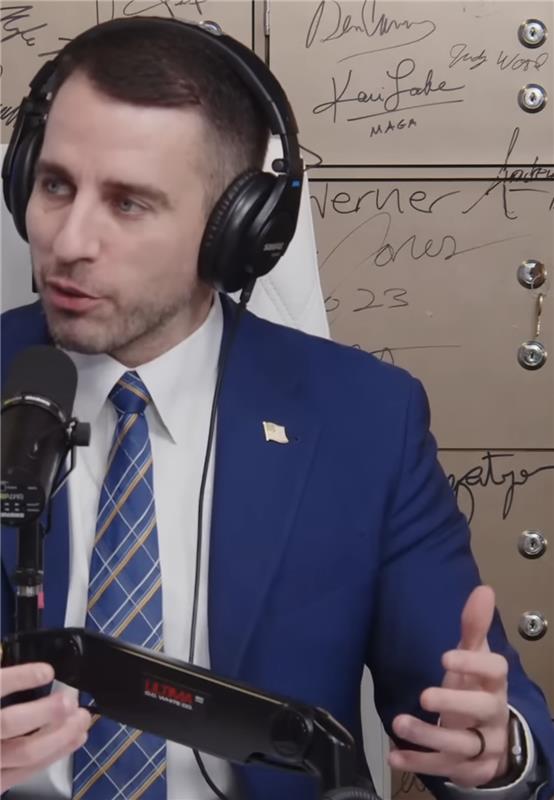
  • Chase Hughes with the Apple Ultra

    Chase Hughes with the Apple Ultra

    Behavioral Science Expert, Author & Former U.S. Navy Chief — The Behavior Panel

    Chase Hughes’ Apple Watch: The Man Who Reads Everyone Else Wears the Device That Reads Him

    Twenty years in the U.S. Navy, specialising in behaviour profiling, interrogation, and human intelligence operations. Bestselling author of The Ellipsis Manual and TONGUE: A Cognitive Hazard. Founder of NCI University and co-founder of The Behavior Panel. A career built on the systematic study of how people read — and misread — other people. On the wrist of Chase Hughes: an Apple Watch, which monitors his own heart rate, sleep, movement, and physiology continuously. The behavioural scientist, tracked.

    Chase Hughes wearing Apple Watch

    Chase Hughes — Apple Watch on wrist. Source: @thealphamind-z1c

    Chase Hughes Apple Watch detail

    Apple Watch — continuous health monitoring, physiological tracking

    Chase Hughes served for approximately twenty years in the United States Navy as a Chief, specialising in behavioural profiling, interrogation, and Human Intelligence (HUMINT) operations. During that career he developed frameworks for reading nonverbal behaviour, detecting deception, and structuring influence — work that he describes as having been embedded in military training programmes and used by government agencies. After leaving military service, he channelled that body of knowledge into a publishing and training operation: The Ellipsis Manual (2017), a field manual covering profiling, body language, and persuasion; Six-Minute X-Ray; The Behavior Operations Manual; and most recently TONGUE: A Cognitive Hazard (December 2025), which explores how language itself shapes cognition and perception.

    He founded NCI University — Neuro-Cognitive Intelligence — to teach his frameworks to law enforcement, businesses, and the general public at multiple certification levels, from foundational observation skills through advanced profiling and influence. He co-founded The Behavior Panel, a YouTube channel on which a group of behaviour experts analyse nonverbal cues and deception indicators in public figures and media events in real time. He has appeared on The Joe Rogan Experience and other high-reach podcasts, consults for law firms and corporations, and has spoken widely on the architecture of influence — how decisions are shaped by forces operating below conscious awareness. His motto, repeated consistently across his platforms: “We rise by lifting others.”

    It is worth acknowledging, as his own introductory material does not, that aspects of his claimed credentials and the more extravagant formulations of his methods have attracted sceptical scrutiny online. This is a space — behavioural science, influence, interrogation — where claims can be difficult to verify and marketing language often outpaces evidence. What is demonstrable is a substantial body of published work, a large and engaged following across platforms, and a consistent focus on teaching observable behavioural frameworks rather than mystical persuasion powers. The Apple Watch on his wrist is, in that context, a reasonable choice for someone who thinks carefully about what the body signals — and what it needs.

    “I’ve spent most of my life studying people — not the cute, Instagram version of ‘behavior,’ the real stuff.” — Chase Hughes


    Timepiece

    Apple Watch

    The Apple Watch, first released in 2015 and now the world’s best-selling watch by a significant margin, is a continuous physiological monitoring platform as much as it is a timepiece. The current lineup — Series 11, SE, and Ultra — collects a running picture of the body’s states across the day and night: heart rate patterns, heart rate variability, blood oxygen saturation, sleep stages and duration, detected sleep apnea events, activity levels, and the signals that precede falls or crashes. All of it runs passively, continuously, and invisibly — the wearer need not attend to it for it to work.

    This is, for a behavioural scientist, a meaningful proposition. Hughes’ professional work centres on the systematic collection and interpretation of physiological and behavioural signals — the microexpressions, baseline deviations, vocal patterns, and movement cues that reveal internal states the subject may not be consciously expressing. The Apple Watch does something analogous, inward rather than outward: it reads the wearer’s own body continuously, surfaces anomalies, and delivers information that the wearer might not otherwise notice. Heart rate under stress. Sleep quality affecting cognitive performance the following day. Blood oxygen variations. These are the kinds of signals a behavioural expert understands to be important — and the Apple Watch collects them without requiring the wearer to do anything beyond wearing it.

    Platform Apple Watch (watchOS) — paired with iPhone
    Models Series 11 / SE / Ultra — aluminium, stainless steel, or titanium
    Health monitoring Heart rate, ECG, blood oxygen, sleep tracking, sleep apnea detection, fall & crash detection
    Connectivity Calls, messages, notifications, Apple Pay — hands-free on wrist
    Safety Emergency SOS, fall detection, crash detection, loud sound alerts
    Software watchOS — over-the-air updates, continuously improving
    Price range From ~$249 (SE) to ~$799+ (Ultra)

    The Watcher, Watched

    Chase Hughes’ professional framework rests on a central premise: the body is constantly broadcasting information that the conscious mind is not managing. Microexpressions, baseline deviations, physiological arousal indicators — these signals exist regardless of whether the person producing them knows it or intends it. His work teaches people to notice these signals in others, to interpret them systematically, and to respond to what the body is communicating rather than what the voice is saying.

    The Apple Watch operates from the same premise, directed inward. It monitors the physiological signals the wearer’s own body is producing — continuously, passively, without requiring conscious attention — and surfaces patterns that would otherwise remain invisible. A heart rate that climbs before a stressful engagement and takes longer than expected to return to baseline. A night’s sleep interrupted in ways that affect cognitive clarity the following afternoon. Blood oxygen dips that correlate with fatigue. These are exactly the kinds of signals a behavioural expert would tell a client to pay attention to in high-stakes situations — and the Apple Watch collects them around the clock. For Hughes, the watch is not incidental. It is the inward-facing version of the same professional attention he applies outward.

    The Architecture of Influence on the Wrist

    Hughes’ books describe influence as operating below conscious awareness — not through manipulation in the Hollywood sense, but through the systematic leveraging of how brains actually process information. The Apple Watch works the same way in its health monitoring role: it does not wait for the wearer to notice a problem and decide to investigate. It collects continuously, flags patterns automatically, and delivers insight that the wearer would not otherwise have. The architecture of both systems — behavioural profiling and wrist-worn biometrics — is the same: passive collection, pattern recognition, surfaced insight. On the wrist of the person who built a career teaching others to read signals they weren’t consciously seeing, the device that reads signals he isn’t consciously noticing is an entirely coherent choice.


    More Apple Watch Spots on Spot.Watch

    Why this watch, on this wrist?

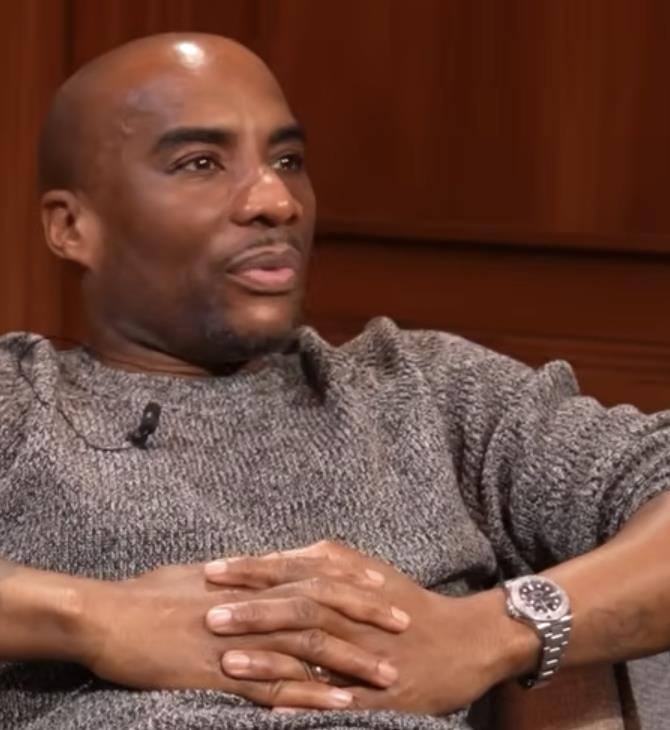
  • Charlamagne (Lenard McKelvey) – Rolex Yacht Master

    Charlamagne (Lenard McKelvey) – Rolex Yacht Master

    Radio Host, Cultural Commentator & Media Provocateur

    Charlamagne tha God’s Rolex Yacht-Master: Sharp Talk, Polished Steel

    Charlamagne tha God, born Lenard McKelvey, has built a public persona on candor, friction, and cultural instinct. That makes the sighting of a Rolex Yacht-Master especially fitting: a watch that sits between sport and polish, projecting confidence without the overt aggression of some more obvious status pieces.
    Charlamagne tha God wearing a Rolex Yacht-Master
    Charlamagne tha God wearing the watch during a video appearance.
    Source/Credit: YouTube source image
    Rolex Yacht-Master close-up
    The Rolex Yacht-Master combines nautical roots with a more refined Rolex sports-watch profile.
    Source/Credit: NING image / reference image

    Charlamagne has spent years making himself unavoidable in American media. As a co-host of The Breakfast Club, a podcast presence on Brilliant Idiots, and an author with a voice that routinely spills beyond radio into politics, entertainment, and self-help, he has become more than an interviewer. He operates as a kind of cultural pressure point, someone who tests guests, pushes narratives, and keeps conversations from settling into PR-approved comfort.

    That reputation matters when reading the watch. The Yacht-Master has never been Rolex’s bluntest instrument. It shares the Oyster architecture and robustness that define the brand’s sports models, but it is softer at the edges, more fluid in tone, and more interested in composure than conquest. Where a Submariner can read like pure utility and a Daytona like motorsport mythology, the Yacht-Master lives in a more social register.

    On Charlamagne, that balance lands well. His public image has always mixed confrontation with charisma. He can be provocative, but he is also polished enough to move between radio, television, publishing, and business. The Yacht-Master mirrors that duality. It is sporty, but not rough. Luxurious, but not delicate. Recognizable, yet slightly off the most predictable Rolex path.

    That is what makes this sighting worth more than a simple celebrity inventory note. The best watch spots reveal something coherent about the wearer. Here, the Rolex choice doesn’t flatten Charlamagne into another celebrity with a nice watch. It suggests someone who understands presentation, who knows the value of being seen clearly, and who prefers confidence with a bit of nuance behind it.

    The Yacht-Master has always been the Rolex sports watch for someone who wants presence without shouting.
    —Spot.Watch editorial observation

    Timepiece

    Rolex Yacht-Master

    The Rolex Yacht-Master arrived in 1992 as a different kind of Rolex sports watch. Rather than leaning fully into diving, racing, or exploration, it took the brand’s Oyster formula and gave it a more luxurious, marina-adjacent identity. The result was a watch that retained the reliability and everyday wearability Rolex is known for, while introducing a more elevated, almost leisure-class tone.

    Over the years, the Yacht-Master has appeared in multiple sizes and material combinations, from Rolesium models pairing Oystersteel with platinum, to gold versions, to modern executions in RLX titanium. Its bidirectional rotatable bezel and 100-meter Oyster case keep it grounded in Rolex sports-watch utility, but the overall impression is more refined than rugged.

    That is why the Yacht-Master matters in the wider Rolex conversation. It occupies a middle ground many brands struggle to hit: capable, luxurious, unmistakably sporty, yet not overbuilt for theater. In celebrity wear, it often reads as a thoughtful choice rather than the most obvious one, which gives it a different kind of credibility.

    Reference / Model Rolex Yacht-Master (exact reference not confirmed from the provided image)
    Case Oyster case, typically 37mm to 42mm depending on reference
    Movement Automatic Rolex manufacture movement, reference-dependent
    Key Features Bidirectional rotatable bezel, Oyster construction, sporty-luxury styling, bracelet or Oysterflex options depending on model
    Water Resistance 100 meters
    Retail / Market Position Premium Rolex sports model with pricing dependent on size, metal, and specific reference

    A Better Match Than the Obvious Choice

    There are more aggressive watches Charlamagne could wear, and more conservative ones too. The Yacht-Master is interesting because it avoids both extremes. It has the authority of Rolex, but with a smoother silhouette and a more self-aware sense of style. That suits someone whose career depends not only on forcefulness, but on timing, delivery, and tone.

    In that sense, the watch becomes an extension of media fluency. Charlamagne has made a career out of knowing when to press harder and when to let the moment breathe. The Yacht-Master does something similar visually. It is assertive without becoming blunt, luxurious without becoming soft, and familiar without becoming dull.

    What the Watch Reveals

    Celebrity watch coverage often falls into easy shorthand: expensive watch, successful person, end of story. But that misses the point. The more interesting question is why a certain watch makes sense on a certain wrist. Here, the answer lies in calibration. Charlamagne’s image has always involved control over tension, over reaction, over the energy of the room. The Yacht-Master feels calibrated in the same way.

    It is a reminder that taste is often most visible in the choices that stop just short of obviousness. The Yacht-Master carries all the benefits of a recognizable Rolex, but with enough distinction to suggest intention. And for a public figure whose whole career has been built on saying the thing others won’t, that intentionality matters.

    Why this watch, on this wrist?