Category: Watches by the Country

Horology around the world — watchmaking traditions country by country.

  • The Watchmakers of Malaysia

    The Watchmakers of Malaysia

    WATCHES BY THE COUNTRY

    The Watchmakers of Malaysia

    A country with no horological past has become one of the most exciting places to watch the microbrand present unfold.

    MING watch

    Image: MING

    Malaysia is not a name that appears in the old ledgers of watchmaking. It has no centuries of trade guilds, no valley of family workshops, no dynasty of movement makers. Yet in the span of roughly a decade it has become an unlikely and thrilling hotbed for independent and microbrand watchmaking. As The Watch Collectors’ Club put it in a survey of unexpected watch nations, this is a place “even less famous for watchmaking or collecting than Singapore,” and yet it has produced a global breakout (thewatchcollectorsclub.com).

    That breakout is Horologer MING, and its success proved a point that now animates a whole scene: a serious watch company can start anywhere. Across Kuala Lumpur and the Klang Valley, a wave of creators has learned to pair Swiss grade components and movements with distinctly Malaysian design cues, cultural motifs, and community driven, crowdfunded launches. What follows is a field guide to the makers building this young tradition from scratch.

    The Makers

    The house that started it all

    MING (founded 2017) is the reason the world now looks to Malaysia. Headquartered in Kuala Lumpur, the brand handles design, engineering, and quality control in Malaysia while working with production partners in Switzerland. Its early models, spare in styling yet radical in their layered, luminous dial work, were such immediate hits that waiting lists formed almost overnight, as The Watch Collectors’ Club noted in its microbrand roundup (thewatchcollectorsclub.com). It remains one of the country’s best known modern watch brands on the international stage, and a benchmark for everyone who followed.

    The independents finding their voice

    Selten Watch Company (founded 2017), the independent brand of founder Leonardo Tsai, works in small batches of mechanical watches, with collections such as the M1 and Salvage. Its deliberate, limited production approach is a reminder that Malaysian watchmaking is being built one considered release at a time.

    Fateh Watches (founded 2020) leans hardest into national identity. Founded by Fitry Zainal and Haji Zainal Mohd Ali, the brand builds limited production mechanical watches that wear their Malaysian character openly, a proud statement that homegrown design belongs on the wrist.

    Revelot watch

    Image: Revelot

    Aerotec Watches (founded 2015) is the tool watch specialist of the group. Associated with founder Terence See, it produces dive and pilot inspired models in materials such as bronze, titanium, and stainless steel, the kind of rugged, purpose built pieces that reward hard wear and long ownership.

    The accessible and the curated

    Revelot (founded 2017) has focused on making mechanical watchmaking approachable. The brand offers both mechanical and quartz pieces through its online store and local retail channels, with lines including the R series and the Hexmariner. It is a useful entry point for new collectors curious about the Malaysian scene.

    Lug to Lug Watches plays a dual role that says a lot about how this community works. It is both a homegrown brand, with models such as the Urbanist and the Suvi, and a microbrand retailer that curates other independent names alongside its own. In a young ecosystem, that kind of shop is a gathering place as much as a store.

    The Close

    Malaysia’s watch story is being written in real time, and that is exactly what makes it worth following. There is no inherited prestige to lean on here, only design ideas, engineering ambition, and communities of enthusiasts willing to back a good project before the first piece ships. From MING’s Swiss made showpieces to Aerotec’s bronze tool watches and Fateh’s proudly local mechanicals, these makers share a single conviction: that great watches can come from anywhere, provided someone cares enough to build them. Explore them for yourself, read the reviews, and mind your import duties. The next chapter of this tradition is still being drawn.

    Until the next country, keep your eyes on the dial.

    Why this watch, on this wrist?
  • The Watchmakers of Ghana

    The Watchmakers of Ghana

    WATCHES BY THE COUNTRY

    The Watchmakers of Ghana

    In the workshops of Accra, a young generation is teaching the world to tell time in Twi.

    Ghana carries no centuries old horological pedigree. There are no valleys of family owned movement makers here, no lineage stretching back to the age of pocket watches. What Ghana has instead is something rarer and, in its own way, more exciting: a movement being written in real time. Over the last decade a small band of entrepreneurs, most of them based in Accra, has begun designing and hand assembling watches on home soil, framing each piece as a quiet argument for African craftsmanship and national pride.

    The stakes are cultural as much as commercial. In a market long dominated by imports and replicas, these founders are working to change what a Ghanaian consumer expects when they hear “Made in Ghana.” The goal is not to imitate Switzerland or Japan, but to prove that a durable, well finished, locally built timepiece can carry heritage on its dial and create jobs in the process. It is a small industry, but a confident one, and Accra has become its beating center.

    The Makers

    Homegrown Pioneers

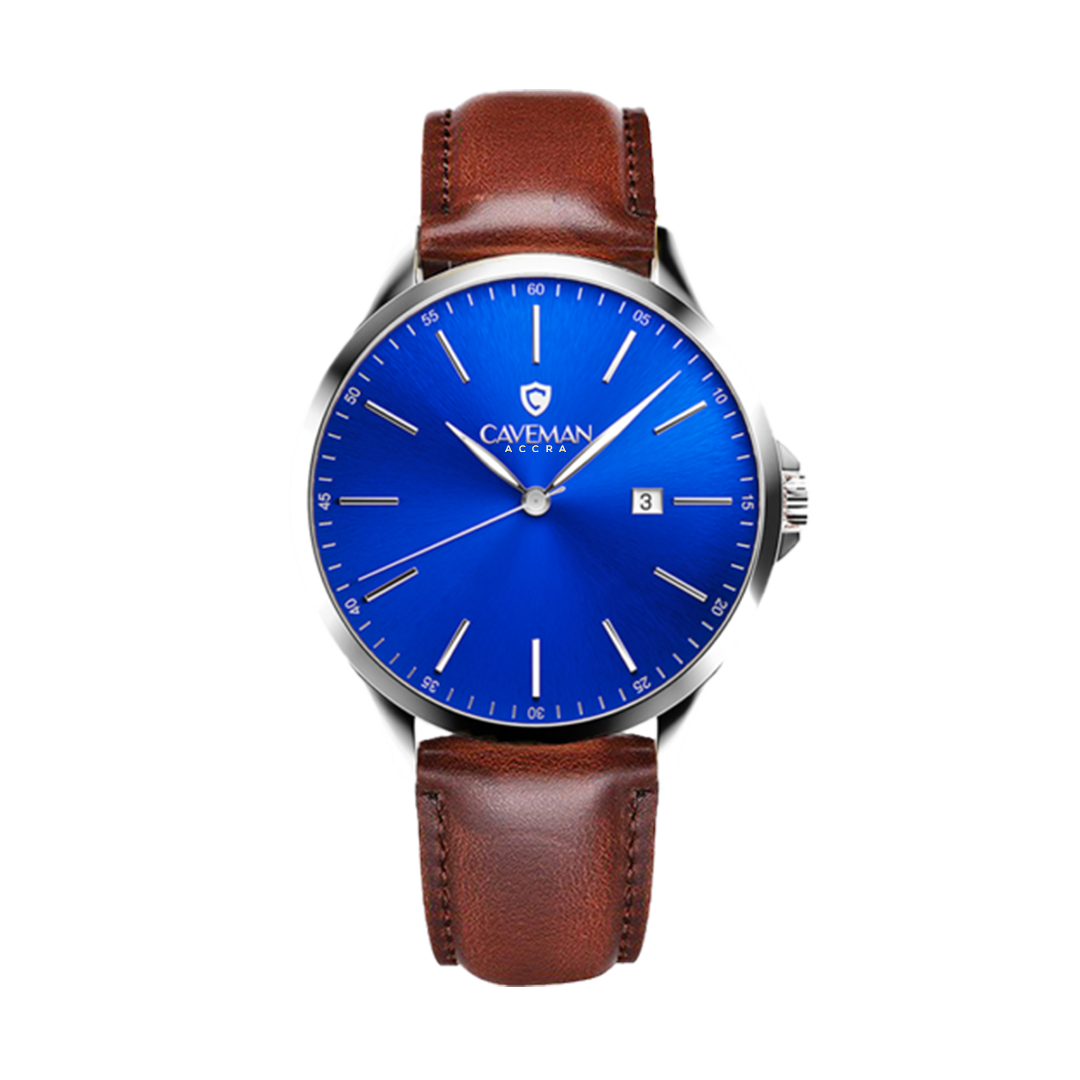
    Caveman Watches is the name most often cited when the conversation turns to Ghanaian watchmaking, and with good reason. Founded on 12 December 2018 by Anthony Mensah Dzamefe, the Accra based brand grew out of an earlier venture Dzamefe started selling watches around Madina in the Greater Accra Region. Caveman leans on vintage style hand assembly and natural raw materials, positioning itself around originality, durability and sustainability rather than mass production. Its reach has stretched well beyond Ghana: the company reports crafting a bespoke 24k rose gold, honeycomb inspired timepiece for Beyoncé in 2023, and has presented watches to figures including Angélique Kidjo, Don Jazzy, Boris Kodjoe and footballer Jeremiah Owusu-Koramoah, per Caveman’s own account.

    The brand’s trophy case backs up its ambitions. Caveman lists recognition including Emerging Brand of the Year at the 2019 Young Achievers Summit, Brand of the Year at the 2021 EMY Africa Awards, and both Product of the Year (for its Blue Volta watch) and Watch Manufacturing Company of the Year at the 2021 Ghana Manufacturing Awards. In December 2024 it opened a new head office in East Legon. Beyond the watches, the company frames itself around community work, from job creation to providing potable water in underserved areas. Its stated mission is disarmingly practical: quality and affordable time telling for the Ghanaian consumer and beyond.

    Heritage and Identity

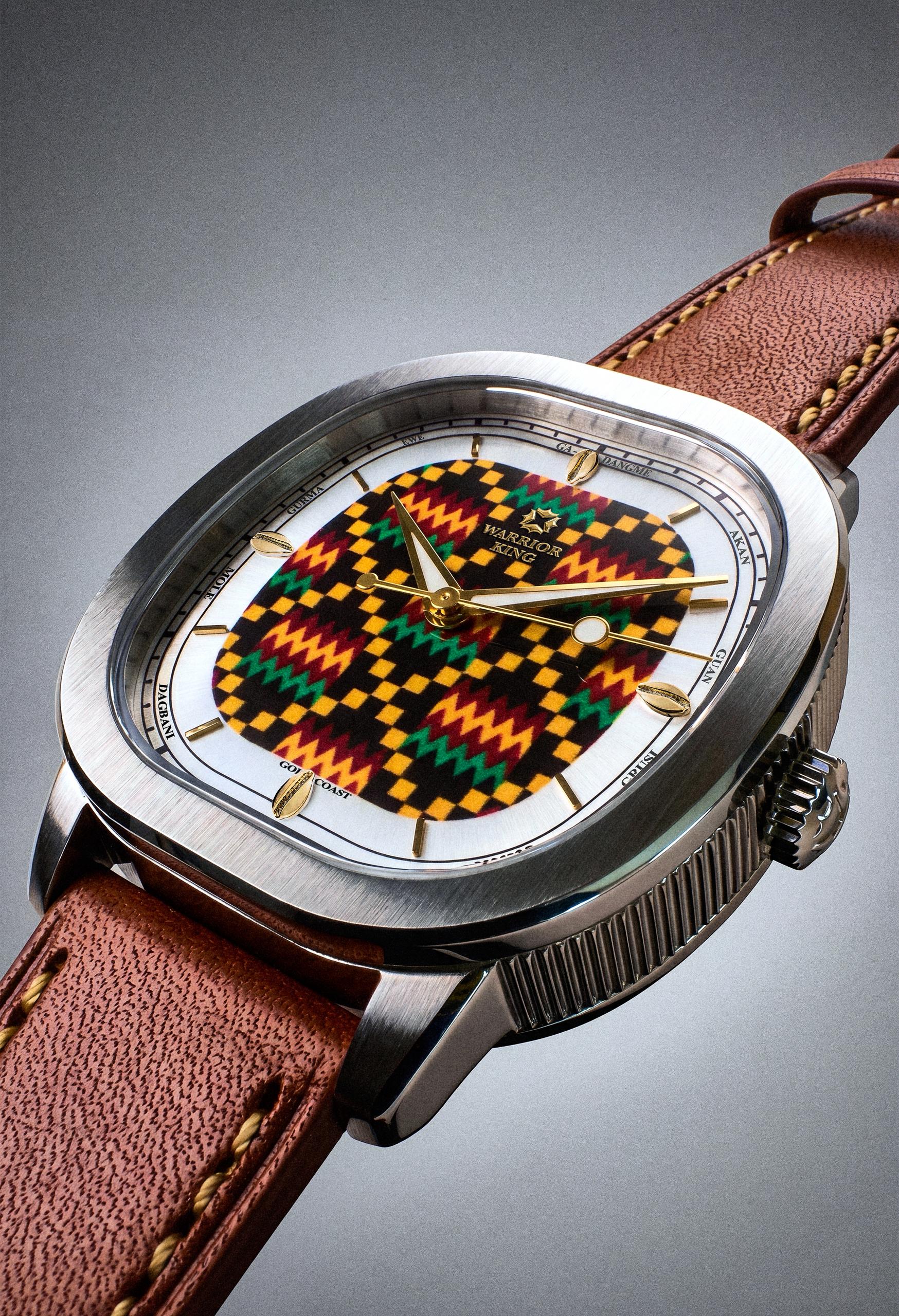
    Warrior King Watches approaches the same challenge from a different angle, drawing directly on Ghanaian cultural and heritage themes in its designs. Operating out of Dzorwulu in Accra, the brand treats the watch as a canvas for national identity, a way to wear a story rather than simply mark the hours. In a young market still defining what a local timepiece should look and feel like, that emphasis on symbolism and heritage gives Warrior King a distinct voice alongside its peers.

    The Bigger Picture

    What unites these makers is a shared conviction that a watch made in Accra can compete on its own terms. Both brands are small by global standards, and neither pretends to the industrial scale of established watchmaking nations. But that is rather the point. The value here is in the intent: to build, assemble and finish at home, to employ Ghanaians, and to shift perception one wrist at a time.

    It is worth being clear about what this guide does and does not claim. The details above come from the brands themselves, and much of the specifics on Warrior King’s catalog and history are simply not public. Where Caveman is happy to reel off awards and celebrity commissions, the broader Ghanaian scene remains young enough that its full shape is still coming into focus. That is the honest state of play, and honestly, it is part of the appeal. This is a story still being written.

    WHERE TO FIND THEM

    Caveman Watches — Accra, Ghana
    Warrior King Watches — Dzorwulu, Accra, Ghana

    Ghana’s watchmaking is not a revival of something old; it is the invention of something new. Two Accra based names carrying two visions, both wagering that the phrase “Made in Ghana” belongs on a well finished dial. Keep an eye on this corner of the map. The next chapter of African horology is being assembled by hand, right now, in the workshops of the capital.

    Spot.Watch will keep watching. Tick by tick.

    Why this watch, on this wrist?

  • The Watchmakers of Poland

    The Watchmakers of Poland

    WATCHES BY THE COUNTRY

    The Watchmakers of Poland

    Where socialist steel meets independent spirit, and every dial carries a story worth telling.

    Polpora watch

    Image: Polpora

    Poland does not headline the usual conversations about horology. Those tend to run through Switzerland, Germany, or Japan. Yet the country has a quiet horological identity all its own, one built on two distinct chapters. The first is a modest industrial legacy from the socialist era, typified by state watch factories such as Błonie, which turned out watches by the hundreds of thousands. The second, and by far the livelier chapter, is a 21st century revival led by a spirited crop of independent makers.

    These newer Polish brands share a common instinct: they mine national history for meaning. Their watches lean into folklore, aviation, maritime heritage, and the great figures of Polish culture, often pairing Swiss or Japanese base movements with local design, assembly, and storytelling. Warsaw’s AuroChronos Festival has become a growing showcase for this emerging scene, giving the country’s small workshops a stage of their own. What follows is a short field guide to a handful of the makers keeping Polish time.

    The Makers

    The Manufacture

    Polpora is the closest thing Poland has to a full mechanical manufacture in this group. Founded in 2006 and based in Zielona Góra, the company set out to restore a dormant national watchmaking tradition, and it has stuck to mechanical movements exclusively, automatic and manual wind alike. Polpora’s identity is deeply rooted in Polish culture and history, with models that nod to figures such as Copernicus and Kościuszko. It is the sort of brand where the historical reference is the whole point, not a marketing afterthought.

    The Heritage Revival

    Błonie carries the weight of the old state era on its shoulders, and it wears it well. The original Błonie watch factory was a genuine mid-century Polish producer, and the modern company revives that name and design legacy for a new generation. Today’s Błonie preserves the character of its 1960s output while folding in contemporary design and technology, aiming squarely at collectors who value Polish heritage as much as the watch on their wrist. It is a bridge between the country’s two horological chapters, the industrial past and the independent present.

    G.Gerlach watch

    Image: G.Gerlach

    The Storytellers

    G.Gerlach is perhaps the most historically minded of the microbrands. Operated by a foundation devoted to Polish technical heritage, it takes its name from Gustaw Gerlach, a 19th century industrialist, and builds collections that reference Polish military, aviation, and engineering history. The brand was started by watch collectors who wanted timepieces they would be proud to wear, and its designs blend vintage cues with contemporary touches, playing with dials, hands, and bezels without ever straying too far from the classical norm. For anyone drawn to the narrative side of watchmaking, G.Gerlach is a natural place to start.

    The Maritime Voice

    Balticus turns to the sea for inspiration, drawing its naming and design language from the Baltic and Poland’s coastal identity. The brand produces modern mechanical watches, including diver and sport models, giving the Polish scene a distinctly maritime flavor that sets it apart from the aviation and cultural themes favored elsewhere. If Polpora looks to the library and G.Gerlach to the airfield, Balticus looks to the water.

    Poland’s watch world is small, but that is precisely its charm. These are makers who build watches for reasons, whether to honor an astronomer, revive a lost factory, salute the country’s engineers, or capture the pull of the Baltic. The Swiss and Japanese movements inside may be borrowed, yet the stories, the design, and the assembly are unmistakably Polish. Keep an eye on the AuroChronos Festival, and an eye on this quiet corner of Central Europe. The revival is only gathering pace.

    WHERE TO FIND THEM

    Polpora — polpora.com
    Błonie — blonie.com
    G.Gerlach — gerlach.org.pl
    Balticus — balticus-watches.com

    Until the next border, keep watching.

    Why this watch, on this wrist?

  • The Watchmakers of Finland

    The Watchmakers of Finland

    WATCHES BY THE COUNTRY

    The Watchmakers of Finland

    Where Nordic silence meets mechanical precision, and the Arctic light finds its way onto a dial.

    Suunto watch

    Image: Suunto

    Finland has slipped, almost without fanfare, into the front rank of Europe’s small-scale watchmaking nations. This is not a country of vast factories and marketing spectacle. It is a country of ateliers, benches, and a state-supported watchmaking school near Helsinki that has quietly trained a generation of independents now respected far beyond the Baltic. The Finnish way favors restraint over volume: tight-knit workshops, careful hands, and a design language rooted in the landscape itself.

    That landscape runs deep through the work. Arctic wood, elk leather, and archipelago themes appear again and again, married to the clean geometry that Finnish design is known for the world over. Alongside a heritage name like Leijona, founded in 1907, a younger community of microbrands and independents has grown up around Helsinki, each interpreting Nordic minimalism in its own way. Here is a field guide to a few of them.

    The Makers

    The Instrument Maker

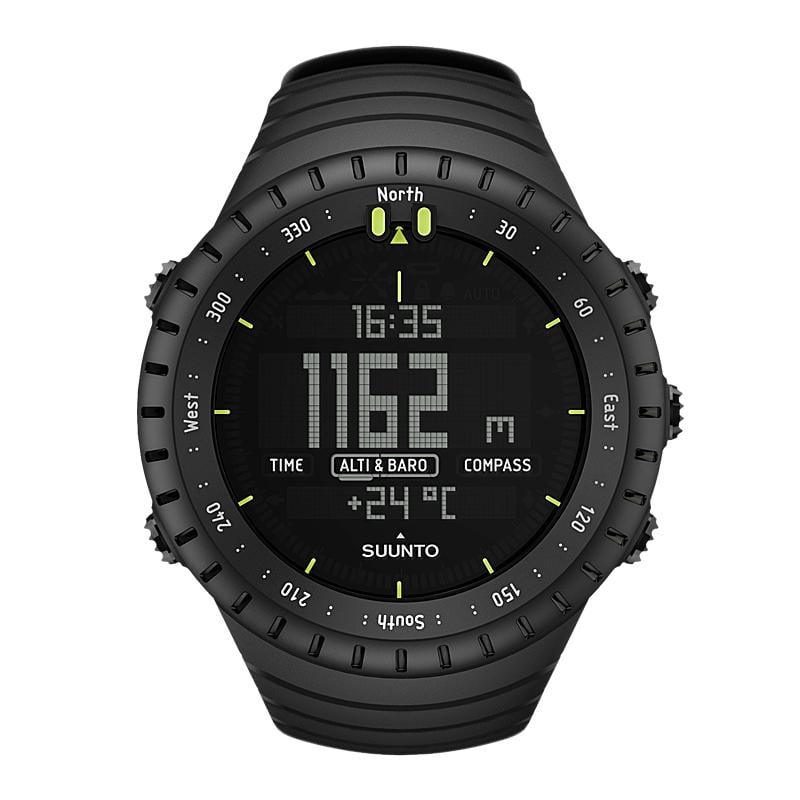
    Suunto is the outlier and the giant of Finnish timekeeping. Founded in 1936 and headquartered in Vantaa, it built its global reputation on precision instruments: compasses, dive computers, GPS watches, and sports watches worn by explorers, divers, and athletes. Where the rest of the Finnish scene leans mechanical and artisanal, Suunto represents the country’s engineering tradition, function first and rugged to the core.

    The Heritage House

    Leijona traces its roots to 1907, making it one of the oldest and best-known domestic watch names in Finland. Its longevity is its story: generations of Finns have marked their milestones with a Leijona on the wrist. The brand remains a fixture of the national identity, a familiar name that still stands for accessible, everyday Finnish watchmaking.

    The Independents

    If Finland has a horological star, it is Stepan Sarpaneva. His eponymous house, Sarpaneva, was founded in 2003 in Helsinki and has become internationally collectible for its unmistakable dial and case work. Sarpaneva’s designs are strange in the best sense, immediately recognizable and unlike anything coming out of Switzerland. It is proof that a single independent voice can put a whole country on the map.

    Leijona watch

    Image: Leijona

    Sarpaneva’s sister brand, S.U.F Helsinki, arrived in 2004 with a different remit. Where the main line explores the eccentric, S.U.F produces limited mechanical watches built around Finnish themes with local assembly. As the brand puts it, these are watches that are “Finland, through and through.” It is the more grounded, patriotic counterpart to Sarpaneva’s oddball world.

    From Espoo comes Jurmo, an independent brand that pairs Nordic styling with small-scale mechanical production. Named after a spot in the Finnish archipelago, Jurmo leans into the country’s nature-first design instinct, offering a clean and considered take on the modern Finnish mechanical watch.

    The Microbrands

    Not every Finnish maker is chasing haute horlogerie, and that variety is part of the charm. Pook Watches, based in Joensuu, brings color and accessibility to the scene with dive-style watches built on Japanese automatic movements. Its cheerful, adventure-minded identity (“to the next adventures,” as the brand says) is a friendly counterpoint to the more austere corners of Finnish design.

    Aarni, founded in 2015, takes the country’s affinity for natural materials to its logical conclusion. The brand builds watches and accessories from wood and other natural materials, framing itself as “nature refined” and Scandinavian by design. It is the most literal expression of the Finnish habit of bringing the forest onto the wrist.

    The Close

    What unites these makers is not a house style but a temperament: quiet confidence, respect for materials, and a refusal to do more than is needed. From Suunto’s field instruments to Sarpaneva’s collectible eccentricities, Finland proves that a small nation with a good school and a strong sense of place can produce watches that travel the world. Keep an eye on the north. The light up there is doing interesting things.

    Brands and details verified against the independent Watches of Finland community of makers. Explore each maker at the links above, and support the small workshops keeping Finnish horology alive.

    WHERE TO FIND THEM

    Suunto — Vantaa
    Leijona — Finland
    Sarpaneva — Helsinki
    S.U.F Helsinki — Helsinki
    Jurmo — Espoo
    Pook Watches — Joensuu
    Aarni — Finland

    Why this watch, on this wrist?

  • The Watchmakers of Denmark

    The Watchmakers of Denmark

    WATCHES BY THE COUNTRY

    The Watchmakers of Denmark

    Where furniture design logic meets the wrist, and less is very nearly everything.

    Denmark rarely comes up in the same breath as Switzerland or Germany, and that is precisely the point. This small Nordic kingdom never built a sprawling mechanical manufacturing industry. What it built instead was a design philosophy, one exported through chairs, lamps, radios, and hi-fi systems long before it reached the wrist. Clean lines, honest materials, and the conviction that form should follow function: these are the same instincts that shaped Danish furniture icons and now shape Danish watches.

    There is real horological history here too. The Jürgensen watchmaking family carried a Danish name into the highest reaches of the craft, and today Copenhagen and Aarhus host a lively scene of microbrands and design houses. Some chase affordable minimalism at scale, others chase craft ambition in small batches, but nearly all of them share that unmistakable Scandinavian restraint. Below is a field guide to a cross section of the country’s makers.

    The Design Houses

    Denmark’s watch story is inseparable from its wider design legacy, and no name proves that better than Georg Jensen. Founded in Copenhagen in 1904, the house built its reputation on silver and jewelry before extending that heritage into timepieces, including the Koppel collection. A Georg Jensen watch reads less like a gadget and more like a piece of Danish design history you can wear.

    The same lineage runs through Jacob Jensen, the design house founded by the industrial designer of the same name in 1958. Jensen’s studio helped define what modern Danish product design looks like, and its watches carry that spare, architectural aesthetic onto the wrist. These are pieces defined by geometry and quiet confidence rather than ornament.

    The Modern Design Brands

    If you have browsed a minimalist watch online in the last decade, you have probably crossed paths with Nordgreen. Founded in Copenhagen in 2017 by Pascar Sivam and Vasilij Brandt, the brand made accessible Scandinavian design its whole reason for being. Industrial designer Jakob Wagner is associated with its design language, and the result is a range of clean, uncluttered watches that have found a genuinely global audience.

    Obaku takes minimalism somewhere slightly more meditative. Launched in 2007, the brand blends Danish design with a Zen aesthetic, producing watches that are designed in Denmark and sold internationally. The emphasis is on calm, uncluttered dials and a sense of stillness, an approach that feels distinctly of its home country.

    Nordgreen watch

    Image: Nordgreen

    Then there is Bering, founded in 2010 and named for the Danish explorer Vitus Bering. As the brand tells it, the concept was born after a trip to the North Pole, and that Arctic inspiration runs through everything: think minimalist design paired with materials like sapphire crystal and ceramic. The tagline says it plainly, “Inspired by Arctic Beauty.” Bering has become one of Denmark’s most recognizable exports in the design watch category, spanning both watches and jewelry.

    The Microbrands and Craft Makers

    For those who want a bit more character and a bit more craft, Denmark’s independent scene delivers. Henry Archer, based in Aarhus and founded by Henrik Schødt, focuses on slim automatic watches dressed in clean Scandinavian design cues. It is a small operation with a clear point of view, and its lean cases show how much personality can live inside restraint.

    Vejrhøj offers something more unexpected. Founded in 2013 by Janus Aarup, this independent brand is best known for combining natural wood with steel and other materials, all within a firmly Scandinavian design framework. Using wood as a primary material is a bold move in a field obsessed with metal, and it gives Vejrhøj pieces a warmth and tactility that stand apart from the crowd.

    Together, these two makers represent the quieter, more hands-on end of Danish watchmaking, the part of the scene where design and craft ambition matter more than volume.

    The Close

    Danish watchmaking is not about complications stacked ten deep or centuries of manufacturing pedigree. It is about a way of seeing: the belief that a well made object should be honest, useful, and beautiful in its simplicity. Whether you gravitate toward the heritage of Georg Jensen and Jacob Jensen, the accessible minimalism of Nordgreen, Obaku, and Bering, or the craft focus of Henry Archer and Vejrhøj, there is a distinctly Danish sensibility running through all of it.

    Some of the facts above draw on WhichWatch.org’s roundup of Danish brands, which you can read at whichwatch.org. As ever, the best way to understand a watch is to visit the maker directly and see the design thinking for yourself.

    Why this watch, on this wrist?

  • The Watchmakers of Hong Kong

    The Watchmakers of Hong Kong

    WATCHES BY THE COUNTRY

    The Watchmakers of Hong Kong

    Where assembly lines once ruled, a design city now keeps its own time.

    Memorigin watch

    Image: Memorigin

    Few places have shaped the modern wristwatch as quietly, and as thoroughly, as Hong Kong. From the 1960s through the 1990s, the city’s factories, traders, and assembly workers turned imported movements into finished watches at extraordinary volume. Exports jumped eightfold across the 1970s, and by the early 1990s Hong Kong stood as the world’s leading watch exporter by quantity, supplying close to 70 percent of the planet’s watches after pivoting hard into inexpensive quartz, as the South China Morning Post has documented.

    Then the economics shifted. As costs rose, mass production drifted north to mainland China, and Hong Kong reinvented itself as a hub for design, sourcing, retail, and trade. That reinvention set the stage for something new: a generation of homegrown brands and independent makers who blend Chinese heritage with modern craft and bold, accessible design. Below are five names carrying that story forward.

    The Makers

    The homegrown houses

    Memorigin, founded in 2011, is arguably the city’s most ambitious watchmaker. It builds mechanical watches around tourbillon movements, the kind of complication usually reserved for far pricier Swiss houses. What sets Memorigin apart is its willingness to dress that complication in Chinese cultural themes, marrying traditional watchmaking codes with local storytelling.

    Longio took the longer road. Founded in 1996, it began in manufacturing and OEM work before stepping out under its own name. Today Longio makes high-spec Chinese-made mechanical watches, including tourbillon models, and stands as proof that the city’s factory era could evolve into genuine brand-building rather than fade away.

    The microbrands

    Phoibos Watches, established in 2016, speaks to the value-hungry enthusiast. The brand, which styles itself PHOIBOS, concentrates on dive and tool watches that deliver real capability without a premium price. It is exactly the sort of focused, no-nonsense offering that thrives in a city built on efficient production and sharp sourcing.

    Selten Watch Company was founded in 2017 by Leonardo Tsai and takes a more studious approach. Selten builds modern mechanical watches with a stated emphasis on regulation and finishing, chasing the feel of a serious independent while keeping things within an accessible format. It is a quiet, craft-first proposition in a scene that often shouts.

    ANICORN Watches, founded in 2014 by Joe Kwan and Chris Chan, represents Hong Kong’s design-led streak. Known for its disc-display watches, ANICORN reads more like a design studio than a traditional workshop, and it has built a reputation through collaborations with cultural, design, and space-related partners. It is the clearest expression of the city’s post-factory identity: ideas first, then time-telling.

    Hong Kong’s horological story is one of reinvention. The volume left, but the know-how, the eye for design, and the trading instincts stayed. In the hands of makers like Memorigin, Longio, Phoibos, Selten, and ANICORN, that inheritance has become something distinctly the city’s own. Keep an eye on this harbor. It has always known how time flies.

    Why this watch, on this wrist?

  • The Watchmakers of Sweden

    The Watchmakers of Sweden

    WATCHES BY THE COUNTRY

    The Watchmakers of Sweden

    Where industrial minimalism meets the long Nordic light, and a watch is judged by what it leaves out.

    Sweden’s horological identity was never built on gilded ateliers or centuries of haute horlogerie. It was built on function. This is the country of precision instruments, of military and aerospace engineering, of a design culture that prizes clean lines and honest materials above ornament. The 19th-century precision maker Halda set an early tone, but the Swedish story really belongs to the present: a wave of design-forward brands that treat restraint as a virtue and legibility as a value.

    Today Stockholm and Gothenburg anchor a lively community of independent makers. Some grew into global fashion names, others launched from Kickstarter campaigns with a single strong idea. Nearly all of them pair Nordic aesthetics with Swiss or Japanese movement technology, and most keep pricing refreshingly approachable. Below is a field guide to the makers worth knowing.

    THE MAJOR HOUSES

    Daniel Wellington is the brand that put Swedish watches on wrists worldwide. Founded in Stockholm in 2011, it became a genuine global phenomenon on the strength of slim, minimalist cases and interchangeable NATO straps. Whatever you make of its fashion-watch reach, it proved that a Swedish design sensibility could scale to millions.

    Triwa has been one of Sweden’s most recognizable exports since 2007. Also out of Stockholm, it leans into bold color and playful minimalism, treating a watch dial as a small canvas rather than a stripped-back exercise. It is proof that Scandinavian simplicity need not mean austerity.

    Sjöö Sandström represents the more serious, craft-driven end of the Swedish spectrum. Founded in 1986, the maker is known for hand-finished, small-batch timepieces, including the Chronolink Worldtimer. This is where Swedish watchmaking edges closest to traditional fine-watch ambition.

    THE MICROBRANDS

    The real energy in Swedish watchmaking runs through its independents, and there are plenty worth your attention.

    Maen Watches, founded in Stockholm in 2018, blends Swedish design with Swiss movements and launched via Kickstarter with the Hudson Automatic diver. The brand’s philosophy is quality over quantity, and its attention to finishing shows across the lineup.

    Nezumi Studios was founded in 2016 by vintage-car enthusiast David Campo Cardenes, and it shows. The brand is best known for retro, two-toned chronograph dials that carry motorsport flavor without tipping into pastiche.

    Triwa watch

    Image: Triwa

    Tusenö works out of Gothenburg, producing affordable, high-quality automatics since 2015. The maker has been steadily shifting production toward Sweden and Switzerland, a sign of a microbrand maturing into something more ambitious.

    Bravur, founded in 2011, hand-assembles its watches in Sweden. It blends traditional watchmaking technique with a modern Scandinavian look, occupying the sweet spot between craft credibility and contemporary style.

    GoS Watches is perhaps the most distinctive story here. Launched in 2013 by a master bladesmith and a master watchmaker (Gustafsson and Sjögren), the brand brings a rugged, tool-inspired sensibility to its designs, drawing on Nordic metalworking heritage in a way no one else quite matches.

    Åkerfalk has carved out its own niche with distinctive 24-hour dial watches, spanning divers and chronographs. For collectors who find standard 12-hour layouts a little predictable, it offers a genuinely different way of reading time.

    Monchard was founded in 2013 by two friends and launched via Kickstarter with the Skytoucher GMT, a flieger-style quartz watch. It embodies the modern Swedish microbrand playbook: a clear design idea, community funding, and a pilot-inspired aesthetic delivered at an accessible price.

    THE CLOSE

    Swedish watchmaking is not trying to out-Switzerland Switzerland, and that is precisely its charm. It approaches the wristwatch the same way the country approaches furniture, lighting, and industrial tools: strip away the excess, respect the materials, and let function drive form. Whether you want a global fashion icon, a hand-finished worldtimer, or a Kickstarter-born flieger, there is a Swedish maker working in exactly your key.

    If you have overlooked the Nordic corner of the watch world, consider this your invitation to look north. The light is clean up there, and so are the dials.

    Until the next country, keep your watch honest and your straps interchangeable.

    Why this watch, on this wrist?

  • The Watchmakers of Singapore

    The Watchmakers of Singapore

    WATCHES BY THE COUNTRY

    The Watchmakers of Singapore

    A city-state with no clockmaking past has become one of the microbrand world’s most restless engine rooms.

    Zelos Watches watch

    Image: Zelos

    Singapore never had a horological tradition to inherit. No valley of family workshops, no centuries-old guilds, no national movement calibre to defend. What it had instead was position — a trading crossroads and luxury-retail hub where Japanese and Swiss supply chains, global shipping, and a design-literate, internet-native founder class all converged. Over roughly the past decade, that combination has produced something unexpected: a genuinely vibrant independent scene, punching far above the country’s size.

    The formula is distinctly Singaporean. Founders pair reliable Japanese and Swiss movements with original, frequently maritime- or heritage-inspired designs, then sell directly to a worldwide audience through crowdfunding and e-commerce rather than traditional retail. Community fairs such as IAMWATCH and SPRG have helped turn the island into a meeting point where homegrown micro-brands rub shoulders with visiting independents. As Fratello has documented in its survey of the local scene (fratellowatches.com), a handful of names have led the charge.

    The Makers

    The flag-bearers

    Zelos Watches is arguably Singapore’s most internationally recognized microbrand. Founded in 2014, it built its reputation on robust dive watches distinguished by exotic case and dial materials — meteorite, dinosaur bone, forged carbon and the like — turning affordable tool watches into small conversation pieces. It’s the brand that proved a Singapore microbrand could earn a global enthusiast following, and it remains a reference point for those that followed.

    Boldr Supply Co. took a different route to the same audience. Launched in 2017, Boldr leans into the adventure and tool-watch idiom, prioritizing affordability and durability for people who actually beat up their watches. It’s consistently cited among the core of Singapore’s microbrand industry, and its no-nonsense, field-ready ethos has given it a loyal, outdoorsy following.

    The design specialists

    Vario is a broader proposition — as much a strap and accessories house as a watch brand. Founded in 2016, it’s known for vintage-inspired field, pilot, and dress watches, and for treating straps and accessories as a serious part of the offering rather than an afterthought. That versatility has made Vario a friendly entry point into the Singapore scene for collectors building a rotation.

    Feynman Timekeepers is the scene’s craft-minded outlier. Founded in 2018 by Yong Keong Lim, it operates at low production volumes and has made its name on intricate guilloché dial work, most notably across its Feynman One series, as Harper’s Bazaar Singapore has highlighted (harpersbazaar.com.sg). Where much of the microbrand world chases specs, Feynman chases finishing — a reminder that decorative artistry isn’t the sole province of the Jura.

    The materials innovator

    RZE Watches rounds out the group with a clear technical identity: titanium tool watches built around distinctive faceted case designs. That focus on titanium — lighter on the wrist, and worn with a hardcoat for scratch resistance — plus a strong sense of geometry has helped RZE carve out its own lane in a crowded field. It’s another example of the Singapore playbook: pick a lane, execute it cleanly, and let the internet find you.

    Singapore’s watch story is a modern one — no ancestral workshops, no myth of a founding master, just a cluster of sharp, globally minded independents who decided the absence of a tradition was an opportunity rather than a handicap. From Zelos’s exotic-material divers to Feynman’s guilloché dials, the through-line is confidence: these are brands that assume the whole world is their showroom. Watch this crossroads.

    Sources: Fratello and Harper’s Bazaar Singapore.

    Why this watch, on this wrist?

  • The Watchmakers of Italy

    WATCHES BY THE COUNTRY

    The Watchmakers of Italy

    Where the watch became less a machine and more a matter of style.

    Italy’s horological identity was never forged in the crucible of in-house mechanical engineering the way Switzerland’s was. Instead, it grew out of design, cultural flair, and an instinct for how a timepiece should look on the wrist. Milan, in particular, helped popularize the steel luxury sports watch and remains a beating heart of independent watch retail and collecting — a city where the object matters as much as the movement inside it.

    That reputation can be misleading. The world’s most famous “Italian” names — Panerai and Bulgari among them — are today manufactured in Switzerland. Yet a genuine domestic scene endures: Tuscan and Venetian ateliers crafting heritage-inspired divers and dress watches, and a fresh wave of Milan- and Florence-based microbrands pairing unmistakably Italian aesthetics with Swiss or Japanese calibers. Below is a field guide to the makers keeping Italian time alive.

    THE ESTABLISHED HOUSES

    Locman was founded in 1986 on the Isle of Elba by Fulvio Locci and Marco Mantovani. The brand leans hard into its maritime surroundings, specializing in lightweight titanium and carbon-fiber sport watches — pieces that feel built for the Tyrrhenian Sea just off its doorstep.

    U-Boat, founded by Italo Fontana in Tuscany in 2000, is impossible to mistake for anyone else. Its oversized cases, drawn from aviation and naval-instrument design, have earned it a genuine cult following among collectors who want a watch with presence rather than restraint.

    Breil is the Milan-based, fashion-forward house within the Binda Group, producing steel watches, jewelry, and smartwatches. Its avant-garde design ethos is quintessentially Milanese — bold, contemporary, and unafraid to treat a watch as a statement accessory.

    Anonimo was born in Florence in 1997, in the wake of Panerai’s move to Switzerland. It picked up the thread of robust, tool-inspired watchmaking, building rugged diving and military pieces powered by Swiss movements — a direct link to Tuscany’s instrument-watch tradition.

    D1 Milano arrived in 2013 with a distinctly modern take on the fashion watch. Founded in Milan, it’s known for bold color pairings and modular strap systems that let wearers reconfigure a watch to match the moment — style as a system, not a single choice.

    THE NEW INDEPENDENTS

    Italy’s microbrand scene has become one of the most vibrant in Europe, and it splits neatly between the lagoon city of Venice and the design studios of Milan and beyond.

    Venezianico, founded in 2015, wears its home on its sleeve, celebrating Venetian heritage in every reference. The brand took a serious leap forward in 2025 with the launch of its first in-house caliber, the V5000 — a milestone that pushes it beyond assembly and toward genuine manufacturing ambition.

    Unimatic emerged from a Milan design studio in 2015 and has since become a reference point for stripped-back tool-watch aesthetics. Its watches — assembled locally with Seiko or Sellita movements — trade on clean, original design and sharp digital branding. As Exquisite Timepieces notes, Unimatic offers “clear, fresh, and original design that exudes power and durability” (exquisitetimepieces.com), a rarity among microbrands that so often echo the big Swiss icons.

    Meccaniche Veneziane, founded in 2017, is the other side of the Venetian coin — Renaissance- and Venetian-inspired mechanical watches finished with handcrafted Italian leather straps. It’s a brand that treats horology as a continuation of the city’s centuries-old craft traditions.

    Echo/Neutra takes us to the mountains. Based in the Dolomites and founded via Kickstarter in 2019 by a product designer and an aerospace engineer, the brand pays tribute to Cortina d’Ampezzo and the 1956 Winter Olympics — an alpine counterpoint to Italy’s coastal watchmaking narrative.

    HTD (Horological Tools Department) rounds out the roster from Florence. Founded in 2020 by Federico Del Guerra and Federico Zulian, this small-batch outfit builds watches around vintage racing, sailing, and diving themes — passion projects in the truest Tuscan sense.

    Italy may not out-engineer Switzerland, and it never set out to. Its gift is a way of seeing — a conviction that a watch should carry style, place, and personality on its dial. From Elba to Venice, from Milan’s studios to the Dolomites, the makers here prove that Italian watchmaking is alive, curious, and increasingly ambitious. Keep an eye on the lagoon and the Arno: some of the most interesting time in Europe is being kept there.

    Until next country — buon tempo.

    WHERE TO FIND THEM

    Locman  ·  U-Boat  ·  Breil  ·  Anonimo  ·  D1 Milano  ·  Venezianico  ·  Unimatic  ·  Meccaniche Veneziane  ·  Echo/Neutra  ·  HTD

    Why this watch, on this wrist?

  • The Watchmakers of India

    The Watchmakers of India

    WATCHES BY THE COUNTRY

    The Watchmakers of India

    From the state-run factory floors of Bangalore to a new generation of founder-led ateliers, India tells its own time.

    India’s horological identity was forged not in a mountain valley but in the ambitions of a newly independent nation. In 1961, the government-owned HMT established a factory in Bangalore — the fruit of a collaboration with Japan’s Citizen Watch Company — and set out to put affordable mechanical watches on the wrists of ordinary Indians. Championed by Prime Minister Jawaharlal Nehru’s vision of self-reliance, HMT became a cultural icon, its “Timekeepers to the Nation” slogan echoing across a country building its own industrial future, as Monochrome recounts.

    The story pivoted in the mid-1980s. As HMT clung to mechanical designs, a young quartz-focused brand from the Tata Group seized the moment, reshaping how India thought about wristwatches entirely. Today, India is one of the world’s largest watch markets by volume — and, in the last five years, a wave of small, design-forward microbrands has begun mining the country’s history, art, and craftsmanship for a new generation of collectors.

    The Major Houses

    Titan Company (founded 1984) is the giant at the center of it all. Part of the Tata Group, it grew into India’s largest watchmaker by pairing fashionable, affordable quartz timepieces with sharp instincts about a changing market — reshaping the nation’s relationship with timekeeping and capturing the majority of the domestic market. Its ascent in the late 1990s marked the definitive turning point for Indian watchmaking.

    Fastrack (founded 1998) is Titan’s youth-facing arm, built for a younger, style-conscious audience. Bold, casual, and unmistakably contemporary, it has become one of the most recognizable watch names among younger Indian consumers.

    Sonata (founded 1992) rounds out the family as Titan’s value-focused, mass-market brand. Widely available across the country, it delivers dependable, accessible timekeeping to an enormous everyday audience — the wristwatch as a genuinely universal Indian object.

    The New Independents

    If Titan’s houses represent scale, India’s microbrands represent voice — each one a small studio translating culture and heritage into wearable design.

    Bangalore Watch Company (founded 2018) is arguably the country’s most prominent independent. Founded by Nirupesh Joshi and Mercy Amalraj, it draws on aviation, space exploration, and cricket for its collections — and counts India’s first space-qualified wristwatch among its milestones. It has done more than most to prove that “made in India” and “serious watchmaking” belong in the same sentence.

    Delhi Watch Company (founded 2020) has earned a reputation for design-forward releases that sell out fast. Its Everest — a nod to Sir Edmund Hillary’s Rolex Explorer — captured collectors’ imaginations and helped signal that a hungry, discerning enthusiast audience had arrived in India.

    Fastrack watch

    Image: Fastrack

    Jaipur Watch Company, founded by Gaurav Mehta, leans fully into heritage. Its handcrafted pieces are inspired by Indian motifs — ancient coins, postage stamps, and miniature paintings — turning fragments of the subcontinent’s history into dials you can wear. It’s storytelling as watchmaking, rooted firmly in place.

    Kala Watch Co takes the artistic impulse further still, crafting watches with hand-drawn dials steeped in Indian culture and narrative. For Kala, the dial is a canvas, and each release is an argument that a wristwatch can carry genuine artistry.

    Coromandel Watch Co., formerly Madras Watch Works, takes its name from India’s Coromandel Coast. It blends that regional maritime heritage with modern craftsmanship, giving its watches a distinct sense of geography — a reminder that Indian watchmaking is not monolithic but drawn from many coasts, cities, and traditions.

    The Close

    India’s watch story is one of remarkable acceleration: a country that arrived late to domestic production, built a giant, and is now producing the kind of small, culturally rooted independents that collectors seek out worldwide. From Titan’s mass-market reach to the hand-drawn dials of a Bangalore or Jaipur atelier, the throughline is confidence — a nation increasingly comfortable telling time on its own terms.

    Keep watching this space. If the past five years are any guide, India’s next chapter will be worth setting your alarm for.

    — Spot.Watch. Facts and history via Monochrome Watches and Teddy Baldassarre.

    Why this watch, on this wrist?