WATCHES BY THE COUNTRY
The Watchmakers of the United Kingdom
From Georgian London’s precision pioneers to a new generation of enamel dials and fire-hose straps — Britain is building again.

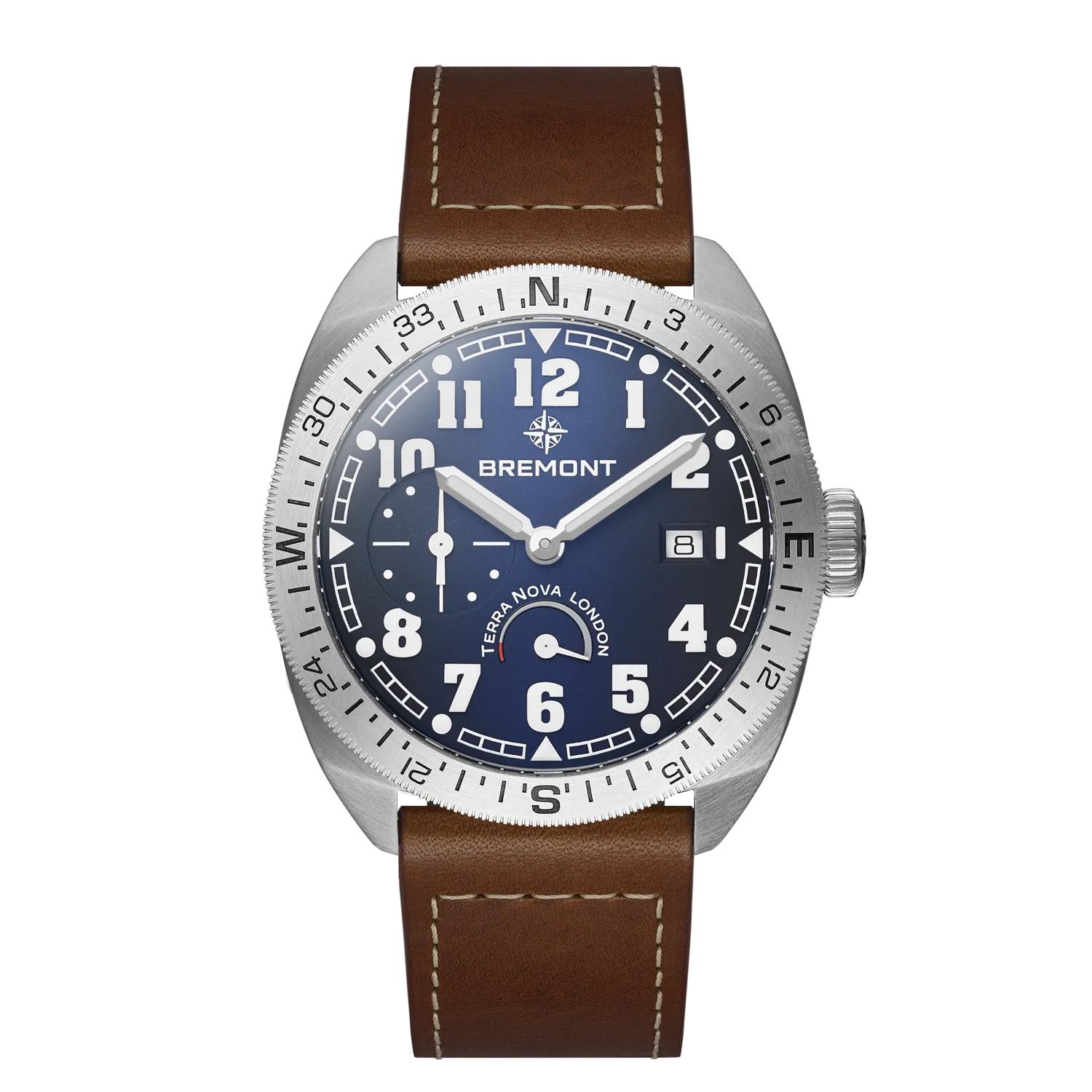
Image: Bremont
Long before Switzerland became shorthand for fine watchmaking, London was the world’s workshop of precision. The city gave us Thomas Tompion, the “father of English clockmaking”; John Harrison, whose marine chronometers solved the longitude problem; and George Graham, whose escapement innovations still echo through mechanical watches today. For a stretch of the 18th and early 19th centuries, British horology set the global standard.
Then came the long decline. Industrial-scale manufacturing withered through the 20th century, and Britain’s horological heritage faded into museum cabinets. But the last two decades tell a different story. Heritage names have been revived, a wave of design-led independents has emerged, and the sector is genuinely booming — the Alliance of British Watch and Clock Makers reports the industry grew a remarkable 65% between 2021 and 2024, reaching roughly £206 million, as Time+Tide reported (timeandtidewatches.com). Tellingly, some 67% of the brands operating today were founded within the last ten years — this is a young, hungry industry rediscovering an old craft.
The major houses
Bremont (founded 2002) is Britain’s largest independent watchmaker, built around aviation, military and expedition themes. Crucially, it has invested in genuine UK manufacturing at its facility known as “The Wing” — a rare commitment to home production in a sector that, by the Alliance’s own figures, sources most components abroad.
Christopher Ward (founded 2004) has become the powerhouse of modern British watchmaking. The direct-to-consumer, Anglo-Swiss brand is best known for its C60 Trident dive watches, and it now sits atop the domestic industry — reporting sales of £45.5 million in 2024–2025, a 49% jump on the prior year, according to Time+Tide (timeandtidewatches.com). Its formula — Swiss movements, sharp design and honest pricing — has become the template many others follow.
The independents and microbrands
The real energy of British watchmaking today lives among its independents, most of them micro-businesses of ten people or fewer.
Fears is a revival with real lineage: a Bristol watchmaking family firm dating back to 1846, relaunched in 2016 by Nicholas Bowman-Scargill, a descendant of the founder. It’s a rare case of continuity in a sector otherwise defined by newcomers, marrying heritage credentials with contemporary design.
Farer (founded 2015) brings a jolt of colour to the London scene. Its travel-inspired dive and dress watches lean into bold dials and adventurous palettes, offered at accessible price points that have won a devoted following.

Image: Christopher Ward
AnOrdain (founded 2016) is Glasgow’s quiet triumph. The brand has earned international acclaim for its hand-enameled dials — grand feu and fumé work of a quality once thought beyond a young British maker — paired with Swiss movements. It’s proof that British craft can compete on artistry, not just design.
Pinion (founded 2013) works out of Oxfordshire, producing small-batch watches designed and built in England. Its use of modern automatics alongside rare new-old-stock movements gives its watches a mechanical character that mass production can’t replicate.
Mr Jones Watches (founded 2007) is London’s resident eccentric, celebrated for playful, artistic dials that reimagine how a watch tells time. With dial printing and assembly handled in-house, it’s a genuinely creative studio as much as a watch brand.
William Wood Watches draws on a firefighting heritage, most distinctively through straps made from repurposed fire-hose rubber. The result is a brand with a story stitched into every detail — a fitting emblem of British microbrand character.
Britain’s watchmaking future looks less like a restoration of empire and more like a spirited insurgency — dozens of small studios, a couple of scaled-up leaders, and a growing appetite to bring more production home. The heritage of Tompion and Harrison is a heavy inheritance, but for the first time in a century, there’s a generation confident enough to carry it forward. Keep your eye on this island.
WHERE TO FIND THEM
Bremont
Christopher Ward
Fears
Farer
AnOrdain
Pinion
Mr Jones Watches
William Wood Watches
Why this watch, on this wrist?