Author: Gabby

  • Blancpain Marks the Bathyscaphe’s 70th With a 300-Piece Reissue of a 1968 Model

    Blancpain Marks the Bathyscaphe’s 70th With a 300-Piece Reissue of a 1968 Model

    DROP

    Blancpain Marks the Bathyscaphe's 70th With a 300-Piece Reissue of a 1968 Model

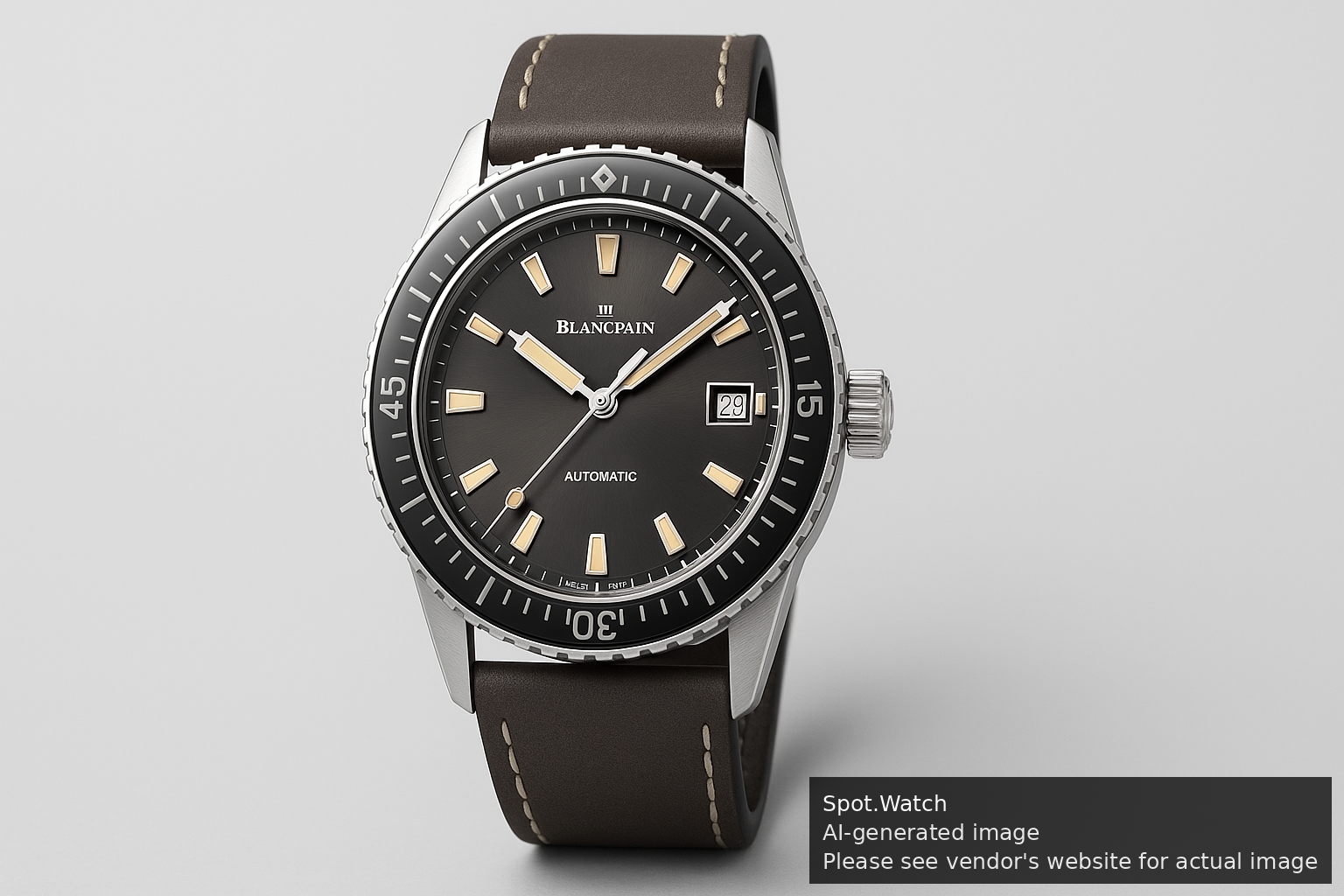
    A 37.40 mm steel diver on chocolate calf, with the reference and caliber on Blancpain's own spec page and the price nowhere on it.

    Blancpain Fifty Fathoms Bathyscaphe 70th Anniversary Limited Edition

    AI-generated illustration based on a source photo. See the actual watch at the vendor’s website.

    Blancpain announced the Bathyscaphe 70th Anniversary Limited Edition on 20 August, a 300-piece reissue of a 1968 Bathyscaphe. The release traces the lineage: the Fifty Fathoms debuted in 1953, and the Bathyscaphe followed in 1956 as its “civilian counterpart.” (The name was registered in 1953 by then chief executive Jean-Jacques Fiechter, a diver himself.)

    The number collectors will notice: 37.40 mm. Blancpain says the steel case was designed around the movement, not the reverse, which explains the modest diameter. The rest of the specs are on Blancpain’s product page for reference 5903-1110-063A: 10.60 mm thick, 18 mm between lugs, 300 meters of water resistance, a sapphire caseback, and the automatic Caliber 1150 (3 Hz, 28 jewels). The strap is hand-stitched chocolate calf leather.

    The bezel is where the reissue departs from its ancestor. Steel carries up into a ring beneath the domed crystal, and the insert is ceramic with lacquered numerals in place of the hesalite the 1968 watch used. Durability wins; patina loses. That’s the trade-off.

    Two things Blancpain does not publish anywhere we could find: a price and a power reserve. Hourstriker, WatchCrunch and Gear Patrol all report $18,300, but the maker has not said so, and neither will we.

    Reference5903-1110-063A, confirmed via the URL slug on Blancpain’s own site (“fifty-fathoms-bathyscaphe-5903-1110-063a”) and matched by Blancpain’s own product-spec page title, “Fifty Fathoms Bathyscaphe – 5903 1110 063A”
    PriceNot published by Blancpain on either the press release or the product page retrieved.
    Released20 August 2026, as dated on the Blancpain newsroom page ("-20 August 2026").

    Source: Blancpain

    Why this watch, on this wrist?

  • Henry Archer’s Nutid Debuts: Eight Lugless Integrated Watches, No Movement Specified

    Henry Archer’s Nutid Debuts: Eight Lugless Integrated Watches, No Movement Specified

    DROP

    Henry Archer's Nutid Debuts: Eight Lugless Integrated Watches, No Movement Specified

    The Danish microbrand reveals case dimensions and weight for its new sports line, but omits the movement.

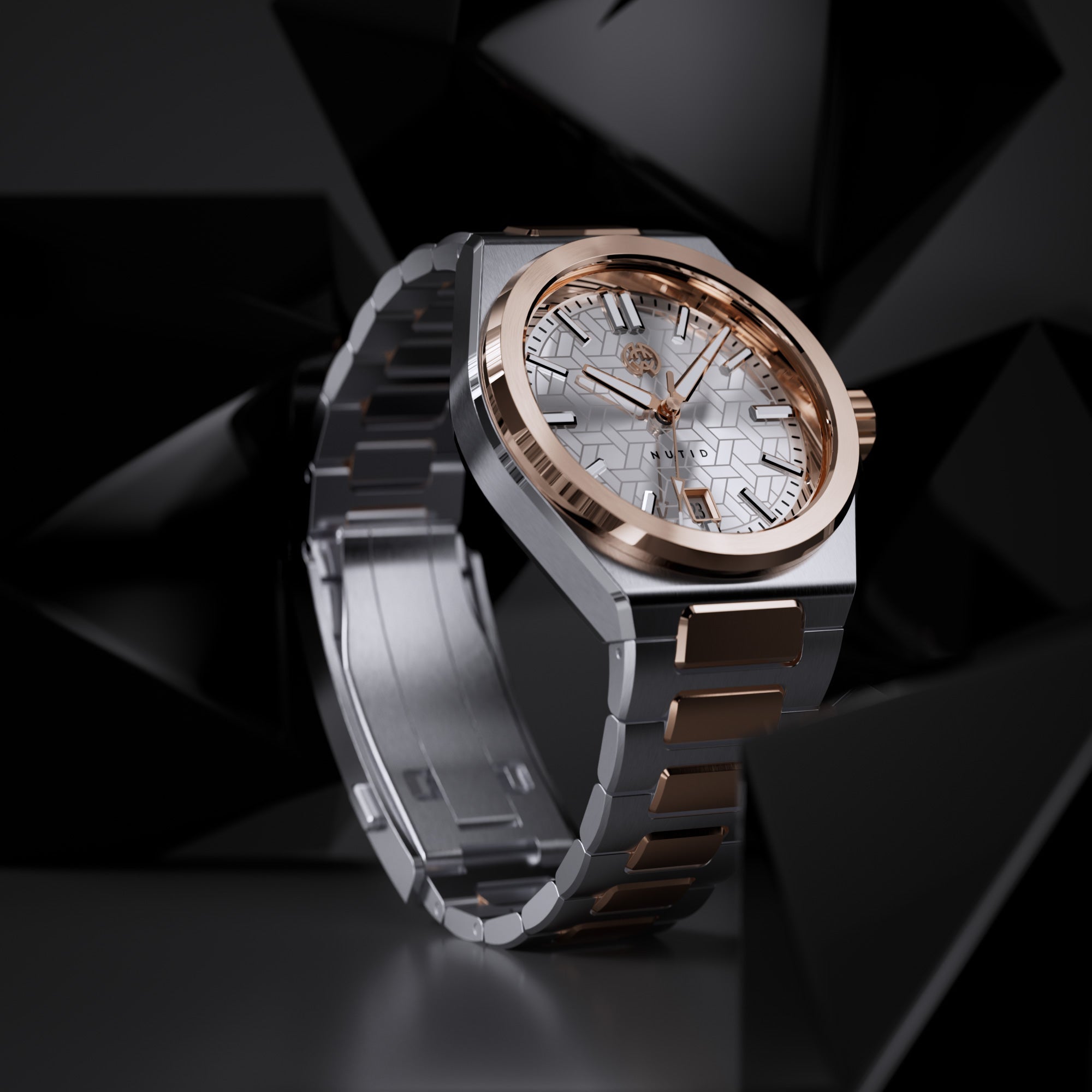
    Henry Archer has unveiled a new direction. Nutid, Danish for “present,” debuts as an eight-piece collection of lugless, integrated-bracelet watches: Lunis, Azura, Quantum, Caelestis, Vesper, Aurea, Petala, and Aster. This isn’t a colorway extension of the Vesterhav or Nordsø lines. Instead, it’s a distinct case architecture, and that is what collectors will notice first.

    Pricing on the brand’s storefront is 5.199,00 kr for seven models, with Aurea at 5.699,00 kr. Third-party posts list prices like £596 and $676, but these are conversions, not official figures from Henry Archer’s site.

    The Quantum’s product page offers specifics: 40mm width, 46.50mm lug-to-lug, 11.20mm height, 316L steel with HV1200 coating, sapphire crystals front and back, and 182 grams on the bracelet. Whether the other seven share those numbers is not confirmed by what the brand publishes.

    What Henry Archer does not publish is conspicuous: no caliber, no movement type, no power reserve, no water-resistance rating, and no alphanumeric references at all. Pieces are identified by colorway name only.

    On the dials, the brand describes “individually lacquered segments that allow each tile to emerge and catch the light in their own distinct way,” and frames the collection as “a reminder to stay grounded in the now.”

    Henry Archer does not state a release date. Social posts referencing Nutid run from early to mid August 2026.

    Note: The krone pricing is retained in Danish decimal format (5.199,00 kr) because that is how the brand publishes it. Reformatting to 5,199.00 would misstate the source figure.

    ReferenceNot published.
    Price5.199,00 kr for Lunis, Azura, Quantum, Caelestis, Vesper, Petala, and Aster; 5.699,00 kr for Aurea

    Source: Henry Archer · first spotted via tiktok.com

    Why this watch, on this wrist?

  • Isotope Watches: A British Independent That Prefers New Ideas to Vintage Repeats

    Isotope Watches: A British Independent That Prefers New Ideas to Vintage Repeats

    MICROBRAND

    Isotope Watches: A British Independent That Prefers New Ideas to Vintage Repeats

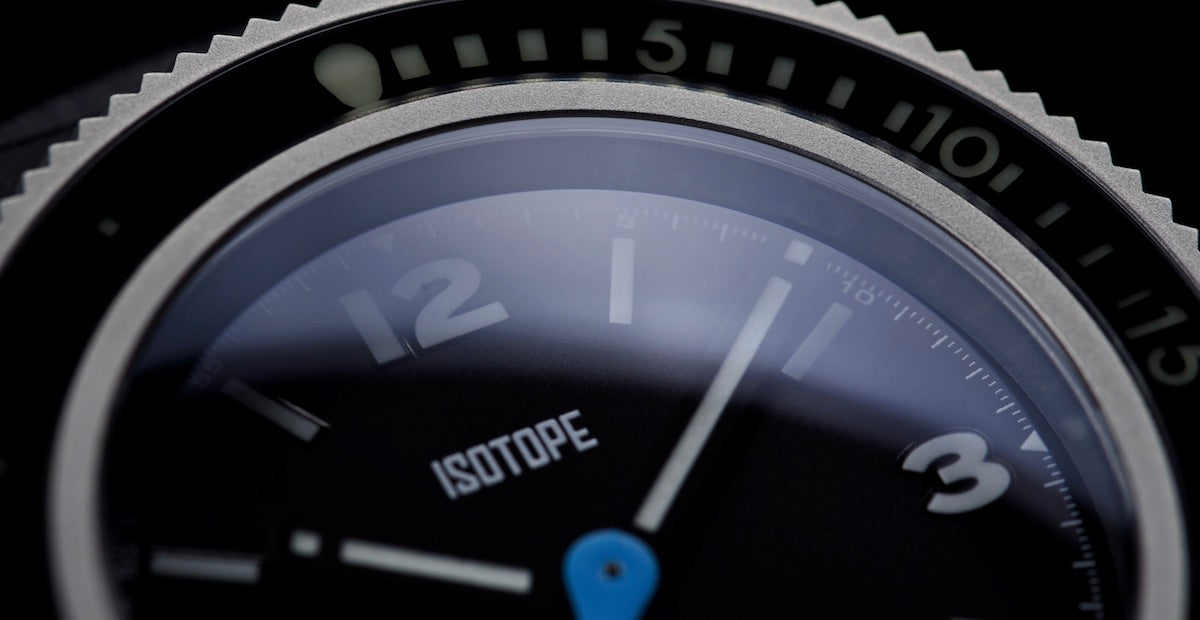
    Founded in Henfield by José and Joana Miranda, Isotope has built a clear identity around unconventional displays, teardrop motifs, and limited runs that rarely look like anything else in the microbrand lane.

    Many young watch brands begin by looking backward. Isotope started with a different premise: take something familiar and rearrange it into a new form. The name comes from the scientific term “isotope,” and that idea of variation within a known framework has shaped the brand since its launch in 2016.

    Isotope was founded by José and Joana Miranda, a Portuguese-English couple based in Henfield, England. According to Oracle Time’s profile of the brand, José came to the project as a collector who wanted a watch he could not find on the market, then worked with designer Vikenty Gryaznov to help define the look. That pairing matters, because Isotope did not enter the scene with a familiar field watch or another vintage diver. From the beginning, it aimed for a more distinctive visual language.

    What Makes It Notable

    The early statement piece was the Rider Jumping Hours, a watch that helped establish Isotope’s design identity. Its most recognizable feature was the repositioned jumping hour display at 6 o’clock, rather than the more common placement at 12. Around it sat the brand’s recurring teardrop form, part of what Isotope calls its Lacrima design language.

    That shape has become Isotope’s calling card. It appears across the collection in apertures, markers, and display elements, giving the catalog a coherence that many microbrands never quite achieve. Even when the complications change, the watches still read as Isotope.

    The brand has also shown a willingness to experiment with display formats beyond the usual microbrand formula. Reports from Oracle Time and coverage from Teddy Baldassarre have highlighted its use of rotating disc indications and more unusual dial treatments. Some specific technical claims around “world first” execution and certain dial materials should be treated cautiously unless confirmed by Isotope directly, but the broader point stands: this is a brand focused on original presentation rather than homage design.

    Signature

    A strong candidate for the definitive Isotope is the GMT 0°. Oracle Time highlighted it as a key expression of the brand’s style, and it is easy to see why. The teardrop motif is turned into the central visual architecture of the watch, shaping both the GMT display and the hour aperture, while a peripheral date keeps the dial balanced.

    The published specs commonly associated with the GMT 0° include a customized Swisstech automatic movement and about 40 hours of power reserve, with pricing around £740 at launch (unconfirmed). Reported edition sizes include 49 pieces per colorway, with some rarer variants produced in even smaller numbers (unconfirmed). As with most Isotope releases, exact availability and current pricing are best confirmed on the brand’s own site.

    At the more complicated end, the Chronograph Moonshot is one of Isotope’s more ambitious releases. Its chronograph display replaces familiar hand based registers with rotating disc style indications, giving the watch a very different look in use. Depending on the edition, pricing has been reported in the roughly $2,500 to $3,340 range (unconfirmed), and movement details should be checked against the official product listing for the specific reference.

    For a more accessible entry point, the HydriumX line brings the same house style to a colorful diver format. Oracle Time discussed editions such as the “Will Return” and Burnt Tangerine versions, noting limited production and sub-£500 pricing at the time. Isotope’s own pricing has also appeared higher for some versions, including figures in the mid-£500 range, so current retail should be verified before purchase.

    Where To Find Them

    The best place to track current releases is Isotope’s official website: isotopewatches.com

    Because the brand works in small batches and limited colorways, stock can change quickly. If a particular model is the reason you are visiting, it is worth checking the official site first rather than relying on older reviews or launch coverage.

    Isotope’s appeal is not just that it is independent. It is that it has chosen a harder route: building a recognizable design language of its own. In a corner of watchmaking crowded with familiar references, that still counts for a lot.

    Visit Isotope Watches →

    Sources: Oracle Time; Teddy Baldassarre; Isotope official website.

    Why this watch, on this wrist?
  • Formex’s CEO Previews Three Essence 39 Upgrades in New Film

    NEW VIDEO

    Formex's CEO Previews Three Essence 39 Upgrades in New Film

    A brief maker-channel preview ahead of a fuller reveal on August 27.

    On August 24, Formex shared a short film featuring CEO Raphaël Granito. He walks through the brand’s motorsport-engineering roots, his family’s history in component manufacturing, and how the Essence grew out of a 43mm crowdfunded launch eight years ago. The description labels it Formex’s bestselling watch.

    Three upgrades arrive August 27: a screw-down crown, Sellita’s SW200-2 Power+ (65-hour power reserve), and a patented butterfly clasp with 3mm of tool-free adjustment per side. Everything else remains unchanged, per Formex.

    Not shown: references, price, dimensions, water resistance.

    Source: YouTube

    Why this watch, on this wrist?

  • Christopher Ward, Hamilton and Omega, Three Different Ideas of a Reveal

    FROM THE ARCHIVE

    Christopher Ward, Hamilton and Omega, Three Different Ideas of a Reveal

    Across three late Augusts, the same week that a small brand chose theatre, a mid-priced house chose Hollywood, and a giant chose a catalogue.

    A brand’s own channel is a record it keeps of itself, whether it means to or not. Every upload is a decision about what mattered enough to film that week, and the titles alone, thin evidence as any title is, tell us where each maker wanted the attention to fall. Line up three of them from the same late-August window and you get three answers to the same question: what is worth showing.

    Omega uploaded a Seamaster Aqua Terra 150M Gents’ Collection film on August 25, 2017. The framing is plain and unembarrassed about it, a collection and its named model, aimed squarely at people already deciding between references. That confidence is its own kind of statement: a house this size does not need a hook, only a shelf.

    Hamilton took the opposite route on August 28, 2020, with a behind the scenes piece tying the Khaki BelowZero to Christopher Nolan’s TENET. The watch shares the billing with a film, which is exactly the trade Hamilton has long understood better than almost anyone, borrowing a story rather than telling one from scratch.

    Christopher Ward, the youngest and smallest of the three, called its August 27, 2021 upload a “Full Reveal” of the C60 Anthropocene GMT. The word reveal does a lot of work there, the language of an event, and it suits a brand still building the ceremony that Omega can take for granted.

    Set side by side, the three reads less like coincidence and more like a map of position. Omega points at a model and trusts the name, Hamilton points at a movie and borrows the glow, and Christopher Ward points at the act of showing itself. Same week, three different bets on how a new watch earns a look.

    Uploaded this week, August 24 to 30, in years past

    Christopher Ward · August 27, 2021 · via YouTube

    C60 Anthropocene GMT Full Reveal | Christopher Ward

    ▶ Watch on YouTube

    Hamilton · August 28, 2020 · via YouTube

    Behind the scenes TENET and the Hamilton Khaki Belowzero I Hamilton Watch

    ▶ Watch on YouTube

    OMEGA · August 25, 2017 · via YouTube

    Seamaster Aqua Terra 150M Gents’ Collection | OMEGA

    ▶ Watch on YouTube

    Why this watch, on this wrist?

    © Spot.Watch · This Week in Watch History

  • Patek Philippe Nautilus Reference 3700/1A: The Steel Watch That Changed Luxury in 1976

    Patek Philippe Nautilus Reference 3700/1A: The Steel Watch That Changed Luxury in 1976

    THIS WEEK IN WATCH HISTORY

    Patek Philippe Nautilus Reference 3700/1A: The Steel Watch That Changed Luxury in 1976

    A porthole, a bracelet, and a price tag that defied convention.

    In the 1970s, the Swiss watch industry was living through its worst nightmare. Cheap, accurate quartz movements from Japan were rewriting the rules, and the old houses of Geneva faced a question they had never had to answer: why would anyone pay for a mechanical watch made by hand when a battery kept better time for a fraction of the cost? Some firms folded. Others fled downmarket. A few decided the only way forward was to make the mechanical watch feel like an object worth wanting for reasons that had nothing to do with telling time.

    Into that anxious moment came the Patek Philippe Nautilus, reference 3700/1A, which debuted in 1976. It was luxury in an unexpected material, sold at a price that made buyers do a double take.

    The Watch

    The Nautilus was drawn by Gerald Genta, the same designer who had given Audemars Piguet its Royal Oak earlier in the decade. Genta famously claimed he sketched the design in minutes during the Basel fair. Whether or not the napkin is real, the design certainly is: a rounded octagonal bezel with two small “ears” flanking the case, joined by visible hinges that recall a ship’s porthole. The dial featured horizontal embossed grooves and a deep blue-black tone.

    Named after Captain Nemo’s submarine, the Nautilus was a bold move for Patek Philippe. What made the 3700/1A radical was not just its shape, but Patek’s ambition to sell steel at gold-watch prices. This was a large steel sports watch from one of the most conservative names in horology. Patek’s own advertising leaned into the paradox, presenting the Nautilus as a watch a discerning buyer would wear with a diving suit or a dinner jacket. The integrated bracelet flowed from the case without visible lugs, a detail that felt modern in 1976 and still defines the category today.

    Specifications

    Reference 3700/1A
    Year of debut 1976
    Designer Gerald Genta
    Case material Stainless steel
    Case diameter 42mm
    Case construction Two-part case with porthole-style bezel and lateral “ears”
    Dial Blue-black with horizontal embossed grooves
    Movement Self-winding caliber 28-255C, based on a Jaeger-LeCoultre ébauche and finished by Patek Philippe
    Bracelet Integrated steel

    Legacy

    The Nautilus did not sell in vast numbers at first. Steel Pateks were still an oddity in 1976, though not entirely unprecedented, and the world took time to understand what Genta had made. That patience has been richly rewarded. The Nautilus is now among the most sought after luxury sports watches in existence, and later references, particularly the discontinued 5711, have commanded waiting lists and secondary market premiums that dwarf their retail prices. Today, the original 3700/1A is a blue chip vintage piece, quietly commanding sums that would have astonished its first owners.

    Closing

    The Nautilus stands as proof that the watch industry survived quartz not by competing on accuracy but by refusing to. Patek Philippe bet that desire outlasts technology, and the porthole on your wrist is the receipt. The gamble of 1976 now looks prescient.

    Source: patek.com

    Why this watch, on this wrist?

    © Spot.Watch · This Week in Watch History

  • Citizen’s Satellite Wave GPS F990: Time by the Stars, Told in 2018

    LOOK BACK

    Citizen’s Satellite Wave GPS F990: Time by the Stars, Told in 2018

    Pulled from Citizen’s own channel, this throwback clip revisits the Satellite Wave GPS F990, the brand’s flagship take on satellite-synced timekeeping. It’s a look at how Citizen framed the technology behind the piece back when it launched.

    Why this watch, on this wrist?

  • Oris and Bamford’s First Collaboration Is a 250-Piece ProPilot Altimeter

    DROP

    Oris and Bamford's First Collaboration Is a 250-Piece ProPilot Altimeter

    Oris unveils a 250-piece "Mission Control" ProPilot Altimeter in 47mm carbon fiber composite, but skips the caliber, reference, and price.

    Oris has teamed with Bamford Watch Department for its first collaboration, and the choice of base watch speaks volumes. Instead of a Big Crown or Diver Sixty-Five, Oris handed Bamford the ProPilot Altimeter, the only model in its lineup with a self-winding movement and mechanical altimeter. On its news page, Oris calls it “the world’s only watch with an automatic mechanical movement and a mechanical altimeter,” and boils the concept down to two words: “A space watch!”

    The details Oris shares are minimal. The 47.00 mm case is made of carbon fiber composite. The run is limited to 250 pieces, per Oris. The movement is described only as an automatic paired with the altimeter mechanism.

    What Oris omits is just as telling. There is no caliber number. There is no reference. There is no price, and no water resistance figure. The page carries no publication date either, only a copyright line, so we are not going to date it by inference. Third-party retailers list a reference and stock, but none of that comes from Oris and we are not treating it as confirmed.

    For collectors, the 250-piece cap and the composite case argue this is a real limited edition rather than a repaint. The blank spaces argue for waiting until Oris fills them in.

    ReferenceNot disclosed anywhere on the Oris page.
    PriceNot disclosed on the Oris page.
    ReleasedThe Oris page itself carries no publication date or byline date, only a footer copyright line reading “© Oris 2026,” which is not a release date and should not be treated as one.
    Specs(only what Oris's page states)

    Source: Oris

    Why this watch, on this wrist?

  • IWC Turns Watchmakers Into Musicians for Swiss National Day

    LOOK BACK

    IWC Turns Watchmakers Into Musicians for Swiss National Day

    Straight from the IWC Schaffhausen archives, this 2013 clip finds the manufacture in an unusually playful mood: after months of secret rehearsals, staff assembled their own orchestra to mark Swiss National Day. It’s a lighthearted glimpse at the hidden talents behind the bench.

    Why this watch, on this wrist?

  • Nodus Releases Tiger’s Eye Stone Dial Sector II Sport for $575, Ships September

    Nodus Releases Tiger’s Eye Stone Dial Sector II Sport for $575, Ships September

    DROP

    Nodus Releases Tiger's Eye Stone Dial Sector II Sport for $575, Ships September

    The Los Angeles microbrand has posted a one-off stone dial on its site at a price collectors will pay, though the full series details remain unconfirmed by the brand.

    Nodus Watches (Los Angeles) Sector II Sport, Tiger's Eye (stone dial)

    AI-generated illustration based on a source photo. See the actual watch at the vendor’s website.

    Nodus has posted the Tiger’s Eye Sector II Sport on its site for $575, with shipping set to begin September 2. The $575 price and September shipping date come from Nodus’s product page, the only official source for this release.

    Stone-dial shoppers often compromise on case quality, but this one delivers. It measures 38mm wide, 11.7mm thick and 47mm lug to lug, in 316L steel, with a screw-down crown, a fixed bezel and 20mm lugs. The sapphire crystal has a flat top, a domed underside, and a blue anti-reflective coating on the interior. Lume is Swiss Super-LumiNova BGW9, Grade A.

    The dial is the highlight. Nodus writes that each one is “a single piece cut and polished to reveal the stone’s natural horizontal striping in warm golds and browns, no two exactly alike,” and adds that the Sector II Sport is “designed and assembled in Los Angeles.”

    The listing confirms these specs: the movement is a Seiko TMI NH38 (no-date) with 24 jewels and a 41-hour power reserve, water resistance is 100 meters, and the bracelet is a 20-16mm taper with a Nodus Extension Module (NEM) clasp and quick-release springbars.

    Other outlets have reported on the broader series. Oracle of Time describes a permanent stone dial series including an Onyx variant with a Seiko TMI NH38 and a 41-hour power reserve, and both it and Gear Patrol report a separate 75-piece Sector II Dive edition with display case maker Holme & Hadfield at roughly $650. None of that appears in the Nodus material at hand, so treat it as reported and unconfirmed.

    What is settled is a price, a size and a date, which for a stone dial under $1,000 is already most of the decision.

    Referenceunknown (no reference/SKU code given on the product page as excerpted)
    Price$575.00 (Tiger's Eye variant, per Nodus product page)
    Released"Shipping begins September 2", as stated on the Nodus product page. Product listing itself appears live as of this compilation (Aug 22, 2026); a third-party recap of the release is dated Aug 21, 2026.

    Source: Nodus · first spotted via oracleoftime.com

    Why this watch, on this wrist?