Author: Gabby

  • Raymond Weil’s Millesime Jubilee: A 500 Piece Chronograph for 50 Years of Independence

    Raymond Weil’s Millesime Jubilee: A 500 Piece Chronograph for 50 Years of Independence

    DROP

    Raymond Weil’s Millesime Jubilee: A 500 Piece Chronograph for 50 Years of Independence

    The anniversary watch puts the family owned Swiss brand’s independence into a compact automatic chronograph rather than a simple commemorative dial.

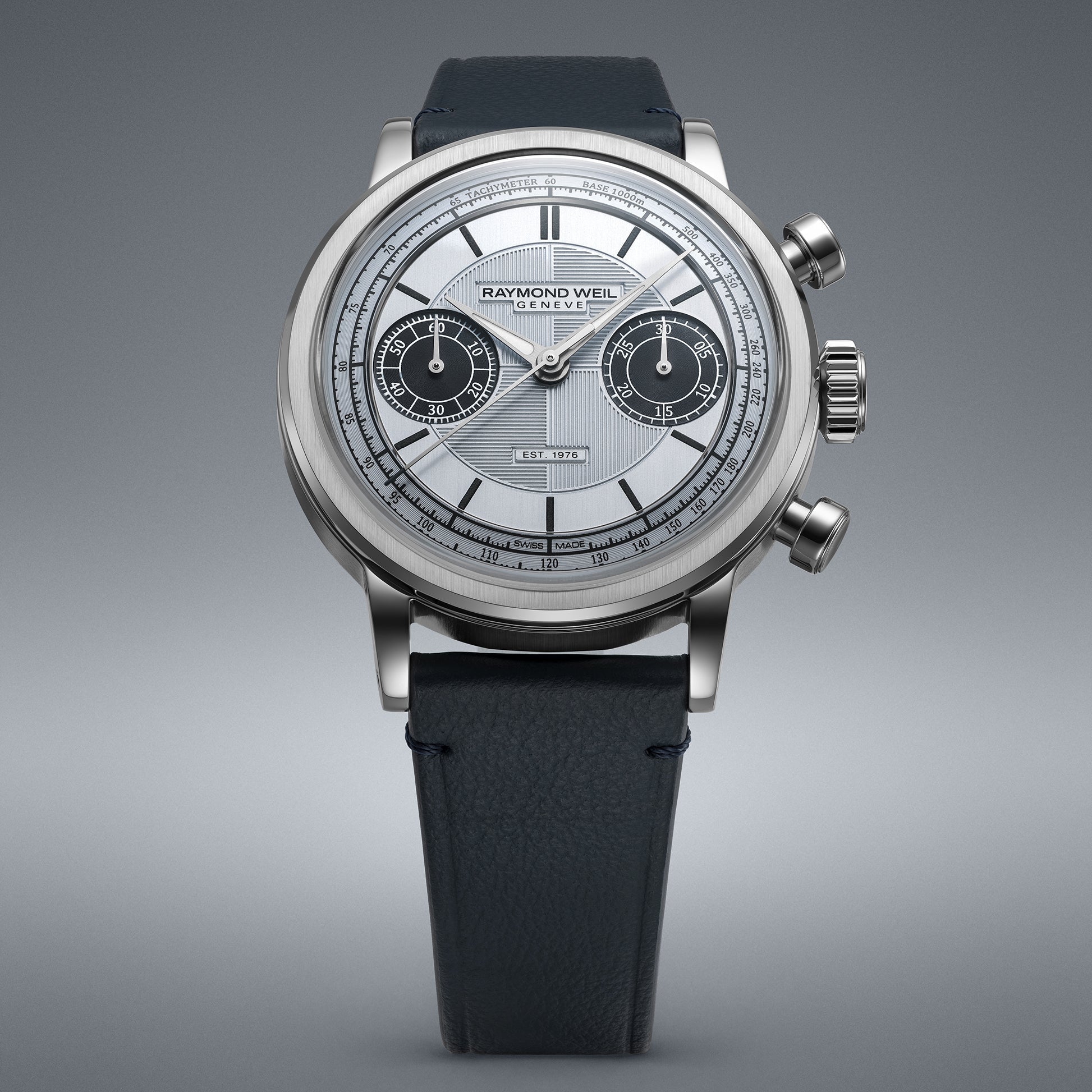
    Raymond Weil’s Millesime Jubilee is a 500 piece bi compax chronograph marking the brand’s 50th anniversary. In Raymond Weil’s announcement, the company traces its origins to Geneva in 1976 and frames the anniversary around three generations of family ownership and independence.

    This isn’t just an anniversary logo exercise. It follows “The Fifty,” introduced earlier this year, offering collectors a more conventional mechanical proposition: a 39 mm stainless steel case, 12.9 mm thickness, and an automatic RW5030 chronograph caliber with a 62 hour power reserve visible through a sapphire caseback.

    The dial is light blue with two midnight blue sub dials, black Super LumiNova indexes with green emission, and obelisk shaped hands under a sapphire glassbox crystal. Water resistance is 50 meters.

    The watch, ref. 7776 STC 65501, is priced at 3,895 CHF for 500 pieces per the product page.

    What collectors will note: a stated caliber, a hard production cap, a published reference, and a price set by the brand. In a year built around Raymond Weil’s independence story, the Jubilee gives that story a tangible, mechanical shape.

    Reference7776-STC-65501
    Price3,895 CHF
    Released2026-09-29
    Case39 mm, stainless steel, 12.9 mm thick
    MovementRW5030, automatic chronograph, 62-hour power reserve
    Water Resistance50 m / 165 ft / 5 atm
    SpecsLight blue dial, two midnight-blue sub-dials, black Super-LumiNova indexes with green emission, obelisk-shaped hands, sapphire glassbox crystal with double-sided anti-reflection coating, snapped caseback with sapphire display window

    Source: raymond-weil.com

    Why this watch, on this wrist?

  • Beaubleu Paris Explains Leather Strap Patina, but the Chemistry Has Limits

    Beaubleu Paris Explains Leather Strap Patina, but the Chemistry Has Limits

    WATCH STORY

    Beaubleu Paris Explains Leather Strap Patina, but the Chemistry Has Limits

    The maker’s leather care journal is most useful when read as advice, not as proof.

    A leather strap’s first mark feels like a small tragedy. A few months later it looks owned. Beaubleu Paris’s journal guide to strap patina treats that change as the point, not the problem, and puts several common claims in writing. That lets us sort care advice from material science, and science from marketing.

    The care advice is clear: a colorless cream two or three times a year, 24 hours of rest after long wear, and two straps in rotation. Sensible, if the exact rhythm is Beaubleu’s own.

    The science holds up in general. SELVANE’s piece on vegetable-tanned leather attributes patina to tannin oxidation, UV exposure, and absorbed skin oils. Iberosattel’s care guidance backs replenishing lost oils to prevent cracking. Pickering Test Solutions notes that perspiration causes discoloration, gloss loss, and cracking. Beaubleu goes a step further, calling sweat the primary cause of fiber degradation.

    The clearest stretch is the claim that a deployant clasp eliminates the strap’s most common breaking point. Plausible from a maker’s workbench, but offered without independent failure data.

    Read the guide as experience, not evidence, and it earns its place. Patina is chemistry, humidity, light, sweat, and habit. The maker starts the strap. The wearer finishes it.

    Source: beaubleu-paris.com

    And at Spot.Watch — that’s always worth noticing.

  • Maen’s Manhattan 37 Ultra Thin Stone Dials Listed at EUR 1,359.20

    Maen’s Manhattan 37 Ultra Thin Stone Dials Listed at EUR 1,359.20

    LOOK BACK

    Maen’s Manhattan 37 Ultra Thin Stone Dials Listed at EUR 1,359.20

    Maen’s compact stone dial Manhattan 37 launched on September 4, with pricing still stated plainly.

    Maen Manhattan 37 Ultra-Thin Stone Dials (collection title as it appears on maen.com)

    Image: Maen

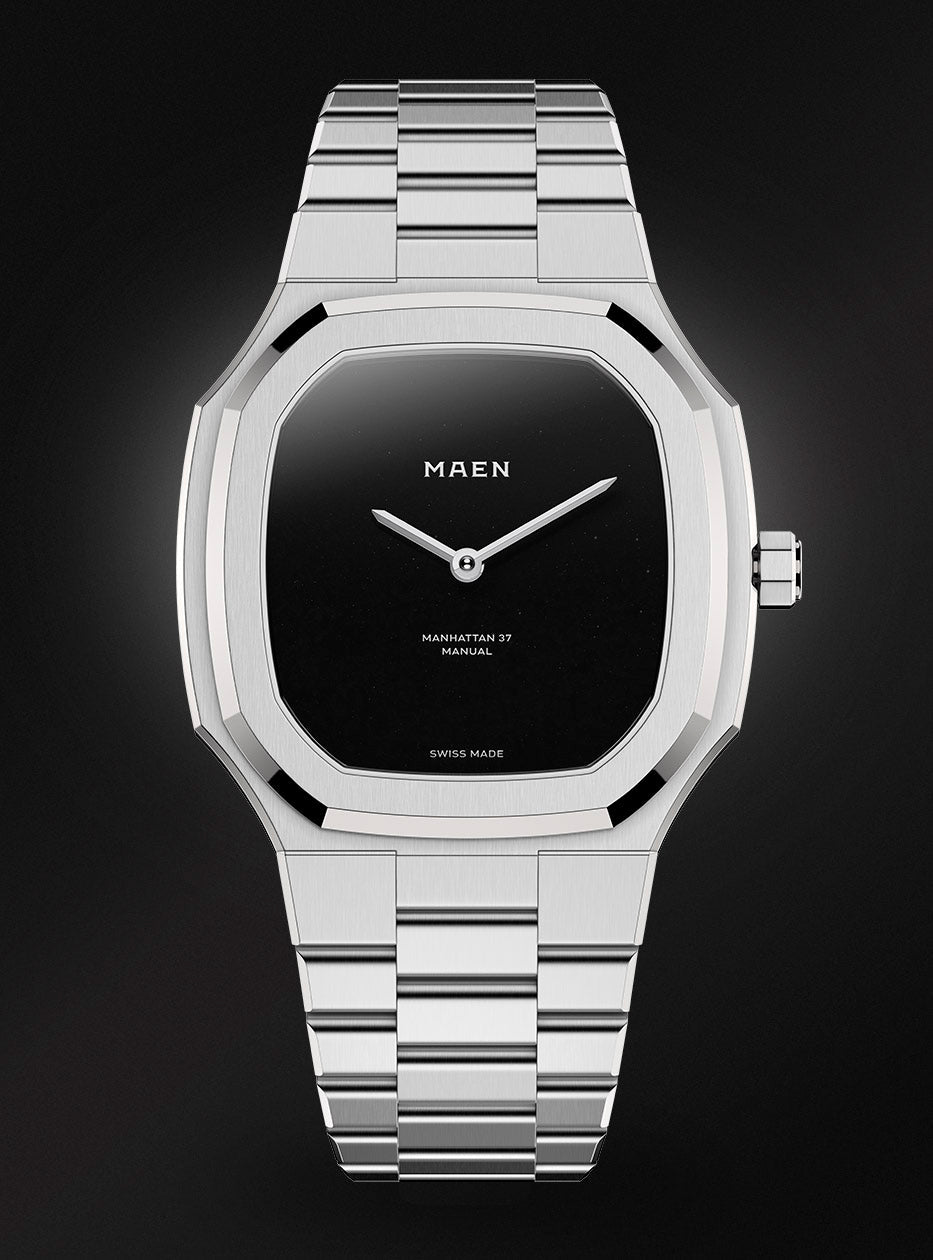
    Maen’s Manhattan 37 Ultra Thin Stone Dials launched on September 4, with pricing that helps clarify the collection’s place in the line.

    The watch’s key details are simple: a 37 mm case and a EUR 1,359.20 price tag. That combination matters. A compact stone dial watch lands in a useful place for enthusiasts who like expressive materials, but still want the proportions of a daily dress sport piece.

    The Manhattan’s architectural shape gains a decorative surface with stone dials, without pushing the watch toward excess formality or bulk. That is important here, because the attraction of stone is visual first. Each dial brings texture, depth, and variation, but the overall watch still needs to feel wearable rather than precious.

    For collectors, the appeal is less about chasing a spec sheet and more about access to a look usually discussed higher up the price ladder. Stone dials draw the eye, but price and size determine whether they feel like daily wear or display pieces.

    Here, Maen has put the visual hook into a compact format, with the price stated plainly enough for buyers to place it against other enthusiast favorites. At 37 mm, the Manhattan 37 keeps the focus on proportion as much as material.

    PriceEUR 1,359.20 (as it appears on the maen.com collection page)
    Case37 mm

    Source: maenwatches.com · first spotted via timepiecenook.com

    Why this watch, on this wrist?

  • Zelos Shows The Mirage 8 Days Skeleton

    LOOK BACK

    Zelos Shows The Mirage 8 Days Skeleton

    This older upload from Zelos’s own channel is a quick look at the Mirage 8 Days Skeleton, a watch whose name points to its openworked design and long running movement. It is worth watching as a concise brand side view of the model, especially for anyone revisiting Zelos’s more ambitious earlier releases.

    Why this watch, on this wrist?

  • Christopher Ward C63 Sealander Chronograph Now Comes in Five Colors

    Christopher Ward C63 Sealander Chronograph Now Comes in Five Colors

    DROP

    Christopher Ward C63 Sealander Chronograph Now Comes in Five Colors

    Pistachio and Pink dials expand the lineup, with mid October 2026 availability.

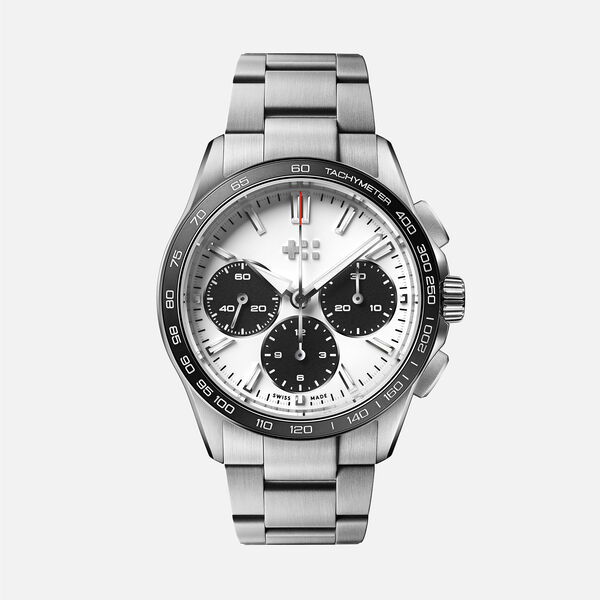
    Christopher Ward’s C63 Sealander Chronograph now comes in five dial colors. The White dial reference C63 41ACH4 S0KW0 B0 joins Black, Pistachio, Sky Blue and Pink, expanding the line’s color range beyond the brand’s usual tool watch palette.

    The listed White dial model on the Bader Bracelet is priced at $2,765, with availability shown as mid October 2026. That puts the watch back in the accessible Swiss chronograph conversation where Christopher Ward tends to be watched closely, especially by buyers who care about thickness, movement choice and bracelet specification as much as dial color.

    The watch remains the enthusiast pitch: a 41mm stainless steel automatic chronograph, 13.9mm thick, powered by a Sellita SW510 with a 62 hour power reserve. Water resistance is 10 ATM (100m), keeping the Sealander’s tool watch identity intact rather than turning this into a dress chronograph with colorful clothes.

    The notable part is the palette. Black and White make sense for a brand built on practical, daily wear watches. Pistachio and Pink say something more interesting: Christopher Ward seems comfortable letting the Sealander Chronograph become a personality piece, not just the sensible option. This shift suggests the Sealander Chronograph may develop its own collector hierarchy.

    ReferenceC63-41ACH4-S0KW0-B0
    Price$2,765.00 (Bader Bracelet configuration, as listed on the product page)
    Released"Pre-order for Mid October 2026" (as stated on the product page)
    Case41mm, 13.9mm, Stainless steel
    MovementSellita SW510
    Water Resistance10 ATM (100m)
    Specs41mm stainless steel case, 13.9mm height, 48mm lug-to-lug, 84g case weight / 174g with strap, Sellita SW510 automatic movement with 62-hour power reserve, 10 ATM (100m) water resistance, all as given on the product page. Jewel count field was cut off mid-scrape ("No of J…") and cannot be reported.

    Source: christopherward.com

    Why this watch, on this wrist?

  • Brew Watches Revisits the Oxford Retrograph’s Telephone Timer Roots

    LOOK BACK

    Brew Watches Revisits the Oxford Retrograph's Telephone Timer Roots

    This throwback upload from Brew Watches’ own channel, dating back to 2019, walks through the Oxford Retrograph and the vintage chronographs that inspired it. Brew traces the story of “telephone timers,” a niche of 1930s chronographs designed for a specific practical purpose, and shows how those old references informed the Retrograph’s retro dial layout. Worth a watch for anyone curious about the obscure history behind one of Brew’s signature designs.

    Why this watch, on this wrist?

  • Citizen Celebrates Series 8’s Fifth Anniversary With a Damascus Steel Case and Forged Carbon Dial

    Citizen Celebrates Series 8’s Fifth Anniversary With a Damascus Steel Case and Forged Carbon Dial

    DROP

    Citizen Celebrates Series 8's Fifth Anniversary With a Damascus Steel Case and Forged Carbon Dial

    The NB6092-01E is limited to 1,300 pieces worldwide, priced at USD 2,200, launching October 2026.

    Citizen’s global newsroom published the NB6092-01E on 24 September 2026, a Series 8 limited edition built to mark five years of the collection. The combination of materials is the story: Damascus steel in the case, forged carbon on the dial, both on a watch from a Japanese volume manufacturer rather than a knife-maker or a one-man independent.

    The Damascus steel is used in the case center, not the bezel. Citizen describes it as multiple sheets of stainless steel layered together, a modern approach the brand’s own footnote separates from the way the material was made in the ancient world. The resulting figuring is what Citizen leans on: “The wave-like patterns are unique to each watch, and no two watches are the same.” The rest of the case is stainless steel with yellow gold-colour plating.

    The dial follows the same logic by different means. Forged carbon scatters its fibre strands rather than aligning them, so the marbling lands differently on every blank. Citizen frames the material through its aerospace and motorsport use.

    Inside is Cal. 9054, with a Traveler GMT function that adjusts the hour hand independently and, with the rotating bezel, tracks a third zone. Roughly 50 hours of reserve, 10 BAR, 41mm across.

    ReferenceNB6092-01E
    PriceUSD 2,200 (projected, Citizen's own label)
    ReleasedOctober 2026 (Scheduled, Citizen's own label)
    Case41.0mm, 13.5mm, Stainless steel (Yellow gold colour plating); Case components: Damascus Steel
    MovementCal. 9054
    Water Resistance10 BAR
    SpecsCase 41.0mm / 13.5mm (Citizen's table marks this "Design specification only"); stainless steel case built from Damascus steel (multi-layered forged stainless steel per Citizen's footnote) with yellow gold-colour plating; forged carbon dial; calf leather strap; sapphire glass with anti-reflective coating. Movement: Cal. 9054, automatic & manual winding, "Traveler GMT" function, 28,800 vph, 24 jewels, approx. 50-hour reserve, accuracy -10/+20 sec/day, transparent case back. Water resistance: 10 BAR.

    Source: citizenwatch-global.com

    Why this watch, on this wrist?

  • Audemars Piguet’s Vintage Aesthetics Talk: The Archive as Debate, Not Dogma

    Audemars Piguet’s Vintage Aesthetics Talk: The Archive as Debate, Not Dogma

    WATCH STORY

    Audemars Piguet's Vintage Aesthetics Talk: The Archive as Debate, Not Dogma

    The house stages the heritage question rather than asserting an answer; its written blurb leaves the objects unnamed, so the filmed talk is where to look.

    Audemars Piguet's Vintage Aesthetics Talk: The Archive as Debate, Not Dogma

    Illustration: AI-generated for Spot.Watch. Not a product image.

    Most heritage talk in watchmaking arrives pre-digested. A brand says a new watch draws on the archive, the copy supplies an adjective, and the conversation ends there. Audemars Piguet’s “AP Talks” entry of 16 September 2026 does something less common: it puts the conversation itself on the page, as a filmed talk, and invites you to follow it.

    The entry is titled Vintage Watch Aesthetics and sits under Savoir-Faire on AP’s own site. The page carries a short written blurb and embeds the full video, AP Talks: Vintage Watch Aesthetics From Past To Present, on Audemars Piguet’s own YouTube channel. The organizing theme is posed as a question: “How can the past shape the present without simply repeating it?” This framing treats heritage as a design problem, not a marketing badge.

    Who is in the room

    AP names four participants. Clara is described as the house’s Heritage and Museum Specialist, Dave as its Museum Curator. Ryan and Adam Goldston appear as artistic architects and vintage watch collectors; they are the identical twins who founded the Los Angeles sneaker company Athletic Propulsion Labs (APL) in 2009, and Ryan has told WWD his taste runs to Art Deco. Clara and Dave are given no surnames and no further biography on the page.

    The setting is Villa Empain, which AP characterizes as an Art Deco backdrop. The subjects under discussion, per AP, are shape watches and special displays, and why both continue to hold appeal. The premise, two archivists and two collectors in an Art Deco villa, positions heritage as a dialogue rather than a monologue.

    The lineage claim, and where it thins

    AP does not leave the discussion abstract. The page states that archival design continues to feed contemporary work, and it explicitly ties that design to a contemporary watch: the Neo Frame Jumping Hour.

    AP describes the Neo Frame as a fusion of Art Deco elegance and modern innovation, reviving “a historic complication dating back to 1650,” where numbers leap every 60 minutes in place of traditional hands.

    The 1650 date demands scrutiny, and the written blurb gives it no referent: no object, no maker, no archival holding. Some context helps weigh it. The Campani brothers built a wandering-hour night clock for Pope Alexander VII in 1656, Josef Pallweber patented a jumping mechanism in 1883, and jump-hour wristwatches, Cartier’s Tank à Guichets of 1928 among them, had their first boom in the late 1920s, per Revolution’s history of the guichet watch. So the mid-17th-century date is defensible for the display idea in clocks, if generous for a wristwatch complication. AP’s blurb simply does not say which lineage it means.

    The written blurb also never names which vintage AP pieces inspired the Neo Frame’s design. Whether the participants do so in the film is for viewers to judge; the point here is that the text jumps from general enthusiasm for shape watches to a single product, and it is the talk, not the page copy, that has to supply the archival object bridging them.

    The discussion remains valuable: few brands stage heritage as a question rather than a statement. But the difference between curatorial reasoning and a well-dressed advertisement lives in the footnotes, and the page copy carries none. AP already has the specialist, the curator and the archive assembled, and a filmed talk to show them. A written companion that names the pieces on the table would let readers check the claims without pressing play.

    Source: audemarspiguet.com, youtube.com (Audemars Piguet), revolutionwatch.com, wwd.com

    And at Spot.Watch — that’s always worth noticing.

  • Formex Takes Its Titanium Field Watch Into Pilot Territory With the AirField Automatic 40mm

    NEW VIDEO

    Formex Takes Its Titanium Field Watch Into Pilot Territory With the AirField Automatic 40mm

    The brand's launch film recasts its titanium platform as aviation gear while quietly upgrading the movement.

    Formex’s launch film introduces the AirField Automatic 40mm as an aviation reading of the Field line, built on what the description calls its “lightweight, hardened titanium platform.”

    Cockpit cues appear in the details: numerals sunk into the dial and filled by hand, a sloped chapter ring, broad sword hands, a marker at 12, and a seconds hand whose counterweight doubles as an aircraft silhouette.

    The Sellita SW200-2 Power+ arrives in the collection and takes the reserve from 41 hours to 65.

    Four colours: Desert Sand, Horizon Blue, Jet Black, Tarmac Grey. Pre-orders are open.

    Source: youtube.com

    Why this watch, on this wrist?

  • The Watchmakers of Belgium

    The Watchmakers of Belgium

    WATCHES BY THE COUNTRY

    The Watchmakers of Belgium

    A land of chocolate, diamonds, and racing corners, where horology arrives not by tradition but by imagination.

    Ressence watch

    A Ressence Type 3 in Black/Black. Image: Ressence

    Belgium has no centuries-deep clockmaking legacy to trade on, no valley of ateliers passed down through generations. What it has instead is design confidence, an appetite for reinvention, and a small but fiercely creative community of independents. Much of that energy radiates from Antwerp, a city long defined by diamonds, fashion, and industrial design, and now an unlikely staging ground for horological experiments that range from oil-filled dials to racetrack-numbered limited runs.

    The Belgian formula tends to run like this: keep the concept and design at home, and lean on Switzerland for movements, and often for assembly, the parts it does best. It is a pragmatic arrangement that lets ideas lead. What follows is a field guide to the makers keeping Belgian time.

    The Design Houses

    Ressence is the country’s most celebrated independent, founded in Antwerp by Benoît Mintiens in 2010. Its signature is the ROCS orbital display, the Ressence Orbital Convex System, which trades conventional hands for continually rotating discs, and on selected models, beginning with the Type 3 in 2013, an oil-filled chamber that makes the indications appear to float just beneath the crystal. Mintiens, an industrial designer whose background spans high-speed trains, aircraft cabins, and medical devices, showed three working prototypes at Baselworld in 2010 and never looked back. Design and engineering remain in Antwerp; assembly is done in Fleurier, Switzerland. The brand marked its fifteenth anniversary in 2025 not with a heritage retrospective but with Ahead of Time, a book profiling twenty creative leaders, which tells you where its gaze is fixed. The result is one of the most instantly recognizable dials in modern watchmaking.

    Ice-Watch, founded in 2007 by Jean-Pierre Lutgen, took a very different route to international recognition. Its colorful, affordable fashion watches turned a Belgian company into a global name, proving that accessible design can travel just as far as haute horlogerie. If Ressence courts the connoisseur, Ice-Watch courts everyone else.

    Komono, established in Antwerp in 2009 by former professional snowboarders Raf Maes and Anton Janssens, sits at the intersection of watches, eyewear, and lifestyle accessories. Its name borrows a Japanese word for small things, but the aesthetic is unmistakably Belgian: minimalist, sleek, and built around a considered color palette. Watches remain a core pillar of the range.

    The Microbrands

    Ice-Watch watch

    An Ice-Watch wristwatch. Image: Ice-Watch

    Raidillon is Belgian motorsport distilled into steel. Founded in 2001 and named after the fearsome Raidillon corner at Spa-Francorchamps, the brand mirrors the circuit’s grid in its output: just 55 pieces per model, echoing the 55 cars once permitted to start the major races there. Every watch is individually numbered, and the movements are Swiss, wrapped in racing-inspired design and premium materials. The brand turns twenty-five in 2026 and is marking it with two anniversary-edition chronographs, the Curve and the Speed.

    Gavox, launched by Michael Happé in 2011, builds tool watches with a professional’s brief in mind. The name fuses the Greek galaxias with the Latin vox, roughly the voice of the universe, and the collection spans aviation, diving, marine, and motorsport. Happé is a pilot and the grandson of one of the original Flying Tigers, and that lineage feeds directly into pieces meant to be used, not just admired, offered in both mechanical and quartz.

    Méraud Watch Co. was founded in 2016 by Stijn Busschaert, a vintage collector and a leading member of the Belgium Watch Club, who set out to make premium, vintage-inspired mechanical watches at a sensible price. The brand launched in 2018 with the Bonaire, a 39mm diver designed in Ghent and made in Switzerland. The line leans into midcentury cues: thick luminous hands, generous hour markers, and a functional-first sensibility, with dive and chronograph models among the offerings.

    Tamawa is perhaps the most unusual entry of all. Founded in Brussels in the late 2000s by designer Hubert Verstraeten, this design brand builds watches and accessories from phenolic resin, the material Belgian billiard-ball maker Saluc uses for its Aramith balls; the name is Japanese for “ball on a steel ring.” There is a second Belgian footnote inside the material: Bakelite, the original phenolic resin, was invented by Ghent-born chemist Leo Baekeland. The designs are organized around distinctive rounded resin beads in the eight official snooker colours, giving Tamawa a tactile, sculptural identity that no other maker on this list can claim.

    The Close

    Belgium’s horological scene is small, but it is anything but timid. From the orbital discs of Ressence to the racetrack-limited runs of Raidillon and the billiard-ball resin of Tamawa, these makers share a willingness to start from an idea rather than a template. That is the Belgian signature: design first, tradition optional, and Swiss engineering enlisted only where it serves the concept. For collectors tired of the familiar, this is a country worth watching.

    Where to find them

    Why this watch, on this wrist?