Author: Gabby

  • Beaubleu Paris Makes the Case That a Watch Should Outlive Its Owner

    Beaubleu Paris Makes the Case That a Watch Should Outlive Its Owner

    WATCH STORY

    Beaubleu Paris Makes the Case That a Watch Should Outlive Its Owner

    A small Parisian brand argues that repairability is a design decision. Its own movement choices are the best evidence.

    Every collector has a drawer watch. The quartz piece no one will service. The chronograph with a cracked bridge and no spare. The diver whose crown tube vanished decades ago. It still ticks, in memory.

    Beaubleu Paris says that fate is a choice, not bad luck. In a buying guide on its own site, headed “Why some objects defy obsolescence” but titled, for search engines, “Automatic Watch for Women: How It Works, How to Choose, How to Care for It,” the brand opens with a durability argument and puts it plainly: “A mechanical movement maintained runs for several decades. This longevity is no accident: it’s due to a design that’s modular, repairable, and built to last.” Then, almost as an aside: “The assembly expertise and reparability do the rest.”

    Three kinds of repairable

    Repairability is not one property. It is at least three, and they separate under pressure. The three-part framework that follows is ours, not Beaubleu’s; the guide itself moves on to how an automatic works and how to care for one.

    First, service access: can a competent independent open the case, lift the movement, clean, lubricate and reassemble it without factory-only tooling. Most decent watches clear this bar.

    Second, component supply: when a balance staff bends or a barrel arbor shears, does the part exist, and will anyone sell it outside the brand’s network. This is where drawer watches are made. A movement can be elegantly serviceable in theory and finished in practice because one bridge left production.

    Third, design honesty: are the parts that wear replaceable on their own, rather than fused to something expensive.

    The first is a decision an engineer makes once. The second is a supply commitment measured in decades, and it is the hardest promise in watchmaking to keep.

    How Beaubleu keeps it

    Founded in Paris in 2017 by designer Nicolas Ducoudert, Beaubleu is best known for circular hands, rings with an indicator dot in place of pointed hour and minute hands. The watches are designed and hand-assembled in a Paris workshop. What matters for the guide’s durability argument is what goes inside them.

    The Vitruve line runs the Miyota 9015, a Japanese automatic made in enormous numbers, with parts that move freely through the independent trade; the 39mm Vitruve Date Steel lists at €950 on the brand’s mesh bracelet. The Seconde Française collection, whose Blanc Ivoire was a GPHG 2024 Challenge nominee, uses a 4 Hz calibre from France Ebauches in Maîche, with Incabloc shock protection and 70 percent of its major components made in France, and starts at €1,490. Both carry a five-year movement warranty; on the finished watch the brand is less consistent, with the guarantees page promising a minimum of two years while the site banner advertises 36 months.

    Neither is an in-house calibre, and that is the point. A low-volume proprietary movement is repairable only as long as its maker chooses to be. A Miyota or a France Ebauches is repairable as long as watchmakers exist. By buying the heart of the watch rather than designing it, Beaubleu makes the guide’s promise one it can actually keep.

    Where that leaves the collector

    The guide is short on specifics, and the useful ones are dull: a published parts policy and a spare-parts commitment measured in years. Beaubleu names its calibres on every product page but has not written those down yet. But it has already made the decision that matters most, and made it in the least glamorous way possible. That is usually how watches stay out of the drawer.

    Source: beaubleu-paris.com, beaubleu-paris.com/guarantees, Vitruve Date Steel, Seconde Française collection

    And at Spot.Watch — that’s always worth noticing.

  • Citizen Unveils Two Limited Editions With Handcrafted Tosa Washi Dials

    Citizen Unveils Two Limited Editions With Handcrafted Tosa Washi Dials

    DROP

    Citizen Unveils Two Limited Editions With Handcrafted Tosa Washi Dials

    Two Super Titanium limited editions, arriving October 2026, pair Kochi washi paper dials with Citizen's ±5-seconds-a-year Eco-Drive movement.

    Citizen has released two limited editions of The CITIZEN, each with a one-of-a-kind dial handcrafted from Tosa washi paper in Kochi Prefecture, arriving October 2026.

    Both use Citizen’s Cal.A060, rated to ±5 seconds a year, with an 18-month reserve once the watch drops into power-save mode and a perpetual calendar good to 28 February 2100. Water resistance is 10 BAR, and the 38.3mm by 12.2mm case figures are design specification only.

    The AQ4100-65X takes a dark-red dial in ultra-thin Tengujoshi washi, housed in a Super Titanium case and bracelet with a Duratect Platinum treatment. The watch is limited to 300 pieces, priced at USD 3,000.

    The AQ4106-00B goes a different way, with an Unryushi dial. The dial features swirling cloud-like patterns with embedded gold fibres. Its case is treated in Duratect Sakura Pink and it arrives on an LWG-certified crocodile strap. This version is limited to 350 pieces, priced at USD 3,100. Full specs are here.

    On the paper itself, Citizen credits artisans working by traditional methods in Kochi and notes that The CITIZEN has fitted Tosa washi dials since 2017. No workshop is named, no individual papermaker, and nothing is said about fibre or forming technique.

    What collectors get is a dial that cannot be duplicated, since each sheet is formed by hand, fitted to one of the few quartz platforms enthusiasts treat as genuinely precise.

    ReferenceAQ4100-65X; AQ4106-00B
    PriceUSD 3,000 (AQ4100-65X, projected); USD 3,100 (AQ4106-00B, projected)
    ReleasedOctober 2026 (Scheduled), as stated by Citizen; announcement published 17 September 2026
    SpecsCase 38.3mm diameter / 12.2mm thickness ("design specification only") in Super Titanium™, Duratect Platinum (AQ4100-65X) or Duratect Sakura Pink (AQ4106-00B); Cal.A060 Eco-Drive, ±5 seconds/year accuracy, 18-month power reserve in power-save mode, perpetual calendar to Feb 28, 2100; water resistance 10 BAR; Dual Sphere Glass with Anti-Reflective Coating.

    Source: citizenwatch-global.com

    Why this watch, on this wrist?

  • The Watchmakers of Thailand

    The Watchmakers of Thailand

    WATCHES BY THE COUNTRY

    The Watchmakers of Thailand

    Where a young Bangkok independent scene builds its first horological voice atop one of Asia's busiest luxury retail floors.

    WISE watch

    A WISE wristwatch. Image: WISE

    Thailand’s relationship with the wristwatch has long been that of a marketplace rather than a workshop. The country ranks among Southeast Asia’s largest destinations for luxury watch retail, its shopping districts stocked with the great Swiss houses and its collectors known for depth of knowledge and appetite. The making side of the story, by contrast, has rarely carried a national byline.

    What Thailand has historically lacked is a watchmaking identity of its own, a maker’s tradition rather than a buyer’s one. That is beginning to change. Since the late 2000s, a small but committed independent scene has taken root in Bangkok, pairing Thai design sensibility and craft with imported Swiss and Japanese movements. These independents remain niche, sometimes barely more than passion projects, but together they represent the first generation of a genuinely Thai-rooted watchmaking voice. It is a story still being written, and its early chapters are worth reading.

    The Makers

    Bangkok is the natural center of this movement, and WISE is its most established name. Founded in 2008, WISE designs its watches in Thailand and hand-assembles them in its Bangkok workshop, spanning dive watches built for real underwater use as well as more expressive pieces. Among the latter are its Adamascus models, whose Damascus-pattern dials turn the layered, rippling texture of forged metal into a face rather than a blade, a nice bit of craft that gives the brand a signature look. The range is priced like a serious microbrand: the Adamascus AD861A pairs a 41mm 904L steel case, ceramic bezel and 200m water resistance with a Miyota 9015 automatic for $770, while the Adamascus ADX101 True GMT runs Miyota’s 9075 “true” GMT calibre in a 40mm case for $970. For a country whose watch culture was long defined by what it sold rather than what it made, WISE stands out as proof that domestic assembly and original design can happen under a Thai flag.

    The wider scene is small and closely knit. A-rtisan, the project of Bangkok collector Ratthawich Chainarongruj, is one of the country’s earliest homegrown brands. When SJX covered it in October 2014 it called A-rtisan the first Thai watch brand, though WISE predates it; the debut Dragon, a chunky 44mm piece in steel, DLC or bronze with a hand-finished Swiss Unitas 6497 inside, was limited to 100 pieces per metal at 51,000 to 61,000 baht. At the other end of the spectrum sits Simpl, founded in 2013 by Tanachpak Warrnissorn and Alisa Kittipong, which sells minimalist quartz designs on Miyota movements in 316L steel, including a single-hand model and a rotating-dial “Reverse” line. Different budgets, same pattern: collectors and designers turned founders, working from the inside of the hobby outward.

    The Shape of a Young Scene

    What unites these makers is a set of shared constraints and shared ambitions. None of them can lean on centuries of local horological heritage, so they borrow the mechanical heart from established movement suppliers and pour their energy into the parts that carry identity: the dial, the case, the finishing, the story. That is the classic microbrand playbook the world over, but in Thailand it does double duty, because each new release is also an argument that a Thai watch can exist as a category at all.

    It is easy to underestimate how much groundwork that requires. A retail market as sophisticated as Thailand’s sets a high bar for taste, and local buyers know exactly what the Swiss competition offers at every price. A homegrown brand has to earn attention in that environment, not merely on novelty but on execution. The presence of a maker like WISE, with nearly two decades of continuous operation behind it, suggests that at least some of these young houses have cleared that bar and found an audience willing to wear something made closer to home.

    The Close

    Thailand’s watch story is unusual precisely because it runs in reverse of the familiar Swiss or German arc. Here, the market came first and the makers last, arriving only in the past two decades as a scrappy, design-led generation of independents. That ordering is not a weakness so much as a different starting point, and it gives the country’s emerging brands a clear-eyed, collector-informed sensibility that shows in their work. The scene is still tiny, and it would be dishonest to pretend otherwise. But every mature watchmaking nation began with a handful of stubborn founders deciding their country deserved a watch to call its own. Thailand now has that handful, and the coming years will tell how far they can carry it.

    Where to find them

    Source: wisetimepiece.com, watchesbysjx.com, simplwatch.com, theslenderwrist.com

    And at Spot.Watch — that’s always worth noticing.

  • Rolex Perpetual Padellone: a 39mm Annual Calendar With Moonphase, From CHF 52,500

    DROP

    Rolex Perpetual Padellone: a 39mm Annual Calendar With Moonphase, From CHF 52,500

    Launched September 15 with Calibre 7190, the Haplos calendar system and three references in Everose gold or platinum, the Padellone carries a 1950s nickname into the permanent collection.

    Rolex does not often lead with complicated calendars. The Sky-Dweller has carried an annual calendar since 2012, but the catalogue is built on watches that tell time and date, which makes the Perpetual Padellone, launched September 15 as a permanent-collection model, worth a closer look.

    Rolex’s page outlines the movement. Calibre 7190 is a complete annual calendar with moonphase: day and month in two apertures at 12, the date read from a blue crescent-tipped hand around the dial edge, all of it jumping instantaneously. A patented system Rolex calls Haplos tells 30-day months from 31-day ones with only two added parts coupled to the date mechanism. The calibre runs at 5 Hz through the silicon Dynapulse escapement, holds about 66 hours of reserve, and sits behind 30 patent applications. Three model numbers appear: m53505-0002 and m53505-0003 in 18k Everose gold, on alligator strap or Settimo bracelet, and m53506-0002 in 950 platinum on strap.

    What Rolex’s page does not list, the press does. The case is 39mm and 12.2mm thick, water resistant to 50m, with an Intense White dial on the gold models and Ice Blue on the platinum. Prices are CHF 52,500 for Everose on strap, CHF 64,800 on the Settimo bracelet and CHF 59,000 for platinum, per Monochrome and Watchonista.

    The name is the other story. Padellone, “big frying pan”, is what Italian collectors called the oversized 1950s reference 8171, a triple calendar with moonphase. Rolex has now adopted the nickname directly into the official model name.

    A genuine new-watches entry, then, with the technical substance on Rolex’s page and the buying numbers a click away. Read what’s there; the blanks are already filled.

    Source: rolex.com, monochrome-watches.com, watchonista.com

    And at Spot.Watch — that’s always worth noticing.

  • Ulysse Nardin’s Grey Freak X: The Freak Gets Smaller, and Gets a Price

    Ulysse Nardin’s Grey Freak X: The Freak Gets Smaller, and Gets a Price

    DROP

    Ulysse Nardin's Grey Freak X: The Freak Gets Smaller, and Gets a Price

    The second-generation Freak X, reference 2323-500-1A/0A, arrives at 41 mm with a new micro-rotor caliber and a CHF 33,500 sticker.

    Ulysse Nardin Freak X Grey, reference 2323-500-1A/0A

    The Freak X Grey. Image: Ulysse Nardin

    Ulysse Nardin's product page for the grey Freak X is sparing with numbers, but the June 17, 2026 launch was not. The second-generation Freak X lists at CHF 33,500, about $41,200, and it is a permanent-collection piece rather than a limited run.

    The watch is smaller than the model it replaces, down from 43 mm to 41, at 13.6 mm thick including the domed crystal and 47.3 mm lug to lug. The monobloc case is 80 percent recycled steel, with a screw-down crown that brings water resistance to 100 meters, a first for the line. A quick-release system swaps the cognac nubuck strap without tools.

    Inside is caliber UN-232, an in-house movement from La Chaux-de-Fonds that the brand says each watchmaker assembles start to finish. It replaces the old full rotor with a rose-gold micro-rotor, keeps the oversized silicon balance and DIAMonSIL escapement, and runs at 3 Hz with a 72 hour reserve across 216 parts and 27 jewels. As on every Freak since 2001, there are no hands: the flying carousel movement rotates once an hour to show the time.

    The timing is deliberate. 2026 is Ulysse Nardin's 180th year and the Freak's 25th, and the brand says the new case and caliber took more than two years to develop. Early retail listings already show the grey version out of stock, so expect a wait.

    Reference2323-500-1A/0A
    PriceCHF 33,500 / USD 41,200
    Case41 mm, 80% recycled steel, 100 m water resistance
    MovementUN-232 automatic, micro-rotor, 72 hour power reserve
    ReleasedJune 2026

    Source: ulysse-nardin.com

    Why this watch, on this wrist?

  • Hublot’s Jeff Koons Watches: Balloon Dog Gets a Dial

    Hublot’s Jeff Koons Watches: Balloon Dog Gets a Dial

    DROP

    Hublot's Jeff Koons Watches: Balloon Dog Gets a Dial

    Announced as an ambassador on September 9, Koons had two watches on the table a week later: a 42 mm Classic Fusion in three colours and a $488,000 central tourbillon.

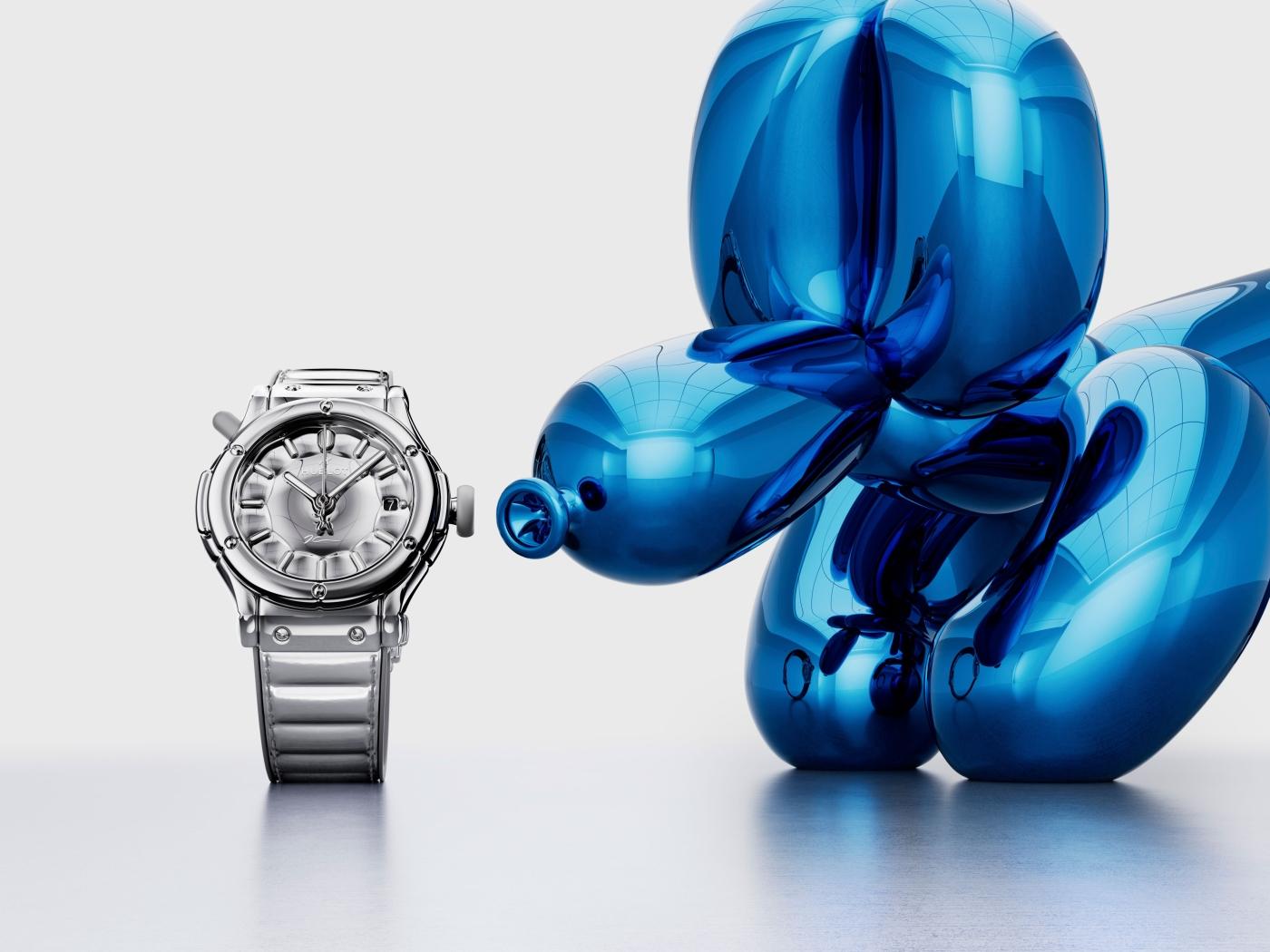
    Hublot Classic Fusion Balloon Dog by Jeff Koons in mirror-polished steel beside a blue Balloon Dog sculpture

    The Classic Fusion Balloon Dog by Jeff Koons in mirror-polished steel. Image: Hublot

    When Hublot named Jeff Koons a brand ambassador from Nyon on September 9, 2026, the release offered no reference, no caliber, and no case data, just atmosphere. Koons called the brand “a manufacture of depth, where materials are reinvented, movements refined and design reengineered with purpose,” and chief executive Julien Tornare said the partnership reflected “exactly where Hublot stands today: substance.” The substance arrived on September 16, in two watches.

    The Classic Fusion Balloon Dog by Jeff Koons is the accessible one, if $25,100 counts. It is a 42 mm Classic Fusion rebuilt around the idea of inflation: a convex dial, domed lumed indexes, a crown shaped like a balloon valve, a rubber “tail” at 10:30, and a seconds hand whose counterweight is a tiny Balloon Dog. Inside is the HUB1710 automatic with a tungsten rotor reshaped into rounded, balloon-like forms, good for about 50 hours. Water resistance is 50 meters. It comes in mirror-polished steel, red anodized aluminum, or blue anodized aluminum, 200 pieces each.

    The MP-14 Origin by Jeff Koons is the statement piece. A 44 mm sapphire-and-titanium case, 20 mm thick, on a matching sapphire bracelet, houses the HUB9014, Hublot's first automatic movement with a central tourbillon. White-gold rings set with baguette diamonds and blue sapphires frame it, and the sapphire dome over the tourbillon is hand-varnished in translucent blue, a nod to Koons's Gazing Ball series. Sixty hours of reserve, 30 meters of water resistance, 30 pieces, and $488,000.

    Tornare called the project “both an artistic and technical adventure,” adding that “what appears effortless and playful is, in reality, an extraordinary exercise in engineering, craftsmanship, and detail.” That is the Koons pitch in one line: an object that looks like a toy and is built like an instrument. Both watches are sold through selected Hublot boutiques and galleries.

    Reference542.UR.8170.NR.JKN26 (Balloon Dog Red) / 914.NJ.0100.JX.9941 (MP-14 Origin)
    PriceUSD 25,100 / USD 488,000
    Case42 mm steel or anodized aluminum, 50 m / 44 mm sapphire and titanium, 30 m
    MovementHUB1710 automatic, 50 h / HUB9014 automatic central tourbillon, 60 h
    Edition200 per colour / 30 pieces
    ReleasedSeptember 2026

    Source: hublot.com

    Why this watch, on this wrist?

  • Seiko’s Save the Ocean Film Focuses on Underwater Archaeology, Not a Watch

    NEW VIDEO

    Seiko's Save the Ocean Film Focuses on Underwater Archaeology, Not a Watch

    The short film promotes Seiko Prospex's support for shipwreck research, a programme that spans four named sites from Greece to Lake Champlain.

    On September 17, Seiko’s YouTube channel released a Prospex Save the Ocean film titled “Seiko Prospex Save the Ocean Underwater Archeology Research Project.” The description states Seiko is “proud to support an underwater archeology research project that is exploring a historical site with the aim of protecting its cultural heritage for future generations,” and it links, twice, to the underwater archaeology page of the Save the Ocean site rather than the programme’s general landing page.

    That page fills in what the film leaves vague. Seiko Prospex supports the work of Dr. Kotaro Yamafune, a nautical archaeologist who specialises in 3D photogrammetry for documenting shipwrecks, and it lists four projects: the Fourni archipelago survey in Greece, which uncovered dozens of wrecks between 2015 and 2019, including a 4th-century vessel at 45 metres; the excavation of Fort James at Port Royal, the Jamaican city that sank into the sea; 3D recording of the steamship Phoenix, built in 1815 and lost in 1819, in Lake Champlain; and the 16th-century Gnalić wreck in the Adriatic off Croatia. The film does not say which of these it shows.

    What neither the film nor the page offers is a watch. No model name, reference number, movement, depth rating, price or edition size appears, so this is sponsorship storytelling, not a product launch. Seiko has tied Save the Ocean limited editions to this research before, and if a new one follows, the film is its opening frame.

    Source: youtube.com, seikowatches.com

    And at Spot.Watch — that’s always worth noticing.

  • Sphaera: A Small Salzburg Maker With Big Long-Term Ambitions

    Sphaera: A Small Salzburg Maker With Big Long-Term Ambitions

    MICROBRAND

    Sphaera: A Small Salzburg Maker With Big Long-Term Ambitions

    Founded in Austria by three enthusiasts, Sphaera builds low-volume, workshop-led sports watches with a strong point of view.

    Sphaera EPOCH Classic wristwatch

    The Sphaera EPOCH Classic. Image: Sphaera

    Salzburg is better known for music and tourism than watchmaking, which makes Sphaera an unusual arrival. Launched in 2023 by Martin Ebner, Daniel Deák, and Michael Jug, it is billed as Salzburg’s first watch brand. The founding story leans technical rather than lifestyle-driven: cases are hand-finished, and every watch is assembled and regulated in the company’s own Austrian workshop, with movements and complex components sourced from Swiss suppliers to Sphaera’s specifications. The workshop has since outgrown Salzburg and moved to larger premises in Vienna, though the brand keeps its Salzburg origin front and center.

    What Makes It Notable

    Sphaera caps production at roughly 300 watches a year. Rather than operating as a design-only microbrand, it handles a substantial share of the work itself, and its stated ideal is a watch good enough to be the only one an owner needs. Whether or not collectors stop at one, the intent is clear: make fewer watches, build them well, and avoid disposable enthusiasm.

    Visually, Sphaera sidesteps the usual microbrand tropes. Its designs draw on military and dive-watch history without reading as homage pieces. Case shapes, dials, and handsets give the watches an identity of their own, which is why the brand has drawn attention well beyond its size.

    Signature

    Two models define the current Sphaera conversation.

    The Meridian is the field-watch leaning model, and its most interesting choice is the movement. Instead of a common central-seconds automatic, Sphaera fits the hand-wound Sellita SW216 with small seconds and about 42 hours of power reserve, visible through a display caseback with Côtes de Genève bridges. That configuration is rare in this corner of the market and gives the watch an old-school character.

    The EPOCH Sport Monochrome pushes the design language toward the dive watch: 200 meters of water resistance, a Swiss STP 1-21 automatic, and a box sapphire crystal in a bead-blasted 40.5 mm case.

    The core collection runs from about €1,450 to €2,100, with limited Rare Editions priced higher. That puts Sphaera above many entry-level microbrands, but the pitch is not bargain pricing. It is small-batch production, Swiss mechanical calibers, and a brand intent on doing as much as possible under its own roof.

    Production is limited and models sell out, so Sphaera’s own site is the reference for current availability, specifications, and pricing.

    Visit Sphaera →

    Why this watch, on this wrist?

  • Singer Reimagined’s DualTrack 1970 Shows a Second Time Zone on a Rotating Flange, Not a Hand

    Singer Reimagined’s DualTrack 1970 Shows a Second Time Zone on a Rotating Flange, Not a Hand

    DROP

    Singer Reimagined's DualTrack 1970 Shows a Second Time Zone on a Rotating Flange, Not a Hand

    The independent brand's new collection pairs a four-barrel, six-day manual calibre with a faceted steel case and integrated bracelet, at CHF 23,500.

    Singer Reimagined built its name on the dial, with the Track 1 chronograph reading everything from the periphery. The DualTrack 1970’s collection page keeps that display-first approach, but this time the case gets equal billing: a sharper, faceted steel form with a fully integrated bracelet, in a nod to the angular sports watches of the decade in its name.

    The dual-time display is the focus. Local time is read centrally, in the ordinary way. The second time zone appears on a rotating 24-hour flange at 6 o’clock, eliminating the need for a fourth hand sweeping the dial on a half-speed track or mental math to distinguish it from the hour hand. The home time zone adjusts via a jumping-hour pushbutton at 9 o’clock instead of crown manipulation.

    Behind it sits what Singer calls Calibre 4 DT, listed on the product pages as Caliber ST5001 Dual Time Slim: a manual-wind movement with four flat-mounted barrels, coupled two-by-two in series and meeting in parallel, for a minimum 144 hours (six days) of power reserve. It runs at 4 Hz, carries 39 jewels and 197 parts, and Singer quotes a rated accuracy of -4/+6 seconds a day.

    Three references are listed, each a colorway: SR811-3 in Cobalt Blue, SR811-5 in Dark Espresso Brown, SR811-2 in Khaki. On the same page, co-founder and managing director Marco Borraccino calls the watch “our tribute to a defining decade of design: architectural in form, intuitive in function and connected to the way we live now.”

    The numbers are on the individual product pages rather than the collection page: stainless steel case, 12.6mm tall, 100m water resistance, steel bracelet tapering from 22mm to 18mm, permanent collection. One figure disagrees. Singer’s own spec sheet gives the diameter as 43mm, while SJX and Monochrome both report 40mm; treat the case size as unsettled until Singer clarifies. Singer does not list a price on its site, but the watch is CHF 23,500 before tax, per SJX and Monochrome, with retailer availability from October 2026. So read this as a purchasable release, not a concept.

    Collectors will want the numbers before they want the tribute. Most of them are now in.

    ReferenceSR811-3 (Cobalt Blue); SR811-5 (Dark Espresso Brown); SR811-2 (Khaki)
    ReleasedAnnounced September 16, 2026; available from retailers October 2026, per SJX. Permanent collection.
    SpecsCase: stainless steel, 43mm per Singer (40mm per SJX and Monochrome), 12.6mm thick, 100m water resistance. Movement: Calibre 4 DT / ST5001 Dual Time Slim, manual-wind, four barrels, 144h power reserve, 4 Hz, 39 jewels, peripheral 24-hour home-time disc. Bracelet: integrated steel, 22/18mm. Price: CHF 23,500 before tax, per SJX and Monochrome.

    Source: singerreimagined.com, singerreimagined.com (SR811-3), watchesbysjx.com, monochrome-watches.com

    And at Spot.Watch — that’s always worth noticing.
  • Blancpain Teases a New Chapter for an Idea Born in 1956

    NEW VIDEO

    Blancpain Teases a New Chapter for an Idea Born in 1956

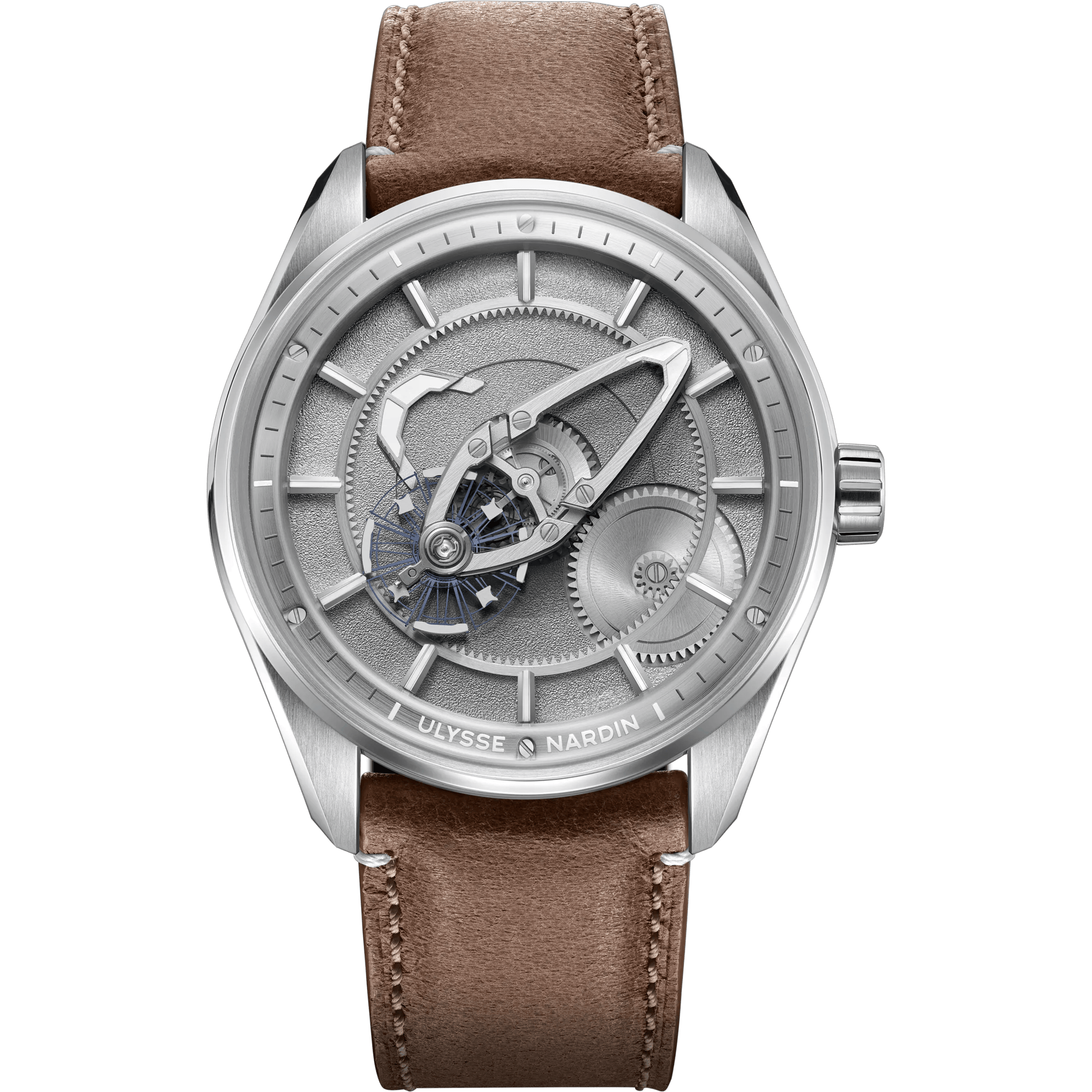
    Blancpain’s short teaser leans on scale and heritage, framing a tiny, very real ladybird beside hints of the #Blancpain1735 lineage, with a reveal promised for September 17. Little is confirmed beyond the date, but the nod to 1956 suggests a fresh take on a long-running Blancpain concept.

    Why this watch, on this wrist?